Explore everything about diet and nutrition app development — from must-have features to costs, tech stacks, and expert tips. Build smarter health apps in 2025.
Diet and Nutrition App Development: The Complete Guide for 2025
Introduction
People are paying more attention to what they eat than ever before. Whether it’s losing weight, managing a chronic condition, or simply eating cleaner, everyone wants a personalized, easy way to track their food and health. That’s exactly why diet and nutrition app development has exploded in recent years.
From calorie counters and macro trackers to AI-powered meal planners, nutrition apps are now a core part of how millions of people manage their health daily. If you’re thinking about building one — or improving an existing product — this guide covers everything you need to know.
We’ll walk you through essential features, tech stack options, development costs, monetization strategies, and the most common mistakes to avoid. Let’s dive in.
| Complete guide to diet and nutrition app development for 2025 |
What Is Diet and Nutrition App Development?
Diet and nutrition app development refers to the process of designing, building, and launching a mobile or web application that helps users track their food intake, manage their nutritional goals, and improve their overall diet habits.
These apps can serve a wide range of users — from fitness enthusiasts and athletes to people managing diabetes, food allergies, or weight-related health conditions. The core purpose is always the same: make healthy eating more accessible, trackable, and sustainable.
Types of Nutrition Apps
- Calorie counter apps (e.g., MyFitnessPal-style)
- Macro and micronutrient trackers
- AI-powered meal planners
- Diet-specific apps (keto, vegan, diabetic-friendly)
- Clinical nutrition management platforms
- Recipe and grocery planning tools
Why the Market for Nutrition Apps Is Booming
The global health and fitness app market is on a steep growth curve, with nutrition apps leading a significant portion of that expansion. Several factors are driving this surge:
- Rising rates of obesity and diet-related diseases worldwide
- Growing consumer interest in preventive healthcare
- Increased smartphone penetration and health-conscious lifestyles
- Insurance and employer wellness programs integrating digital tools
- Post-pandemic focus on immune health and personal wellness
For anyone interested in nutrition tracking app features, it’s clear the demand is not a trend — it’s a long-term market shift. This makes right now an excellent time to invest in building a well-designed nutrition app.
| Growing demand for diet and nutrition app development in the global health market |
Must-Have Features in a Nutrition App
The features you build into your app will define its success. Users expect more than a basic food diary. Here are the core nutrition tracking app features that set successful apps apart:
1. Food Database and Barcode Scanner
A comprehensive food database — ideally with millions of entries — is the backbone of any nutrition tracker. Adding a barcode scanner makes logging meals fast and effortless. Users can scan a product and get instant nutritional data without manual entry.
2. Personalized Meal Plans
AI-powered personalization is quickly becoming an expectation, not a luxury. Apps that learn a user’s food preferences, health goals, and dietary restrictions and generate tailored meal plans retain users far longer than generic trackers.
3. Macro and Micronutrient Breakdown
Users want to see more than just calories. Providing clear breakdowns of protein, carbs, fat, fiber, vitamins, and minerals gives them actionable insight into how balanced their diet actually is.
4. Progress Tracking and Analytics
Visual dashboards, weight logs, goal completion charts, and streak tracking all help users stay motivated. Data visualizations turn raw numbers into meaningful feedback.
5. Integration with Wearables and Health Apps
Syncing with Apple Health, Google Fit, Fitbit, or Garmin allows users to connect their nutrition data with activity levels — giving a more complete picture of their health.
6. Water Intake and Hydration Reminders
Often overlooked, hydration tracking is a simple but high-value feature that users genuinely appreciate. Pairing it with smart push notifications helps build healthy daily habits.
7. Recipe Builder and Meal Logging
Allow users to build custom recipes, save their favorites, and log them with one tap. This reduces friction and encourages consistent usage.
Best Tips at a Glance
| Feature | What to Look For | Why It Matters |
| Personalization | AI-driven meal & macro planning | Tailored to individual health goals |
| Nutrient Tracking | Auto-log from barcode or photo | Saves time, improves accuracy |
| Integration | Wearables, fitness apps, EHR | Unified health data in one place |
| UI/UX Design | Clean, beginner-friendly interface | Drives daily engagement & retention |
| Monetization | Freemium, subscription, B2B | Ensures app sustainability |
| Compliance | HIPAA, GDPR, FDA guidelines | Builds user trust & legal safety |
| Offline Mode | Core features without internet | Usability in all environments |
| Push Notifications | Reminders for meals & hydration | Boosts habit formation |
The Diet and Nutrition App Development Process
Building a nutrition app from scratch involves multiple phases. Here’s a simplified breakdown of how a typical development process works:
Step 1: Discovery and Market Research
Before writing a single line of code, define your target audience, study competitors, and validate your app idea. Answer questions like: What problem does your app solve? Who is your ideal user? What gap exists in the current market?
Step 2: UX/UI Design
Design matters enormously in health apps. A cluttered, confusing interface drives users away within minutes. Invest in a clean, intuitive design that makes logging meals feel effortless — especially for first-time users.
Step 3: Tech Stack Selection
Common technology choices for nutrition app development include:
- Frontend: React Native or Flutter for cross-platform mobile apps
- Backend: Node.js, Python (Django/FastAPI), or Ruby on Rails
- Database: PostgreSQL or MongoDB for user data and food databases
- Cloud: AWS, Google Cloud, or Azure for scalable infrastructure
- AI/ML: TensorFlow or Python-based models for personalization features
Step 4: Development and Testing
Follow an agile development approach — build in sprints, test continuously, and gather early feedback from beta users. Prioritize performance and data accuracy from day one.
Step 5: Launch and Iteration
Submit to the App Store and Google Play, set up analytics, and prepare for ongoing updates. The apps that succeed long-term are the ones that keep improving based on real user behavior.
How Much Does It Cost to Build a Nutrition App?
Development costs vary widely depending on the complexity, platform, and team location. Here’s a rough breakdown:
- Basic MVP (3–4 features, 1 platform): $15,000 – $40,000
- Mid-range app (full feature set, iOS + Android): $50,000 – $100,000
- Advanced app (AI personalization, clinical features): $100,000 – $250,000+
If you’re working with a freelance developer or an offshore agency, costs can be significantly lower. However, always prioritize quality, security, and compliance over cutting corners on budget — especially for a health-focused product.
Monetization Strategies for Nutrition Apps
A great app needs a sustainable revenue model. Here are the most effective monetization approaches for nutrition and diet apps:
Freemium Model
Offer the core app for free and charge for premium features like advanced analytics, AI meal plans, or unlimited recipes. This lowers the barrier to entry while generating steady subscription revenue.
Subscription Plans
Monthly or annual subscription tiers are the most common model in the health app space. Apps like Noom and Cronometer use this effectively to generate predictable recurring revenue.
B2B and Corporate Wellness
Partner with employers, insurance providers, or healthcare organizations to offer the app as part of a wellness benefit. This B2B channel can be extremely lucrative and provides stable, large-volume contracts.
White-Label Licensing
License your platform to nutritionists, clinics, gyms, or dietitian practices who want to offer a branded nutrition app to their clients without building one from scratch.
Compliance and Privacy in Nutrition App Development
When your app handles health data, compliance is non-negotiable. Here’s what you need to keep in mind:
- HIPAA (Health Insurance Portability and Accountability Act): Required if you handle protected health information in the US
- GDPR: Mandatory for any app serving users in the European Union
- FDA guidelines: Relevant if your app makes clinical health claims or connects with medical devices
- App Store and Google Play health data policies: Both platforms have strict rules around health data collection and usage
Work with a legal advisor and a security-focused development team to ensure your app is fully compliant before launch. According to the U.S. Department of Health & Human Services, HIPAA violations can result in fines ranging from $100 to $50,000 per violation. You can learn more at HHS.gov.
Who Can Benefit from Investing in Nutrition App Development?
Nutrition and diet app development isn’t just for Silicon Valley startups. A wide range of organizations and individuals stand to gain:
- Healthcare providers and hospitals looking to support patient wellness remotely
- Dietitians and nutritionists want to scale their client reach
- Fitness brands, gyms, and personal trainers are building digital products
- Food and supplement companies are creating value-added digital tools
- Corporate HR and benefits teams are building employee wellness programs
- Entrepreneurs and investors targeting the growing wellness app market
- Universities and research institutions studying dietary behavior at scale
If your audience cares about what they eat, there’s a strong case for building or owning a nutrition-focused digital product.
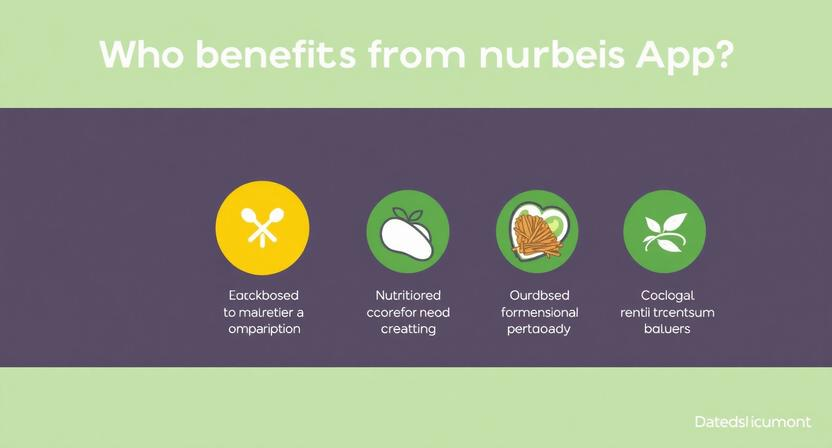
| Different professionals and businesses that benefit from diet and nutrition app development |
1. Overloading the MVP with Features
Trying to build everything at once leads to delays, budget overruns, and a bloated app that confuses new users. Start lean, validate your core value, then layer in features based on real user feedback.
2. Neglecting Data Accuracy
Inaccurate calorie or nutrient data destroys user trust fast. Partner with verified food databases — like the USDA FoodData Central — and build quality checks into your data pipeline.
3. Ignoring Offline Functionality
Users may need to log meals in areas with poor connectivity. If your app fails without an internet connection, you’ll see high churn. Build offline capability from day one.
4. Underestimating UX for Non-Technical Users
Nutrition apps serve diverse audiences. If logging a meal takes more than 30 seconds, many users won’t bother. Every extra tap is friction — design with the busiest, least tech-savvy user in mind.
5. Skipping Push Notification Strategy
Notifications that are irrelevant or too frequent get turned off or lead to uninstalls. Design a smart, personalized notification system that adds value — not noise.
6. No Clear Monetization Plan
Many developers launch apps without a solid revenue strategy and run into sustainability issues within months. Define your monetization model before you start building — not after.
Frequently Asked Questions (FAQ)
1. How long does it take to develop a nutrition app?
A basic MVP typically takes 3 to 5 months. A full-featured app with AI personalization, wearable sync, and advanced analytics can take 8 to 12 months or more, depending on team size and scope.
2. What is the best platform to build a nutrition app on?
Most nutrition apps launch on both iOS and Android simultaneously using cross-platform frameworks like React Native or Flutter. This approach saves development time and cost while reaching the widest possible audience.
3. Do I need a registered dietitian to build a nutrition app?
While not always legally required, working with a registered dietitian (RD) during development is highly recommended. An RD can ensure your nutritional recommendations are safe, accurate, and evidence-based — which is critical for user trust and legal protection.
4. What database should I use for food and nutrition data?
The USDA FoodData Central is the most widely trusted source in the US. You can also license commercial databases like Nutritionix or Edamam for a broader, more consumer-friendly food catalog with restaurant and branded food data.
5. How do I keep users engaged long-term in my nutrition app?
Long-term engagement depends on personalization, progress visibility, and community features. Apps that send smart reminders, celebrate milestones, update their content regularly, and offer social or coaching features consistently outperform those that don’t.
Conclusion
Diet and nutrition app development is one of the most impactful spaces in digital health right now. With the right features, a thoughtful user experience, solid data, and a clear monetization strategy, a well-built nutrition app can genuinely change how people eat — and how they feel.
Whether you’re a startup founder, a healthcare provider, or a wellness brand, now is the right time to invest in this space. The market is ready, the technology is mature, and users are actively looking for tools that help them eat better.
At RealMe Foods, we believe that real food knowledge should be accessible to everyone. If you’re ready to take the next step in building your own nutrition-focused product, explore our resources or get in touch — we’d love to be part of your journey.
👉 Ready to build your nutrition app? Start with RealMe Foods resources and take the first step today.
Related Posts

Best Tea for Immune System: Natural Teas to Strengthen Your Body’s Defenses
Introduction (Problem + Solution) In today’s fast-paced lifestyle, weakened immunity has become a common concern. Stress, poor sleep, pollution, unhealthy…

Best Tea for Digestion and Bloating: Natural Remedies for a Healthy Gut
Introduction (Problem + Solution) Digestive problems like bloating, gas, stomach discomfort, and indigestion are extremely common today. Irregular eating habits,…

55+ Healthy Meal Prep Ideas for 2025: Easy Recipes to Save Time and Eat Better
Explore 55+ easy and delicious healthy meal prep ideas for 2025, including high-protein breakfasts like overnight oats, nutritious lunch bowls…