Discover why a high-fiber diet is essential for your health. This complete guide covers top high-fiber foods, simple recipes, and practical tips to easily boost your intake.
The High-Fiber Handbook: Your Guide to Better Health, One Bite at a Time
Introduction
In the world of nutrition, few dietary components offer as many wide-ranging benefits as fiber, yet it remains one of the most commonly neglected nutrients. A high-fiber diet is not just about promoting regularity; it’s a cornerstone of long-term health, linked to a reduced risk of chronic diseases, improved heart health, and better weight management. Despite its importance, most people fall short of the recommended daily intake. Understanding and prioritizing a high-fiber lifestyle is a critical step toward taking control of your well-being, offering a simple yet powerful way to nourish your body from the inside out.
This comprehensive guide is designed to demystify fiber and provide you with a practical roadmap for seamlessly increasing your intake. We will explore the different types of fiber, their unique benefits, and an extensive list of delicious high-fiber foods. More importantly, we will move beyond the theory with actionable strategies and simple recipes that prove eating a high-fiber diet can be both easy and enjoyable. The impact of embracing a high-fiber diet is profound, leading to improved digestion, sustained energy, and a stronger foundation for overall health.
Fiber 101: Understanding the Two Types of High-Fiber Power
To harness the power of a high-fiber diet, it’s helpful to understand the two main types of fiber, both of which are essential for health.
Soluble Fiber: The Heart Helper
This type of fiber dissolves in water to form a gel-like substance in your gut.
- Key Benefits: Helps lower LDL (“bad”) cholesterol levels and regulates blood sugar levels by slowing the absorption of sugar.
- Top Sources: Oats, barley, beans, lentils, apples, citrus fruits, carrots, and psyllium husk.
Insoluble Fiber: The Digestive Dynamo
This fiber does not dissolve in water. It adds bulk to stool and helps food pass more quickly through the stomach and intestines.
- Key Benefits: Promotes regularity and prevents constipation.
- Top Sources: Whole wheat flour, wheat bran, nuts, seeds, and the skins of many fruits and vegetables.
A healthy high-fiber diet includes plenty of both types.
The Life-Changing Benefits of a High-Fiber Diet
The advantages of prioritizing high-fiber foods extend far beyond the digestive system.
Supports Digestive Health and Regularity
This is fiber’s most well-known role. A high-fiber diet helps prevent and relieve constipation by adding bulk and softening stool. It also contributes to a healthy gut microbiome, as fiber acts as a prebiotic, feeding the beneficial bacteria in your intestines.
Aids in Weight Management
High-fiber foods are typically more filling than low-fiber foods, meaning they help you feel satisfied for longer after eating. This can lead to a natural reduction in overall calorie intake. Furthermore, high-fiber foods often require more chewing, which can slow down your eating pace and give your body time to register fullness.
Promotes Heart Health
Numerous studies have shown that a high-fiber diet is associated with a lower risk of heart disease. Soluble fiber, in particular, plays a key role in lowering cholesterol by binding to it in the digestive system and removing it from the body.
Your Ultimate High-Fiber Food List
Incorporate these foods into your diet to effortlessly boost your fiber intake.
Legumes: The Fiber Champions
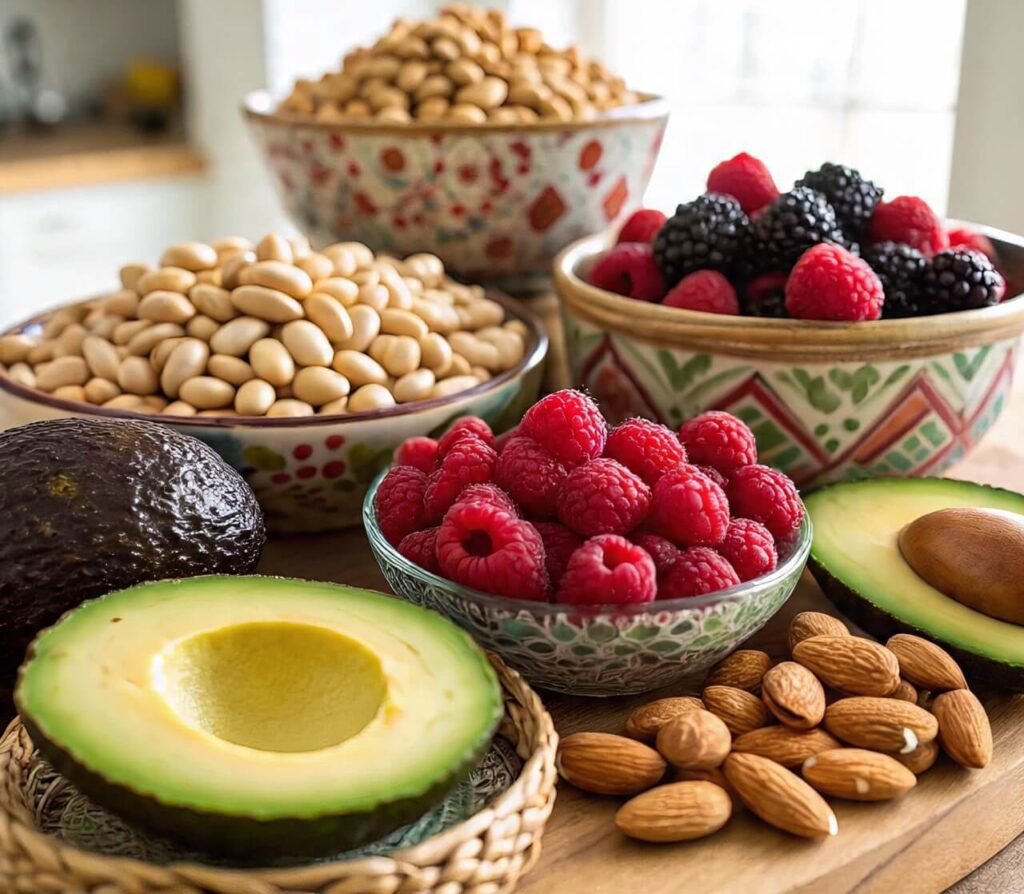
- Examples: Lentils (1 cup cooked = 15g fiber), black beans (1 cup cooked = 15g), chickpeas (1 cup cooked = 12.5g), split peas.
- How to Eat: Add to soups, stews, salads, and veggie burgers.
Whole Grains: The Foundation of a High-Fiber Diet
- Examples: Oats (1 cup cooked = 4g), quinoa (1 cup cooked = 5g), barley, popcorn (3 cups air-popped = 3.5g), whole-wheat pasta, brown rice.
- How to Eat: Choose 100% whole-grain bread and cereals. Swap white rice for brown rice or barley.
Fruits & Vegetables: Nature’s Fiber Packets
- Examples: Raspberries (1 cup = 8g), avocados (1/2 cup = 5g), pears, apples (with skin), broccoli, artichokes, sweet potatoes (with skin).
- How to Eat: Eat the skin whenever possible. Add berries to yogurt, blend avocado into smoothies, and snack on raw vegetables.
Nuts and Seeds: The Fiber-Packed Crunch
- Examples: Chia seeds (2 tbsp = 10g), flaxseeds, almonds (1 oz = 3.5g), pumpkin seeds.
- How to Eat: Sprinkle on salads, yogurt, and oatmeal. Use as a coating for proteins.
Simple & Delicious High-Fiber Recipes
1. Ultimate Fiber-Packed Berry Smoothie
- Ingredients: 1 cup unsweetened almond milk, 1/2 cup plain Greek yogurt, 1 cup frozen mixed berries, 1 tbsp chia seeds, 1 tbsp ground flaxseed, handful of spinach.
- Instructions: Blend all ingredients until smooth. (Fiber: approx. 12g).
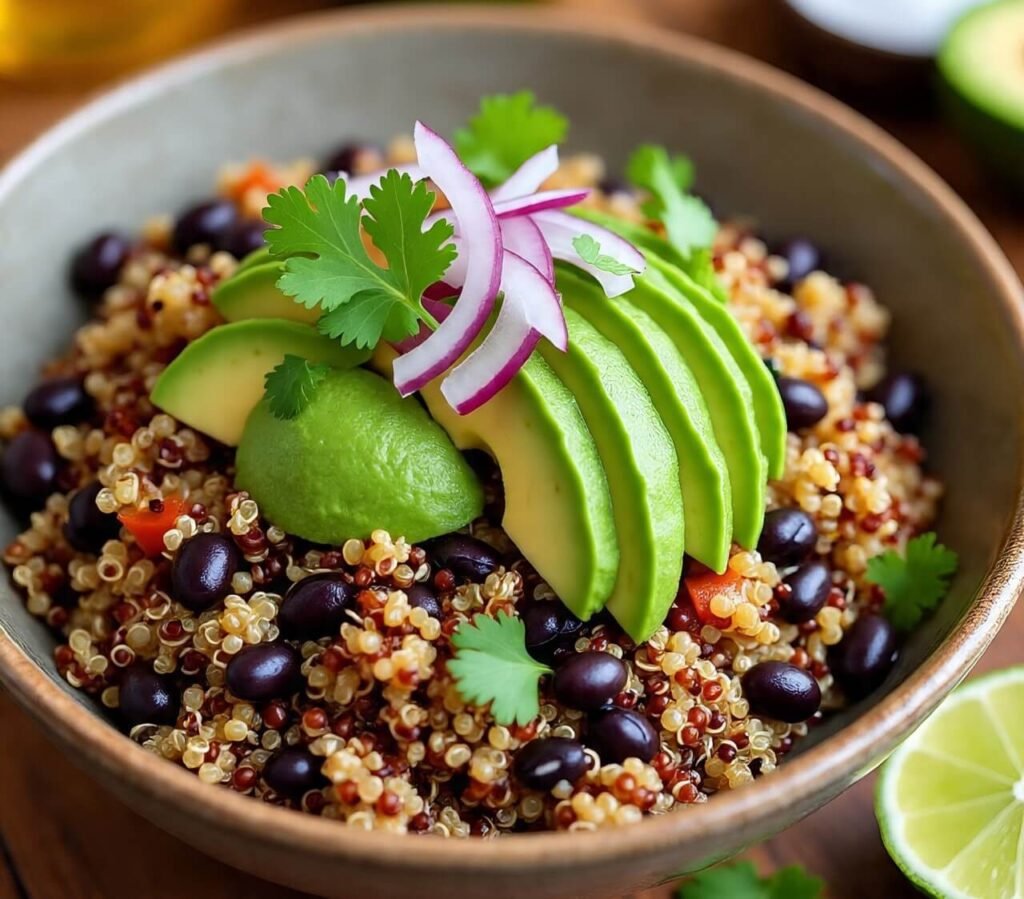
2. Quinoa & Black Bean Power Bowl
- Ingredients: 1 cup cooked quinoa, 1/2 cup black beans, 1/4 cup corn, diced avocado, salsa, lime wedge.
- Instructions: Combine quinoa, beans, and corn in a bowl. Top with avocado, a dollop of salsa, and a squeeze of lime. (Fiber: approx. 15g).
3. No-Bake Chia Seed & Oat Energy Balls
- Ingredients: 1 cup old-fashioned oats, 1/2 cup nut butter, 1/3 cup honey, 1/4 cup chia seeds, 1/4 cup dark chocolate chips.
- Instructions: Mix all ingredients in a bowl. Roll into 1-inch balls and refrigerate for 30 minutes. (Fiber: approx. 4g per ball).
Practical Tips for Boosting Your Fiber Intake
Increasing fiber too quickly can cause gas and bloating. Follow these tips for a smooth transition.
- Go Slow and Steady: Gradually add a few grams of fiber to your diet each week to allow your digestive system to adjust.
- Hydrate, Hydrate, Hydrate: Fiber works best when it absorbs water. Drink plenty of fluids throughout the day to help fiber do its job effectively.
- Read Food Labels: Choose breads and cereals with at least 3-5 grams of fiber per serving.
- The “Add-One” Rule: At each meal, find one way to add fiber. Add beans to your salad, sprinkle seeds on your soup, or choose fruit for dessert.

Conclusion: Make High-Fiber a Lasting Habit
Embracing a high-fiber diet is one of the most impactful choices you can make for your long-term health. It’s not about a restrictive diet but about incorporating a vibrant variety of whole, plant-based foods into your daily routine. By understanding the benefits, stocking your kitchen with high-fiber staples, and using simple strategies to boost your intake, you can easily meet your daily goals. Start slowly, listen to your body, and enjoy the journey to better health, one high-fiber bite at a time.
Frequently Asked Questions (FAQs)
Q1: How much high-fiber food should I eat each day?
A: The general recommendation is 25 grams per day for women and 38 grams per day for men. However, needs can vary. A good approach is to aim for the recommended intake and adjust based on how you feel, ensuring you increase your intake gradually.
Q2: I’ve heard that a high-fiber diet can cause bloating. Is this true?
A: Yes, if you increase your fiber intake too rapidly, it can cause temporary gas and bloating. This is why it’s crucial to go slow and drink plenty of water. Your digestive system will adapt over time, and these side effects should diminish.
Q3: Are fiber supplements a good way to get high-fiber benefits?
A: While supplements like psyllium husk can be helpful for some, they should not replace whole food sources of fiber. Whole foods provide a complex matrix of nutrients, vitamins, and antioxidants that work synergistically, offering health benefits beyond just fiber.
Q4: What are some sneaky ways to add high-fiber ingredients to meals?
A: You can easily “sneak” in fiber by adding a tablespoon of chia seeds or ground flaxseed to smoothies, oatmeal, or yogurt. Use mashed beans to thicken soups and sauces, or mix whole-wheat flour into your regular flour when baking.
Related Posts

Best Tea for Immune System: Natural Teas to Strengthen Your Body’s Defenses
Introduction (Problem + Solution) In today’s fast-paced lifestyle, weakened immunity…

Christmas Jam Recipe Sweet, Spiced & Perfect for Gifting
If there’s one recipe that truly captures the flavors of…

Zinc Rich Foods to Boost Immunity, Skin Health, and Overall Wellness | Essential Sources of Zinc for a Balanced Diet
Introduction: Why Zinc Deficiency is a Hidden Health Problem In…