Introduction: The Problem & The Solution
In today’s fast-paced world, our diets often lack essential nutrients — and Vitamin C is one of the most neglected. Low Vitamin C intake can lead to weakened immunity, frequent colds, slow wound healing, and dull skin. Unfortunately, most people either rely on supplements or fail to get enough from natural food sources.
The solution? Incorporating Vitamin C rich recipes into your daily meals. Not only are these dishes flavorful, but they also boost your immune system, enhance skin health, and protect your body against oxidative stress. In this blog, we’ll explore easy, tasty, and nutrient-packed recipes, along with tips on maximizing Vitamin C absorption.
Why Vitamin C is Essential for Your Health
Vitamin C, or ascorbic acid, is a water-soluble vitamin with numerous health benefits:
- Supports immunity by strengthening white blood cells.
- Improves skin health by aiding collagen production.
- Acts as an antioxidant, protecting against free radical damage.
- Enhances iron absorption from plant-based foods.
- Speeds up healing of wounds and injuries.
Daily Requirement:
- Adults: 65–90 mg per day (maximum 2,000 mg)
- Pregnant women & smokers may need more.
Top Natural Sources: Citrus fruits, kiwi, strawberries, bell peppers, broccoli, kale, guava, and papaya.
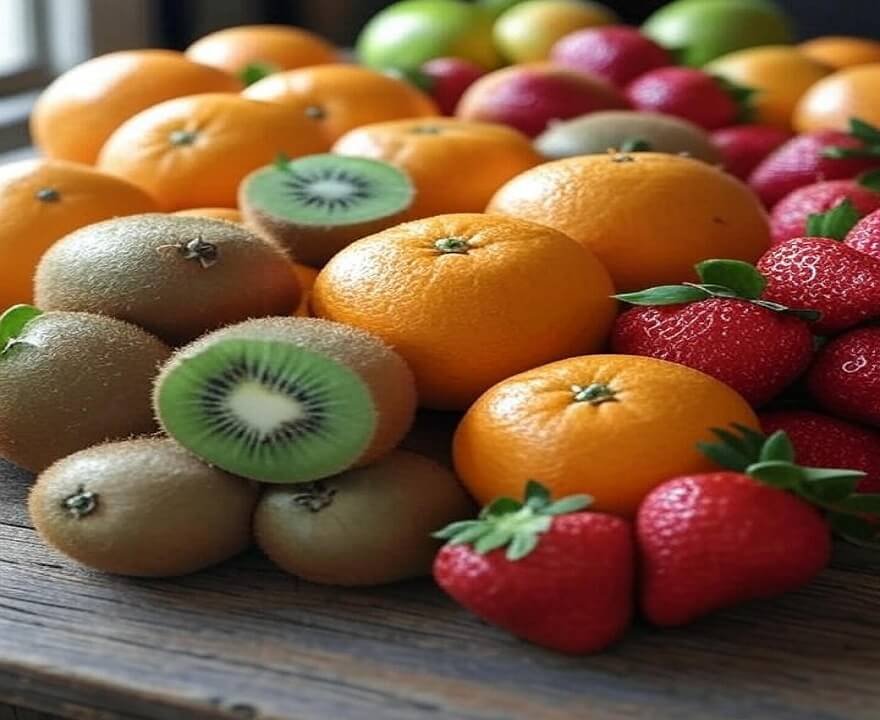
Fresh oranges, kiwis, and strawberries arranged on a wooden table.
Best Vitamin C Rich Recipes to Try at Home
1. Citrus & Berry Immunity Smoothie
Ingredients:
- 1 orange (peeled)
- ½ cup strawberries
- ½ cup blueberries
- 1 kiwi (peeled)
- 1 cup coconut water
Instructions:
- Add all ingredients to a blender.
- Blend until smooth.
- Serve immediately for maximum Vitamin C retention.
Benefits: Packed with antioxidants, boosts immunity, and hydrates your body.

Bright orange and red smoothie in a glass with mint garnish.
2. Bell Pepper & Broccoli Stir-Fry
Ingredients:
- 1 cup broccoli florets
- 1 red bell pepper (sliced)
- 1 yellow bell pepper (sliced)
- 1 tbsp olive oil
- 1 garlic clove (minced)
- Salt & pepper to taste
Instructions:
- Heat olive oil in a pan.
- Add garlic and sauté for 30 seconds.
- Toss in broccoli and bell peppers.
- Stir-fry for 3–5 minutes until slightly tender but still crisp.
Benefits: Bell peppers contain more Vitamin C than oranges. Cooking lightly preserves nutrients.
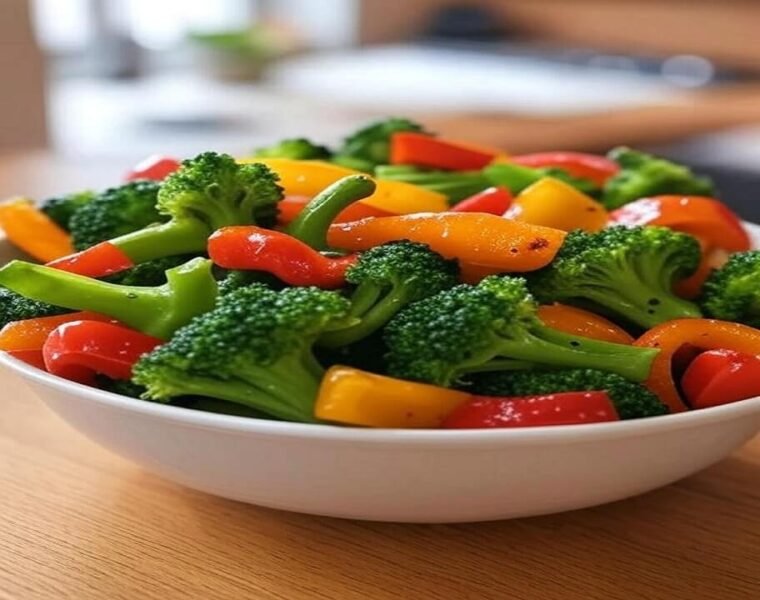
Colorful bell pepper and broccoli stir-fry served in a white bowl.
3. Guava & Papaya Fruit Salad
Ingredients:
- 1 guava (diced)
- 1 cup papaya cubes
- 1 tbsp lemon juice
- 1 tsp honey (optional)
- Fresh mint leaves
Instructions:
- Combine guava and papaya in a bowl.
- Drizzle lemon juice and honey.
- Garnish with mint and serve chilled.
Benefits: Tropical flavors with a Vitamin C boost for radiant skin.
4. Kale & Orange Winter Salad
Ingredients:
- 2 cups chopped kale
- 1 orange (segments)
- ¼ cup walnuts
- 2 tbsp olive oil
- 1 tbsp balsamic vinegar
Instructions:
- Massage kale with olive oil for 1–2 minutes.
- Add orange segments and walnuts.
- Drizzle balsamic vinegar and toss well.
Benefits: Combines leafy greens with citrus for antioxidant power.

Kale and orange salad served in a wooden bowl.
5. Strawberry & Kiwi Chia Pudding
Ingredients:
- 1 cup almond milk
- 3 tbsp chia seeds
- ½ cup strawberries (sliced)
- 1 kiwi (sliced)
- 1 tbsp maple syrup
Instructions:
- Mix almond milk, chia seeds, and maple syrup in a jar.
- Refrigerate overnight.
- Top with strawberries and kiwi before serving.
Benefits: Slow-release energy with a Vitamin C-packed topping.
Tips to Maximize Vitamin C Absorption
- Eat fruits raw — heat destroys Vitamin C.
- Pair with iron-rich foods to improve absorption.
- Avoid overcooking vegetables — steam instead.
- Store produce properly to retain nutrients.
Conclusion
Vitamin C is vital for immunity, skin, and overall wellness, but many people unknowingly fall short in their daily intake. By adding these Vitamin C-rich recipes to your routine, you can naturally meet your nutritional needs without relying solely on supplements. Whether it’s a refreshing smoothie, colorful stir-fry, or tropical fruit salad, these recipes prove that healthy eating can be delicious, simple, and satisfying.
FAQs
Q1: Can I get enough Vitamin C from food alone?
Yes, if you eat a balanced diet rich in fruits and vegetables, supplements are not necessary.
Q2: What happens if I take too much Vitamin C?
Excessive intake can cause digestive discomfort; stick to the recommended daily allowance.
Q3: Are frozen fruits good sources of Vitamin C?
Yes, but fresh fruits generally have higher Vitamin C content.
Q4: Does cooking destroy Vitamin C?
High heat can reduce Vitamin C, so opt for steaming or eating raw.
Q5: Which fruit has the highest Vitamin C?
Guava tops the list, with over 200% of the daily requirement in one serving.
Related Posts

Top 10 Plant Based Diet Benefits | Real Health, Real Energy
Discover the proven plant based diet benefits of a 2025…

Nutritious Breakfast Ideas: Energize Your Morning with Healthy, Delicious Meals
Start your day strong with these nutritious breakfast ideas from…

55+ Healthy Meal Prep Ideas for 2025: Easy Recipes to Save Time and Eat Better
Explore 55+ easy and delicious healthy meal prep ideas for…