
You buy a big bunch of fresh coriander for one recipe, use six sprigs, and three days later the rest is a slimy, dark-green mess at the back of the fridge. Sound familiar? Fresh herbs are the most wasted ingredient in most home kitchens — not because people buy too many, but because they store them the wrong way. Learning how to store fresh herbs properly is simple once you understand one thing: soft herbs and hardy herbs behave like completely different ingredients, and each group needs its own method.
Get it right, and parsley, coriander, mint and basil can stay fresh for two to three weeks instead of wilting in days. Here is exactly how.
Why Fresh Herbs Go Bad So Fast
Herbs spoil for three reasons: too much moisture on the leaves (which feeds rot), too little moisture in the air around them (which dries them out), and damage — bruised leaves turn black quickly. The plastic bag from the shop is the worst of all worlds: it traps wet air against the leaves, so they rot before they dry.
Every method below balances the same equation — keep the stems hydrated, keep the leaves mostly dry, and keep cold air moving gently around the bunch. Which method you choose depends on the herb.
First, Sort Your Herbs: Soft vs. Hardy
Soft herbs have tender stems and delicate leaves: parsley, coriander (cilantro), mint, basil, dill, tarragon and chives. These are thirsty plants — treat them like a bouquet of flowers.
Hardy herbs have woody stems and tougher leaves: rosemary, thyme, sage, oregano and bay leaves. These prefer to be drier — treat them more like vegetables.
This one distinction decides everything that follows.
Method 1: The Jar Method (Best for Soft Herbs)
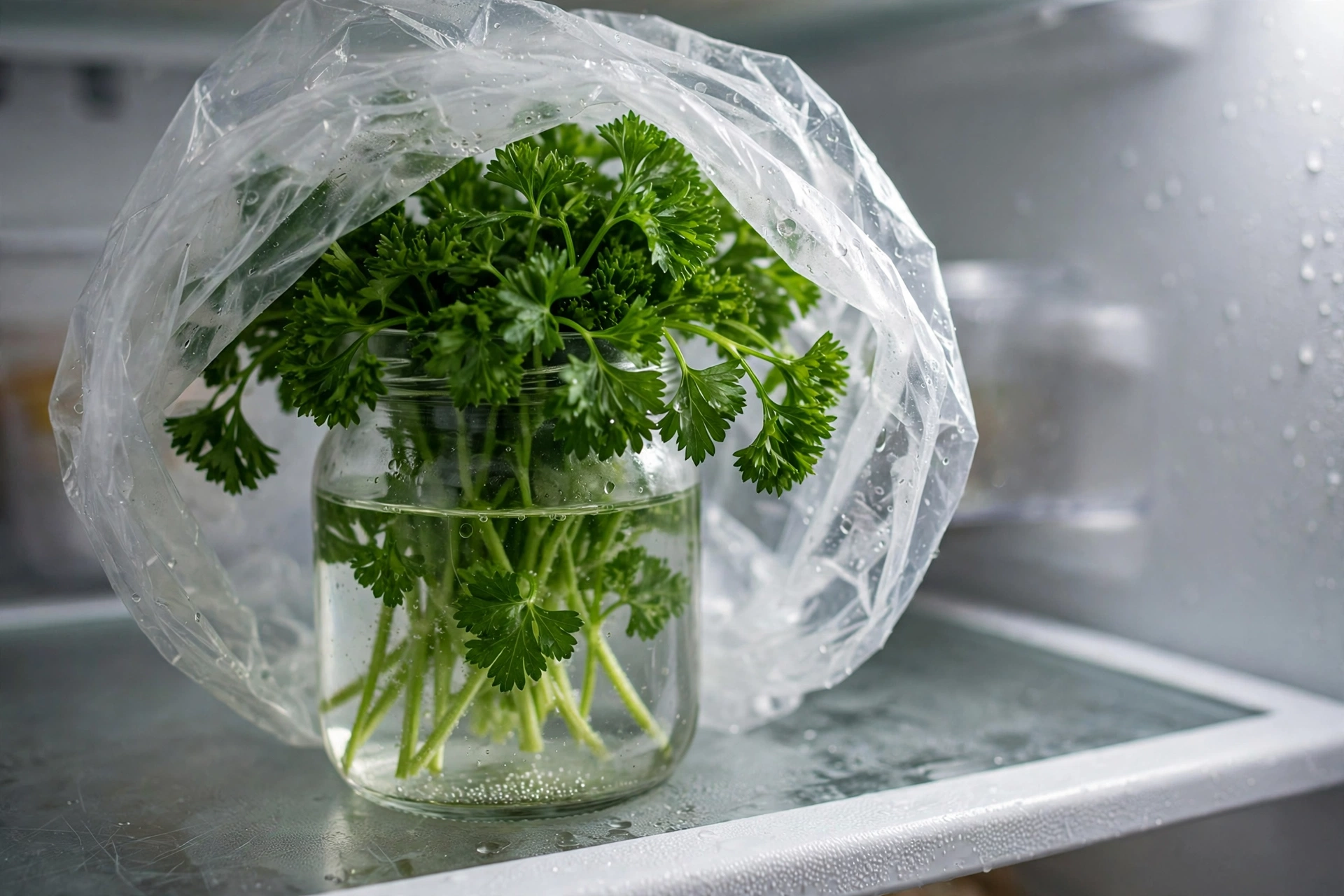
This is the single most effective way to store fresh herbs like parsley, coriander and mint.
- Trim about 1 cm (½ inch) off the bottom of the stems, just like trimming flower stems.
- Fill a clean glass jar or glass with 2–3 cm of cold water.
- Stand the bunch in the water, stems down, leaves up.
- For parsley, coriander and mint: cover the leaves loosely with a clean plastic bag or the jar’s lid left ajar — this holds humidity without sealing in wet air.
- Store in the fridge and change the water every 2–3 days.
Stored this way, parsley and coriander regularly last 2–3 weeks, and mint often longer.
The basil exception: basil hates the cold. Fridge temperatures below about 10°C / 50°F turn its leaves black. Keep basil in a jar of water on the kitchen counter, away from direct sunlight, and it will stay green and fragrant for a week or more — sometimes it even grows roots.
Method 2: The Towel Wrap (Best for Hardy Herbs)
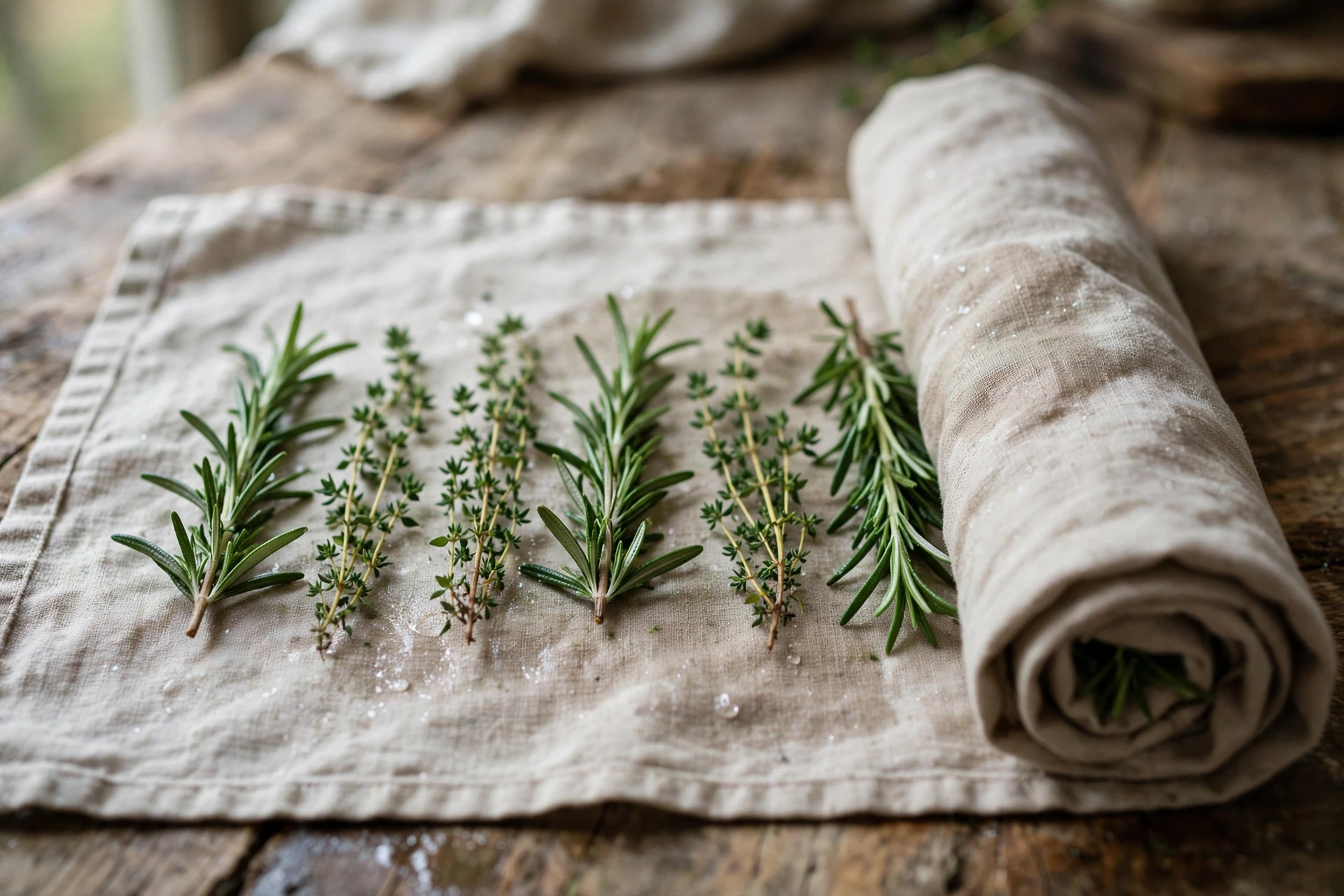
Rosemary, thyme and sage rot quickly in water jars. They last far longer wrapped:
- Lay the sprigs in a single layer on a clean, slightly damp paper towel or thin cloth.
- Roll the towel up gently with the herbs inside.
- Slide the roll into a bag or container — left slightly open, not sealed airtight.
- Store in the crisper drawer of the fridge.
The damp towel stops the leaves drying out, while the open bag stops condensation building up. Hardy herbs keep 2–3 weeks this way. This method also works well for dill and chives if you are short on jar space.
Method 3: Freeze Them (Best for Cooking Herbs You Won’t Use Fresh)
If a bunch is bigger than you can use, freezing beats letting it rot — frozen herbs are perfect for cooked dishes, soups and sauces (just not for garnishing).
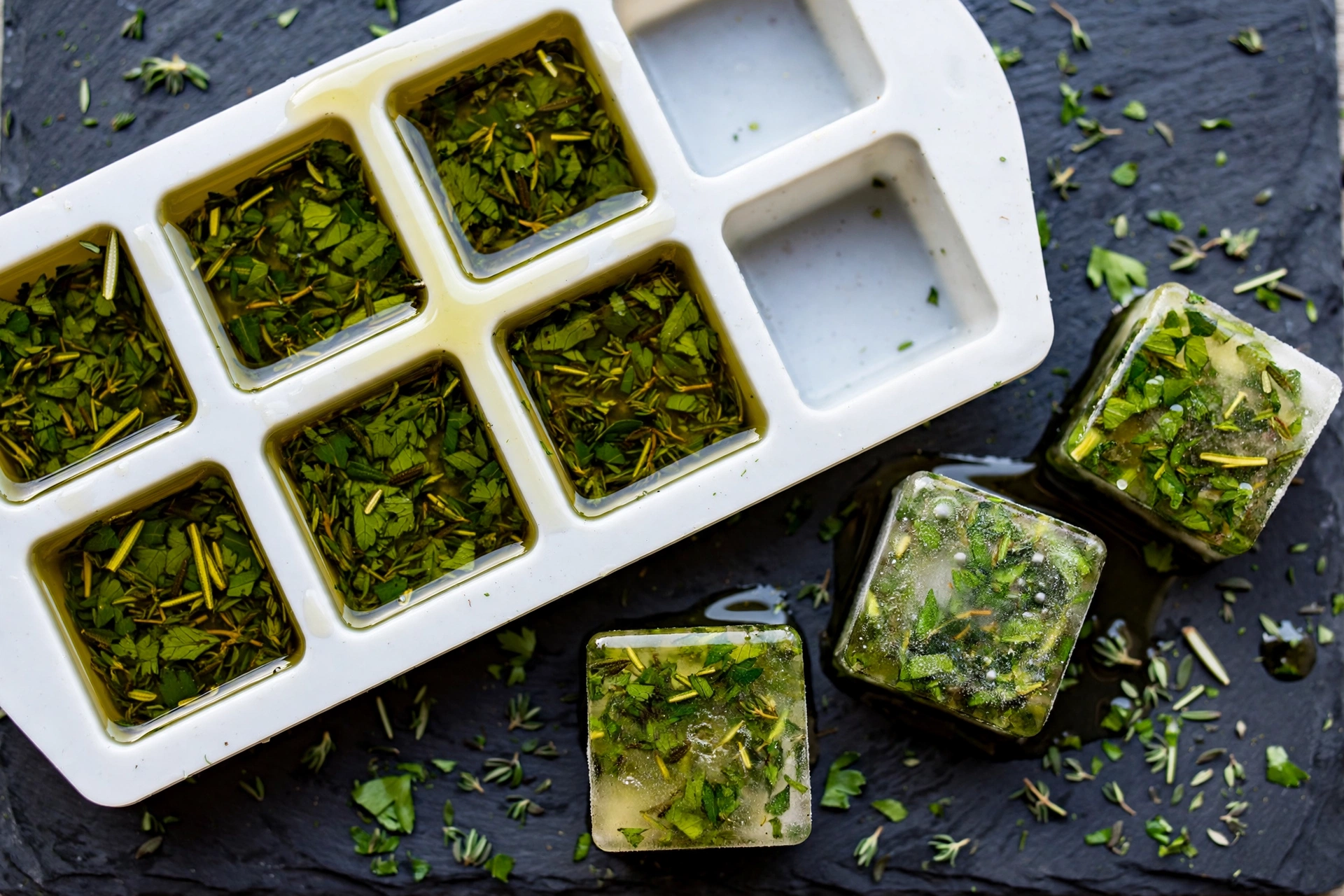
- Ice-cube method: chop the leaves, pack them into an ice-cube tray, cover with water or olive oil, and freeze. Pop a cube straight into the pan while cooking.
- Flat-bag method: freeze whole clean leaves on a tray, then bag them. They crumble straight from frozen, no chopping needed.
Frozen herbs keep their flavour for up to 3 months. This is a brilliant rescue for the leftover coriander from a big batch of dhaniya chutney — freeze it today, and next month’s chutney, soup or curry is already half seasoned.
Quick-Reference Table
| Herb | Type | Best method | Typical fridge life |
|---|---|---|---|
| Parsley | Soft | Jar of water, covered | 2–3 weeks |
| Coriander / cilantro | Soft | Jar of water, covered | 2 weeks |
| Mint | Soft | Jar of water, covered | 2–3 weeks |
| Basil | Soft | Jar of water, on the counter | 1 week+ |
| Dill | Soft | Jar or towel wrap | 1–2 weeks |
| Rosemary | Hardy | Damp towel wrap | 2–3 weeks |
| Thyme | Hardy | Damp towel wrap | 2 weeks |
| Sage | Hardy | Damp towel wrap | 2 weeks |
Fresh peppers reward the same care, by the way — if you cook through a market haul slowly, the storage tips in our poblano pepper recipes guide will help them last, too.
5 Storage Mistakes That Kill Herbs Early
- Washing before storing. Wet leaves rot fast. Wash herbs just before using them — or, if you must wash first, spin or pat them completely dry.
- Sealing them wet in a plastic bag. This is the fastest route to slime.
- Putting basil in the fridge. Cold blackens basil leaves within days.
- Never changing the jar water. Stale water grows bacteria; refresh it every 2–3 days.
- Storing herbs near fruit. Ripening fruit releases ethylene gas, which yellows leaves. Keep herbs away from bananas, apples and tomatoes in the fridge.
How to Revive Wilted Herbs
Herbs that look tired but are not slimy or black can often be rescued. Trim the stem ends and stand the bunch in a bowl of ice water for 20–30 minutes. The leaves drink through the stems and firm up surprisingly well. Use revived herbs the same day — ideally cooked into a dish rather than served raw.
If leaves are slimy, black, or smell sour, they are finished. Throw them out; no storage trick makes spoiled food safe again.
Frequently Asked Questions
Should I wash fresh herbs before storing them?
No — excess water on the leaves is the main cause of early rot. Store herbs dry and wash them right before you cook.
How long do fresh herbs last in the fridge?
With the right method, most soft herbs last 2–3 weeks in a water jar, and hardy herbs 2–3 weeks in a towel wrap — compared with 3–4 days loose in a bag.
Can you freeze fresh herbs?
Yes. Chop them into ice-cube trays with water or olive oil, or freeze the leaves flat in a bag. They keep well for up to 3 months and go straight into cooked dishes from frozen.
Why did my basil turn black in the fridge?
Basil is damaged by cold below roughly 10°C / 50°F. Store it in water on the counter instead, like cut flowers.
Is it better to store herbs in water or wrapped in a towel?
It depends on the herb: soft herbs (parsley, coriander, mint) do best in water; hardy herbs (rosemary, thyme, sage) do best in a damp towel wrap.
The Takeaway
None of this takes more than two minutes at the end of a shop: trim the stems, soft herbs into a jar of water, hardy herbs into a damp towel, basil on the counter, and freeze whatever you know you will not use. That tiny routine turns fresh herbs from the most wasted item in your kitchen into one of the longest-lasting — and every bunch you bought actually ends up in your food.
Storage times are general guidance for home refrigerators. When in doubt, the U.S. government’s FoodKeeper tool and the FDA’s guide to storing food safely are the references to trust.
Related Posts

Best Recipes for Meal Prep: 7 Dishes That Taste Better on Day Three
Best Recipes for Meal Prep: 7 Dishes That Taste Better on Day Three The best recipes for meal prep are…

Bar Cabinet with Wine Fridge: How to Choose the Right One
Bar Cabinet with Wine Fridge: How to Choose the Right One A home bar usually fails in one of two…
15 Brilliant & Space-Saving Pantry Storage Solutions for a Clutter-Free Kitchen
Pantry storage solutions that maximize space, improve organization, and keep food fresh. Discover smart ideas, expert tips, and must-have tools.…