“Sugar-free” has a reputation problem. Too many of us have bitten into a sugar free dessert that tasted like a punishment — dry, oddly chemical, and nothing like the real thing. But here is the good news: sugar free desserts do not have to taste like a compromise. When you sweeten with ripe fruit, rich cocoa, warm spices and a little fat for richness, the result can be genuinely delicious — the kind of dessert people ask for the recipe for, not the kind they politely leave half-eaten.
This guide gives you three complete, cookable recipes plus four no-recipe ideas, a plain-English guide to sweetening without sugar, and the mistakes that ruin most sugar-free baking. No added sugar anywhere — just smart ingredients doing the sweet work.
What “Sugar Free” Really Means
Before we cook, let’s be precise, because labels can mislead. A dessert with no added sugar can still contain natural sugars from fruit or milk — and that is fine. What we are avoiding is sugar added during cooking or processing: table sugar, syrups, honey and concentrated fruit juice.
The U.S. Food and Drug Administration (FDA) explains that added sugars include sugars added during processing, sugars from syrups and honey, and sugars from concentrated fruit or vegetable juices — but not the sugars that occur naturally in milk, fruit and vegetables. The Dietary Guidelines for Americans recommend keeping added sugars below 10% of daily calories, which works out to about 50 grams a day on a 2,000-calorie diet.
So our rule for this article is simple: nothing on the added-sugars list goes in. Fruit, dates and spices do the sweetening instead.
How to Sweeten Desserts Without Sugar
Sugar does three jobs in a dessert: it sweetens, it adds moisture and bulk, and it helps with browning. Take it out and you need replacements for all three. Here is what actually works:
| Sweetener | Best for | What to know |
|---|---|---|
| Ripe banana, mashed | Muffins, pancakes, nice-cream | Adds moisture and body; use very ripe, speckled bananas |
| Medjool dates, soaked and blended | Mousse, bars, sauces | Caramel-like sweetness; soak in hot water 10 minutes first |
| Whole fruit (berries, apples, pears) | Baking, compotes, toppings | Natural sweetness plus fibre; roast or bake to concentrate it |
| Cinnamon, vanilla, cocoa | Everything | Trick the palate — warm flavours make food taste sweeter than it is |
| Stevia or monk fruit | Drinks, yogurt, no-bake treats | Very sweet in tiny amounts; follow packet guidance for baking |
| Erythritol | Baked goods | Measures a bit like sugar; can leave a cooling aftertaste if overused |
A note of caution: “sugar-free” products on supermarket shelves are not automatically healthy. Many are packed with sugar alcohols or refined starches, so check the label rather than trusting the front of the pack. If you want a fuller overview of sugar substitutes, the Mayo Clinic’s guide is a reliable place to start.
Recipe 1: Dark Chocolate Avocado Mousse
This is the recipe that converts sceptics. The avocado disappears completely into a silky, intensely chocolatey mousse — nobody guesses the secret ingredient until you tell them.
Prep time: 10 minutes | Chill time: 2 hours | Serves: 4
Ingredients:
- 2 ripe avocados, halved and pitted
- 1/3 cup (30 g) unsweetened cocoa powder
- 1/4 cup (60 ml) milk of your choice
- 4 soft Medjool dates, pitted and soaked in hot water for 10 minutes
- 1 teaspoon vanilla extract
- A pinch of salt
- Fresh berries and a few mint leaves, to serve
Method:
- Scoop the avocado flesh into a blender or food processor.
- Add the cocoa powder, milk, drained dates, vanilla and salt.
- Blend for 1–2 minutes, scraping down the sides, until completely smooth. If it is too thick, add milk a tablespoon at a time.
- Taste and adjust: a little more cocoa for bitterness, one more date if you want it sweeter.
- Spoon into four small ramekins or glasses, cover and chill for at least 2 hours.
- Serve topped with berries and mint.
Storage: Cover and refrigerate for up to 2 days. Press cling film directly onto the surface to stop it browning.

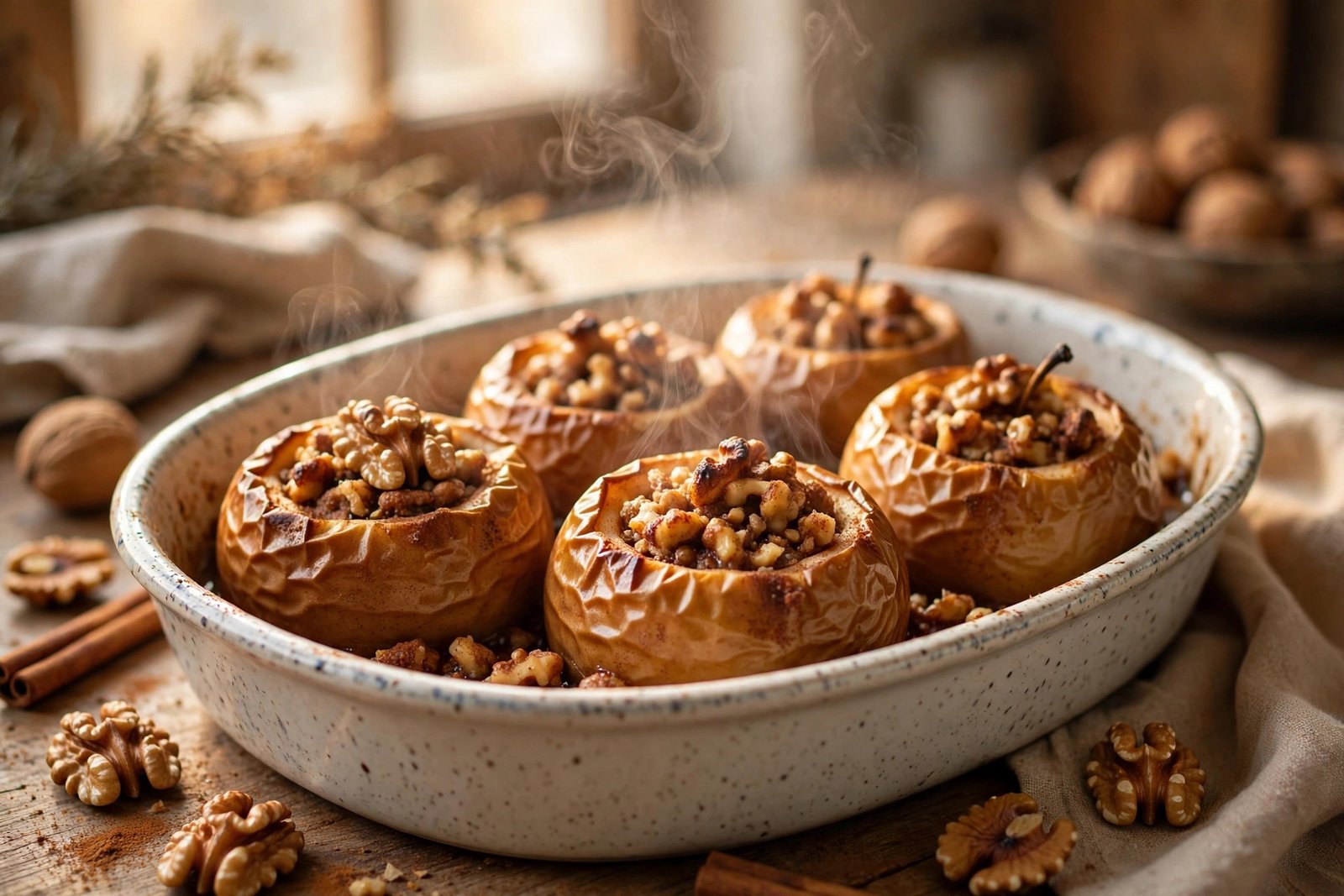
Recipe 2: Baked Cinnamon Apples with Walnuts
Baking concentrates an apple’s natural sweetness, and cinnamon does the rest. This is the easiest dessert in this article and the one that makes the whole house smell wonderful.
Prep time: 10 minutes | Cook time: 30–35 minutes | Serves: 4
Ingredients:
- 4 medium apples (Braeburn or Gala work well)
- 1/4 cup (30 g) chopped walnuts
- 2 tablespoons raisins (optional)
- 1 teaspoon ground cinnamon
- 1 tablespoon butter or coconut oil, melted
- 1/2 teaspoon vanilla extract
Method:
- Heat the oven to 190°C (375°F). Core the apples, leaving the base intact so the filling stays in.
- Mix the walnuts, raisins, cinnamon, melted butter and vanilla in a small bowl.
- Stand the apples in a baking dish and spoon the filling into each one.
- Pour about 1 cm of water into the dish, cover loosely with foil and bake for 30–35 minutes, until the apples are tender when pierced with a knife.
- Serve warm, on their own or with a spoonful of plain Greek yogurt.
Tip: If your apples are very tart, add a few extra raisins — they sweeten as they bake. For a similar naturally sweet breakfast idea, our banana oatmeal pancakes use the same trick of letting ripe fruit do the work.
Recipe 3: Frozen Greek Yogurt Berry Bark
Five minutes of work, a few hours in the freezer, and you have a crisp, creamy snack-dessert that kids love and adults steal from the freezer.
Prep time: 10 minutes | Freeze time: 3–4 hours | Serves: 6
Ingredients:
- 2 cups (500 g) plain Greek yogurt
- 1 cup (150 g) mixed berries (strawberries, blueberries, raspberries)
- 2 tablespoons chopped pistachios
- 1 teaspoon vanilla extract
- 1 tablespoon date paste (optional, for extra sweetness)
Method:
- Line a baking tray with baking paper.
- Stir the vanilla (and date paste, if using) into the yogurt.
- Spread the yogurt about 1 cm thick on the tray.
- Scatter the berries and pistachios evenly over the top, pressing them in lightly.
- Freeze for 3–4 hours until completely firm, then break into shards.
- Store in a sealed container in the freezer for up to 2 weeks. Eat within a few minutes of taking it out — it softens fast.

4 More Sugar Free Desserts (No Recipe Needed)
- Frozen banana bites: Slice a banana, spread with peanut butter, sandwich two slices together, dip in melted dark chocolate and freeze. Ten minutes of work.
- Chia pudding: Our chia seed pudding sets in the fridge with just milk, chia seeds and fruit — naturally sweet with no added sugar at all.
- Roasted pears with cinnamon: Halve pears, dust with cinnamon, roast at 190°C (375°F) for 20 minutes. Serve with yogurt.
- Cocoa-dusted almonds: Toss warm toasted almonds in cocoa powder and a pinch of cinnamon. Sweet, crunchy, and portion-controlled by nature.
If you are cutting back on sugar as part of a wider healthy-eating shift, our guide to the best foods for weight loss explains which everyday foods help you stay full without relying on sweetness.
5 Mistakes That Ruin Sugar Free Desserts
- Swapping honey or agave for sugar and calling it sugar-free. Honey and agave count as added sugars — the FDA is explicit about this. They are not a loophole.
- Forgetting the fat. A little cream, nut butter or avocado gives richness that sugar used to provide. Fat-free and sugar-free together usually tastes like nothing.
- Under-seasoning. Salt, vanilla and cinnamon are not optional extras here — they are what make the sweetness you do have taste bigger.
- Expecting an exact copy of the sugary version. A date-sweetened brownie is delicious, but it is its own dessert. Judge it on its own terms.
- Overdoing sugar alcohols. Large amounts of sorbitol or xylitol can upset digestion. Use them sparingly, especially for children.
FAQs
Are sugar free desserts safe for people with diabetes? They can be a better choice than sugary desserts because they avoid added sugar, but fruit and dates still contain natural sugars that affect blood glucose. This article is general information, not medical advice — if you manage diabetes, check with your doctor or dietitian before changing your diet.
Do sugar free desserts actually taste sweet? Yes, when they are built around naturally sweet ingredients. Ripe fruit, dates and roasted apples are genuinely sweet; cocoa, cinnamon and vanilla make that sweetness taste stronger. What they do not taste like is a spoonful of white sugar — and that is the point.
Can I use honey instead of sugar in these recipes? You can, but the dessert would no longer be sugar free — honey counts as an added sugar. If your goal is simply less refined sugar, honey works in small amounts, but the recipes above are designed to work without it.
How long does chocolate avocado mousse keep? Covered in the fridge, up to 2 days. The cocoa and a squeeze of lemon (optional) slow browning, but it is best eaten the same day for colour and flavour.
What is the best sweetener for baking without sugar? For most home baking, mashed ripe banana or date paste gives the best flavour and texture, because they replace sugar’s moisture as well as its sweetness. Stevia and monk fruit work well in no-bake recipes but can taste thin in cakes, where bulk matters.
Conclusion
Sugar free desserts work when you stop trying to imitate sugar and start using ingredients that are sweet in their own right. Start with the chocolate avocado mousse — it takes ten minutes, uses five ingredients, and it is the recipe most likely to change someone’s mind about sugar-free food. Then keep the baked apples in your back pocket for cold evenings and the yogurt bark in the freezer for warm ones. Sweetness was never only about sugar; it was about flavour, and flavour is still there.
This article is general food information, not medical advice. If you have diabetes or another condition affected by sugar intake, speak to your doctor or a registered dietitian.
Related Posts

Quick Dinner Recipes Under 30 Minutes: 9 Easy & Delicious Time-Saving Meals
Quick dinner recipes under 30 minutes are essential for busy weeknights. Discover our top 9 easy, healthy, and time-saving meal…
Sweet Potato Bread: A Moist, Spiced Loaf from Leftover Mash
Sweet Potato Bread: A Moist, Spiced Loaf from Leftover Mash Sweet potato bread starts, in most kitchens, with a bowl…
Roasted Vegetables with Baked Salmon: One-Pan Dinner
Roasted Vegetables with Baked Salmon: One-Pan Dinner The best weeknight dinners are not recipes. They are systems — a method…