What to Cook for Dinner? Answer These 3 Questions First
It is 5:30 in the evening. You are standing in front of the fridge, the door open, staring at the same shelves as yesterday, and the question arrives on schedule: what to cook for dinner? It is not that you cannot cook. Choosing what to cook, every single night, is exhausting — and on tired nights, the decision itself is the hardest part of the meal. As a result, the same question comes back every evening.
So this guide does not start with a list of recipes. It starts with three questions that take about thirty seconds to answer, and the answers point you straight at tonight’s dinner. No scrolling through fifty ideas, no special shopping trip, no ingredient you do not have. Answer the questions, find your row in the table, cook the dinner that matches.
Question 1: How much time do you actually have?
Be honest, not optimistic. “Fifteen minutes” means fifteen minutes until food is on the table — not fifteen minutes plus chopping and waiting for the oven. Under fifteen minutes, you need food already cooked or nearly instant: eggs, tinned beans, pasta, frozen vegetables, a pouch of microwave rice. For example, an hour-long traybake is not a fifteen-minute dinner.
Thirty minutes opens up a stir-fry, a one-pan pasta or a traybake. An hour is the night for a slow-cooked stew or a roast.
Most weeknights, the honest answer is fifteen to thirty minutes. That is normal, and it is enough: the three recipes below all fit inside it. If your answer is “no time at all”, tonight is a sandwich-and-soup night — a perfectly good dinner too. For more fast ideas, our quick dinner recipes under 30 minutes collection is built for exactly this situation. Above all, be realistic about the time you truly have.
Question 2: What is already in the fridge?
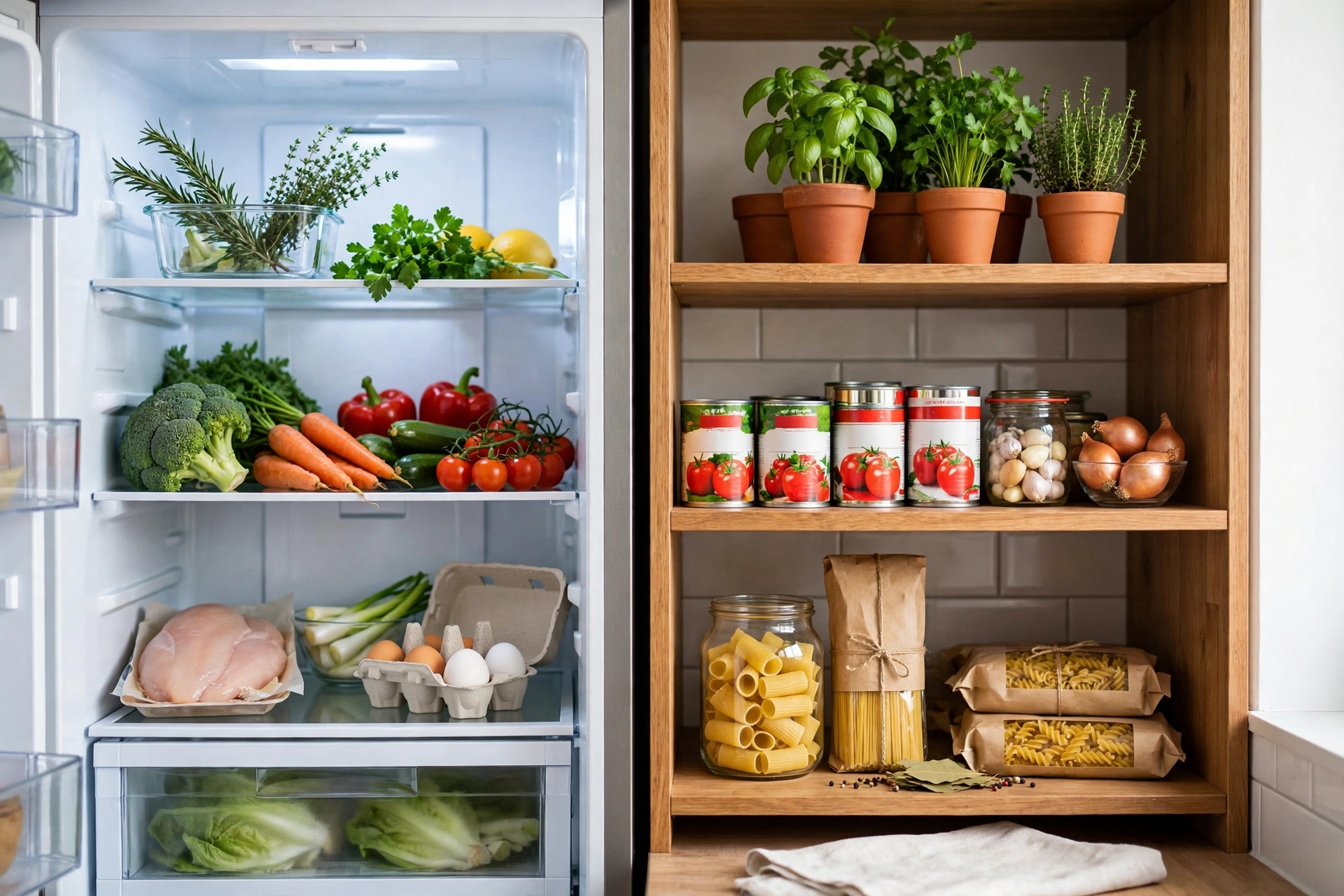
Good cooks start with what they have, not with a recipe. Open the fridge and the cupboard, and look for the anchors: For instance, a tin of tomatoes can become dinner in ten minutes.
- Eggs: an omelette, egg fried rice, or a frittata with whatever vegetables are left.
- Chicken: a stir-fry, a traybake, or sliced chicken in a soy and honey sauce over rice.
- Tinned tomatoes and beans: a bean and tomato skillet, a chilli, or a ten-minute pasta sauce.
- Pasta and a tin of tuna: tuna pasta with chilli and lemon, from a nearly empty cupboard.
- Leftover rice: egg fried rice — day-old rice fries better, because it is drier.
If there is genuinely nothing in the house, the answer is the shop on the corner: pasta, a jar of sauce, a bag of salad and some bread, cooked in twenty minutes. That counts — dinner does not have to be impressive to be dinner. In short, a simple shop-bought dinner still counts as dinner.
Question 3: Who is eating tonight?
The third question changes everything. Cooking for one is different from cooking for a family, and cooking for children is different again. A dinner that works for a tired adult alone — a spicy noodle bowl, a big salad — can be wrong for a table with a five-year-old. In fact, the same ingredients can feed one person or a family.
For children, keep flavours mild and let them build their own plate: chicken, rice and vegetables to take as they like, or a pasta bake they can help assemble. With a partner or a guest, one dish that looks like you tried goes further than three complicated courses. For one person, cook a proper portion and save the rest: tomorrow’s lunch is already made. See our easy recipes guide for five fifteen-minute dinners.
The decision table: what to cook for dinner tonight
Put the three answers together:
- 15 minutes + eggs or rice + anyone: egg fried rice or a vegetable omelette with toast.
- 30 minutes + chicken + family: chicken and vegetable stir-fry with rice, or a traybake.
- 30 minutes + mince + family: meatballs in tomato sauce, or a quick chilli with rice.
- 30 minutes + beans or lentils + anyone: a bean and tomato skillet, or red lentil soup.
If no row fits, cook the nearest one and change a single ingredient. The table is a starting point, not a rule book. Similarly, you can swap one ingredient without changing the meal.
Recipe 1: Chicken and vegetable stir-fry (30 minutes)
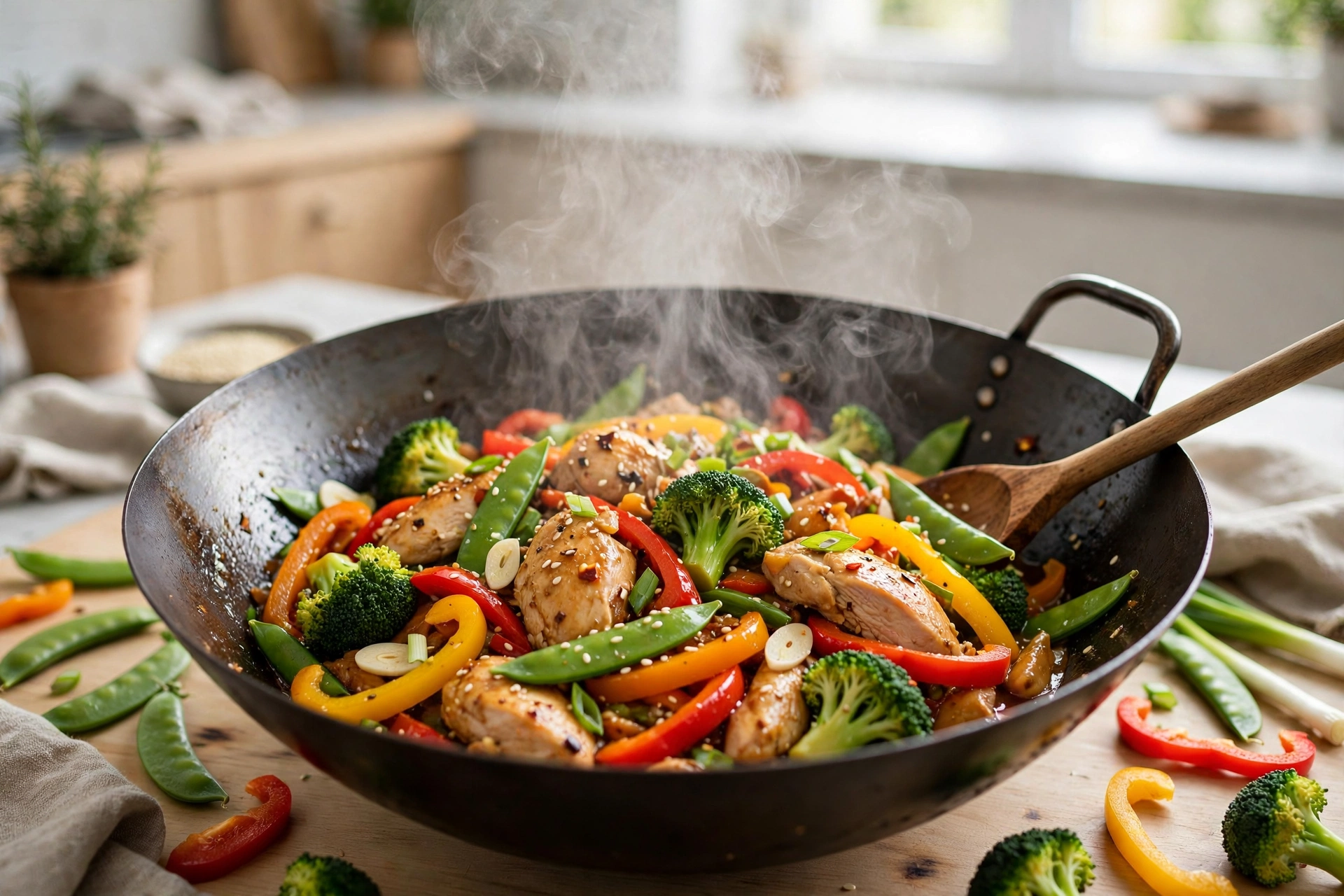
The stir-fry is the great all-rounder of weeknight cooking: fast, flexible, and happy with almost any vegetable. The trick is heat — a very hot pan, everything chopped before the hob goes on. In fact, it works with almost any vegetable in the fridge.
Prep: 10 minutes | Cook: 15 minutes | Serves: 3–4
Ingredients
- 500 g chicken breast, sliced into thin strips
- 1 red pepper, sliced
- 1 head of broccoli, cut into small florets
- 150 g snap peas or green beans
- 3 tablespoons soy sauce
- 1 tablespoon honey
- 1 tablespoon vinegar or lemon juice
- 2 garlic cloves, minced
- 1 tablespoon grated fresh ginger
- 2 tablespoons oil
- Cooked rice or noodles, to serve
Method
- Mix the soy sauce, honey, vinegar, garlic and ginger in a small bowl and keep it by the hob.
- Heat half the oil in a large wok over high heat. Cook the chicken in a single layer for 4–5 minutes until golden, then set aside.
- Add the remaining oil and stir-fry the broccoli and pepper for 3 minutes, then the snap peas for 1 minute.
- Return the chicken, pour in the sauce, and toss for 1–2 minutes until everything is glossy. Serve over rice or noodles.
Food safety note: chicken must be cooked through to the centre, with no pink meat. The USDA advises cooking chicken to 74°C (165°F) USDA Food Safety and Inspection Service. Slicing the chicken thin is what makes this a thirty-minute recipe — thick pieces need longer.
Recipe 2: Baked pasta with tomato and cheese (30 minutes)
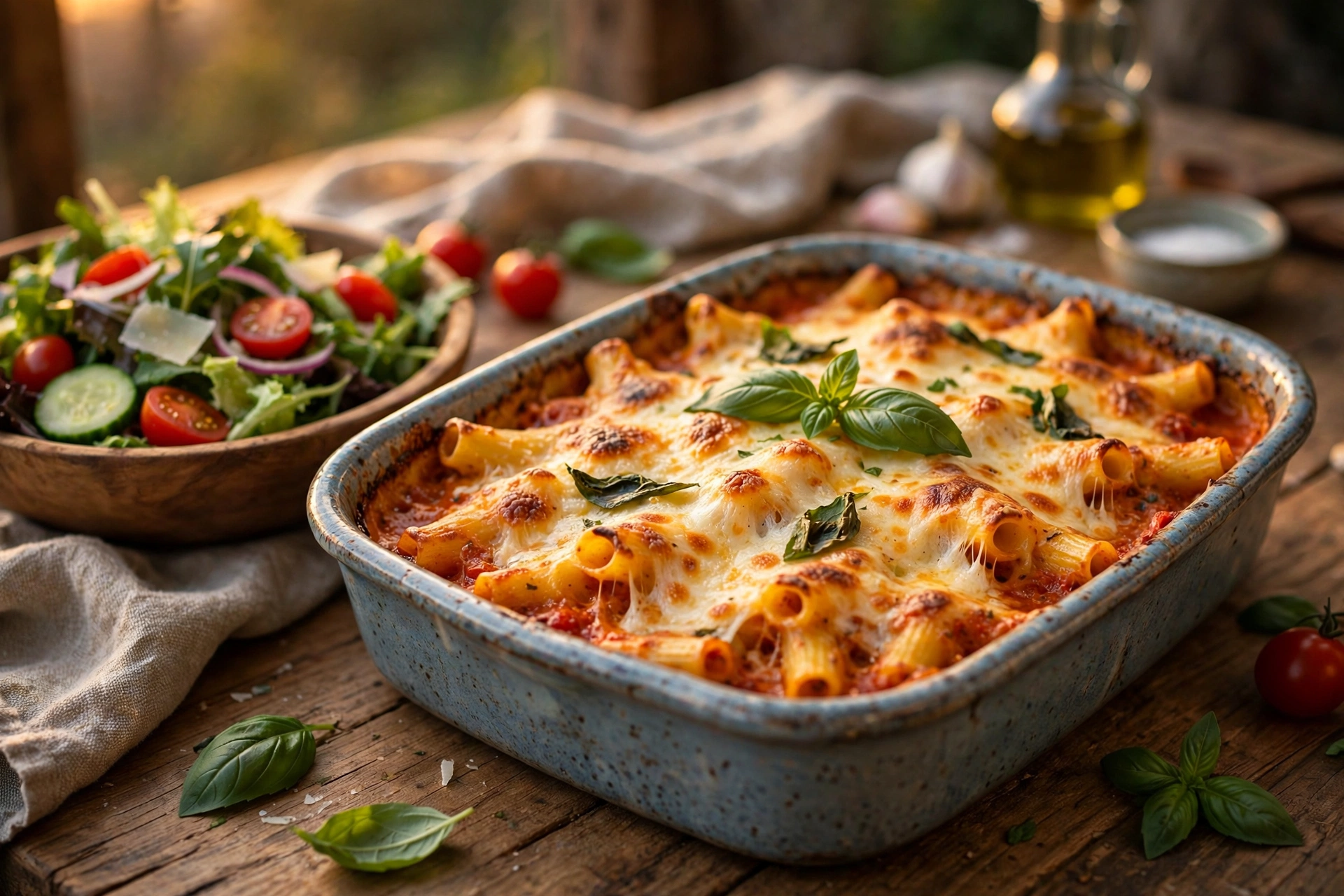
When the house is busy and you want the oven to do the work, a baked pasta is the answer: store-cupboard ingredients, a family fed, and excellent leftovers for tomorrow. For example, it suits nights when everyone eats at different times.
Prep: 10 minutes | Cook: 25 minutes | Serves: 4
Ingredients
- 300 g short pasta, such as penne or rigatoni
- 1 jar (about 500 g) tomato pasta sauce, or 1 can of chopped tomatoes simmered with garlic and oregano
- 150 g grated mozzarella
- 50 g grated Parmesan or a hard cheese
- 150 g spinach or frozen peas
- 1 teaspoon dried oregano
- Salt, black pepper and olive oil
- Fresh basil, to serve
Method
- Heat the oven to 200°C (400°F). Cook the pasta in salted water until just tender, then drain — keep it slightly underdone, as it cooks more in the oven.
- Mix the pasta with the sauce, spinach or peas, half the mozzarella and the oregano, and season well.
- Tip into a baking dish, top with the remaining mozzarella and the Parmesan, and drizzle with olive oil.
- Bake for 20–25 minutes until golden and bubbling. Rest for 5 minutes before serving, so it holds together when you spoon it out.
Make it yours: add cooked chicken, tinned tuna or sliced sausage; swap the spinach for roasted vegetables; or use a white sauce instead of tomato. The same one-dish logic powers our one pot meals collection.
Recipe 3: Egg fried rice, the ten-minute rescue (15 minutes)
Some nights the answer is whatever is fastest, and egg fried rice is the fastest proper dinner there is. Day-old rice works best, but a pouch of microwave rice works too — spread it on a plate and let it cool first so it fries instead of steaming. Above all, it uses what is already in the cupboard.
Prep: 5 minutes | Cook: 8 minutes | Serves: 2
Ingredients
- 2 eggs, beaten with a pinch of salt
- 2 cups cooked rice, cooled
- 1 tablespoon oil
- 100 g frozen peas and carrots, or any frozen mixed vegetables
- 1 tablespoon soy sauce
- 1 spring onion, sliced
- Sesame oil or chilli sauce, to finish
Method
- Heat the oil in a large pan over high heat. Scramble the eggs quickly, break them into small pieces, and scoop them out.
- Cook the vegetables in the same pan for 2 minutes, then add the rice and stir-fry for 2–3 minutes, pressing it flat so it crisps.
- Return the egg, add the soy sauce and spring onion, and toss for 1 minute.
- Taste, adjust the seasoning, and serve immediately with chilli sauce on the side.
What to cook for dinner when nothing sounds good
Some nights no recipe appeals, and that is not a cooking problem — it is a tiredness problem. Lower the bar deliberately: soup and toast is dinner, a cheese omelette and a salad is dinner, a tin of beans on toast with a fried egg is dinner — and a perfectly respectable one. The goal is to eat something warm and decent, not to produce a meal worth photographing. In that case, lower the bar and cook something simple.
Keep a short list of five dinners you can cook without thinking stuck on the fridge, and choose from five, not from the whole internet.
Frequently asked questions
What should I cook for dinner when I have no time?
Choose food that is already cooked or cooks in minutes: egg fried rice, a vegetable omelette, tuna pasta, or soup with toast. Keep the ingredients for two or three of these stocked.
How do I decide what to cook for dinner every night?
Ask three questions: how much time do I have, what is in the fridge, and who is eating. Then match the answers to the decision table above. Planning the week’s dinners on Sunday removes the daily decision entirely.
What is a healthy dinner I can make in 30 minutes?
A chicken and vegetable stir-fry with rice, a bean and tomato skillet, or a traybake with chicken and roasted vegetables. All three combine protein, vegetables and a starchy base in one dish.
What can I cook for dinner with chicken and rice?
Stir-fry it with vegetables and a soy and honey sauce, bake it with rice and stock in one tray, or slice it over a rice bowl with cucumber and herbs. The stir-fry in this guide is the fastest.
How do I stop getting bored of the same dinners?
Change one element, not the whole dish: a different sauce, a different herb, a different grain. Chilli over rice on Monday and in a wrap on Wednesday tastes like two different meals. Rotating five or six core dinners keeps the week varied.
Final word on what to cook for dinner
What to cook for dinner is rarely a question about cooking. It is a question about deciding — and deciding gets easier when the decision is small. Three questions, thirty seconds, one row in the table. Cook the dinner that matches tonight, and save experimenting for nights when you have the energy for it. Dinner does not need to be impressive. It needs to be on the table. In the end, a small decision beats a perfect recipe.
Source: USDA Food Safety and Inspection Service, Chicken Food Safety
Source: USDA MyPlate