Learn how to make the best au jus recipe from scratch or drippings. Rich, savory, and restaurant-quality — perfect for prime rib, French dip, and more.
The Best Au Jus Recipe You’ll Ever Make (Rich, Silky & Ready in 20 Minutes
There’s a moment at the dinner table — usually when someone picks up a French dip sandwich and dunks it into that glossy, dark, beefy liquid — where conversation just… stops. That’s the power of a great au jus.
If you’ve only ever tasted it from a powder packet, you’re genuinely missing out. Homemade au jus is in a completely different league. It’s deep, savory, slightly winey, and has this silky body that coats your tongue in the best way possible. And the truth is, it’s not complicated at all. You just need to understand what au jus actually is — and what it isn’t.
This guide is going to walk you through everything: the classic au jus recipe using beef drippings, a no-drippings version for weeknights, pro-level flavor tips, and the common mistakes that turn a great sauce into a thin, salty disappointment. Let’s get into it.
What Is Au Jus? (And What It’s Not)
“Au jus” is a French culinary term that literally translates to “with juice” — specifically, the natural juices released by meat as it cooks. In American cooking, it’s evolved into a thin, savory dipping sauce served alongside roasted beef dishes, particularly prime rib and French dip sandwiches.
Here’s what trips people up: au jus is not gravy.
Gravy is thickened with flour or cornstarch and has a heavier, more opaque consistency. Au jus stays light and pourable — it’s almost broth-like but with a much more concentrated, complex flavor. Think of it as the soul of the roast in liquid form.
It should be:
- Deeply beefy and savory
- Lightly glossy but still thin
- Rich without being heavy
- Balanced — not too salty, not too acidic
Get those four things right, and you’ve nailed it.
Ingredients You’ll Need
The beauty of a great au jus recipe is that it doesn’t need a long grocery list. What it does need is quality.
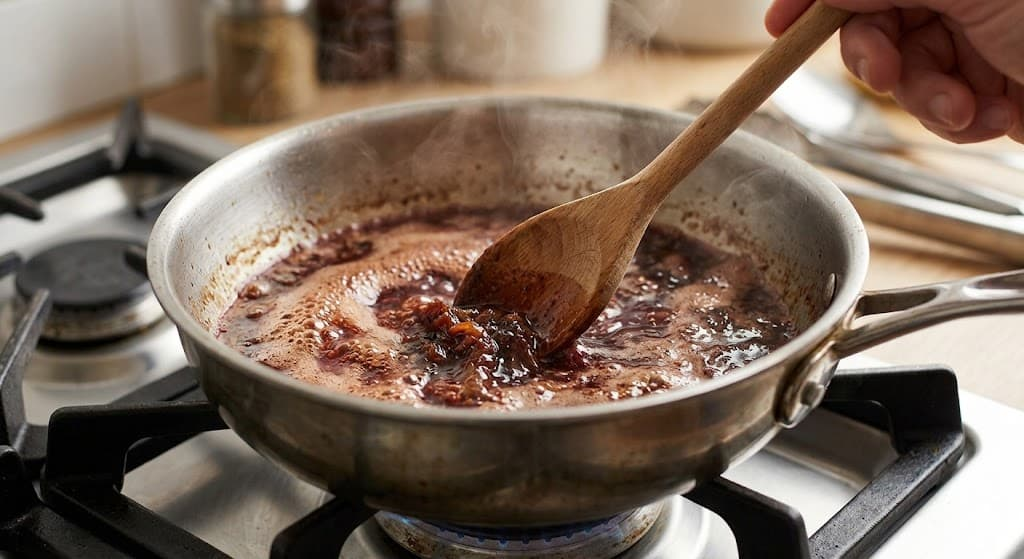
For Classic Au Jus (With Drippings)
- Beef drippings — the pan drippings from a prime rib or roast (about ¼ cup)
- Shallots or yellow onion — 2 shallots or ½ small onion, finely sliced
- Garlic — 2–3 cloves, smashed
- Dry red wine — ½ cup (Cabernet Sauvignon or Merlot works beautifully)
- Beef broth — 2 cups, preferably low-sodium
- Worcestershire sauce — 1 teaspoon
- Fresh thyme — 2 sprigs (or ¼ tsp dried)
- Black pepper — freshly cracked, to taste
- Salt — only if needed at the end
For Au Jus Without Drippings
- Unsalted butter — 2 tablespoons
- Olive oil — 1 tablespoon
- Shallots — 2, finely diced
- Garlic — 3 cloves, minced
- Tomato paste — 1 teaspoon (the secret weapon — more on this below)
- Dry red wine — ½ cup
- Beef broth — 2 cups, high quality
- Worcestershire sauce — 1½ teaspoons
- Soy sauce — ½ teaspoon (adds umami without tasting “Asian”)
- Fresh thyme — 2 sprigs
- Bay leaf — 1
- Black pepper — to taste
Pro Ingredient Note: The quality of your beef broth matters enormously here. If your broth tastes thin and metallic from the carton, your au jus will too. Look for brands with a short ingredient list, or better yet, use homemade beef stock. Brands like Kettle & Fire or Pacific Foods are solid store-bought choices.
Classic Au Jus Recipe (With Drippings)
This is the version you make on prime rib night. It uses everything the roast left behind in the pan, and that’s exactly where all the magic lives.
Step-by-Step Instructions
Step 1: Degrease the drippings. After removing your roast from the pan, pour the drippings into a fat separator or a glass measuring cup. Let it settle for a few minutes. The fat will rise to the top. Spoon off most of the fat, but leave about 2 tablespoons behind — that fat is flavor.
Step 2: Sauté the aromatics. Place your roasting pan directly over two burners on medium heat (or transfer drippings to a saucepan). Add the shallots and garlic to the pan. Cook for 2–3 minutes until softened and fragrant. They’ll pick up all those gorgeous browned bits on the bottom of the pan.
Step 3: Deglaze with wine. Pour in the red wine and let it sizzle. Use a wooden spoon to scrape up every single bit of the browned fond from the bottom of the pan. Those caramelized bits are concentrated beef flavor — don’t leave any behind. Simmer the wine for 2–3 minutes until reduced by about half.
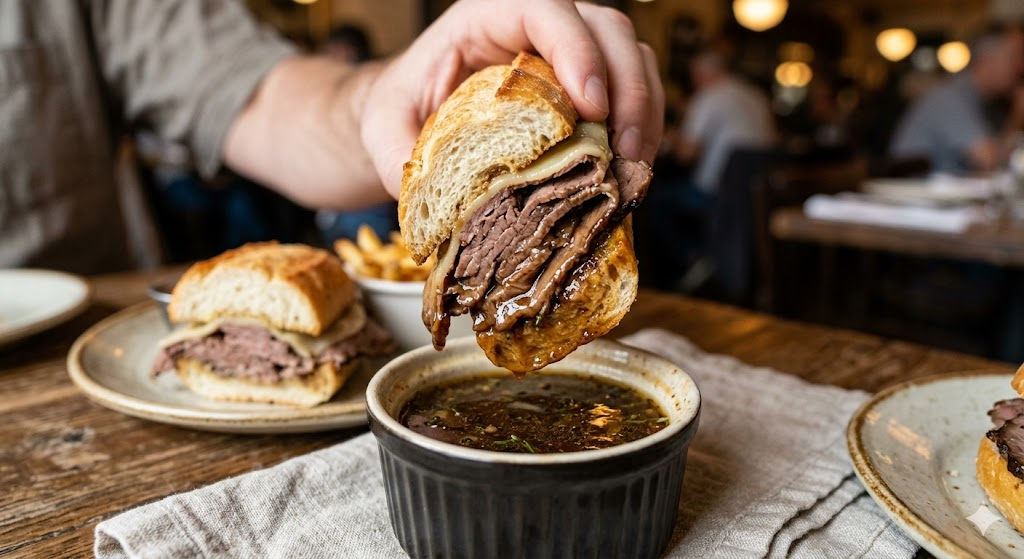
Step 4: Add broth and seasonings. Pour in the beef broth, Worcestershire sauce, and thyme. Stir everything together and bring to a simmer over medium-high heat.
Step 5: Simmer and strain. Let the sauce simmer uncovered for 8–10 minutes. It should reduce slightly and deepen in color. Taste and adjust salt and pepper. Strain through a fine-mesh sieve into a warmed serving vessel.
Yield: About 1½ cups | Total Time: 20 minutes
Au Jus Recipe Without Drippings
No roast? No problem. This version builds the same deep flavor from scratch using pantry staples and a few smart techniques.
Step-by-Step Instructions
Step 1: Build your flavor base. In a medium saucepan, melt butter with olive oil over medium heat. Add shallots and cook for 3–4 minutes until they start to turn golden. Add garlic and cook for another 60 seconds.
Step 2: Add tomato paste. Push the aromatics to the side and add the tomato paste directly to the pan. Let it cook, undisturbed, for 1–2 minutes. You’ll see it darken slightly — this is the Maillard reaction at work, adding color and roasted depth. Stir it in with the aromatics.
Step 3: Deglaze. Add the wine and let it bubble vigorously. Stir to combine everything. Reduce by half, about 3 minutes.
Step 4: Add broth, Worcestershire, soy sauce, and herbs Pour in the beef broth along with the Worcestershire sauce, soy sauce, thyme, and bay leaf. Stir and bring to a gentle boil.
Step 5: Simmer, taste, and strain. Reduce the heat and simmer for 10–12 minutes. Remove the thyme and bay leaf. Taste carefully — adjust with salt and pepper as needed. Strain through a fine-mesh sieve.
Yield: About 1½ cups | Total Time: 25 minutes
How to Get That Deep, Restaurant-Quality Color
One of the most common frustrations home cooks have is ending up with au jus that looks pale and watery. Here’s how the pros get that gorgeous dark mahogany color:
1. Don’t Skip the Fond
The browned bits stuck to the bottom of your roasting pan (the fond) are pure concentrated flavor and color. Deglazing properly — with enough liquid and enough scraping — is non-negotiable.
2. Use Tomato Paste and Cook It First
Even a single teaspoon of tomato paste, cooked until it darkens in the pan, adds incredible depth and a reddish-brown hue. It sounds odd, but you won’t taste “tomato” at all.
3. Choose Your Wine Carefully
A dry red wine with good body — Cabernet Sauvignon, Merlot, Syrah — will add color and complexity. Avoid “cooking wine” from the vinegar aisle. If you wouldn’t drink it, don’t cook with it.
4. Give It Time to Reduce
Rushing the simmer is the fastest way to get thin, flavorless au jus. Those 10 minutes of simmering concentrate everything — the beef proteins, the wine tannins, the aromatics. Let it happen.
5. A Tiny Splash of Soy Sauce
This is a chef’s secret. Just ¼ to ½ teaspoon of soy sauce won’t make it taste Asian — it adds a dark, umami richness that mimics the depth you’d get from long-roasted bones. Use it sparingly.
What to Serve with Au Jus
Au jus is incredibly versatile. Here’s where it really shines:
- Prime Rib — The classic pairing. Serve it warm in a small ramekin or gravy boat on the side.
- French Dip Sandwiches — Thinly sliced roast beef on a hoagie roll, with au jus for dunking. Non-negotiable.
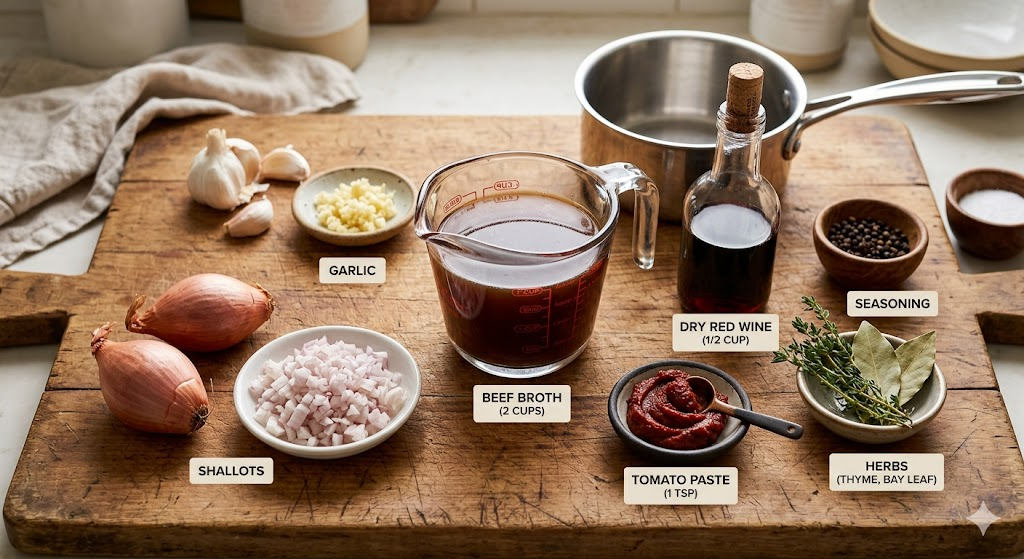
- Beef Tenderloin — Drizzled over sliced tenderloin for an elegant dinner presentation.
- Pot Roast — Use it as a braising liquid or finishing sauce.
- Roast Beef Sliders — Perfect for parties and game day spreads.
- Yorkshire Pudding — A classic British pairing; pour warm au jus over the puddings tableside.
Expert Tips for the Best Au Jus
These are the details that separate a good au jus from one that people ask you about for years.
✦ Always use low-sodium broth. You’re reducing this liquid, which concentrates salt. Starting with regular sodium broth almost always leads to an oversalted final product. Control salt at the very end.
✦ Warm your serving vessel. Au jus cools down fast. Pour boiling water into your gravy boat, let it sit for a minute, then dump it out before adding the au jus. Sounds small, makes a real difference.
✦ Don’t boil vigorously. A gentle simmer extracts flavor and reduces properly. Hard boiling makes the sauce cloudy and can make it bitter.
✦ Taste three times. Once before adding broth (check your fond/wine reduction), once after simmering, and once right before serving. Flavors change as they concentrate.
✦ A cold knob of butter at the end (optional). If you want a slightly richer, glossier finish — a technique called monter au beurre — whisk in ½ tablespoon of cold unsalted butter just before straining. It adds a subtle silkiness without making it a gravy.
✦ Fresh herbs over dried when possible. Dried herbs can add a slightly medicinal, dusty flavor in a quick sauce. Fresh thyme or rosemary sprigs bloom beautifully in the simmering liquid and can simply be fished out before serving.
Common Mistakes to Avoid
Even experienced home cooks make these errors. Knowing them in advance saves you from a disappointing sauce.
❌ Mistake 1: Not Deglazing Properly
Pouring broth directly into the pan without scraping up the fond wastes the most flavorful part of your drippings. Always deglaze with wine or broth first, and scrape aggressively.
❌ Mistake 2: Using the Wrong Broth
Thin, artificially flavored broth produces thin, artificial-tasting au jus. Invest in quality broth — or make your own beef stock on the weekend and freeze it. The difference is dramatic.
❌ Mistake 3: Thickening It
The moment you add flour or cornstarch, you’ve made gravy. Au jus is meant to be thin and pourable. The richness comes from reduction and quality ingredients, not thickeners.
❌ Mistake 4: Over-salting Early
Worcestershire sauce, soy sauce, and broth all contain sodium. Never season aggressively until the sauce has reduced and you’ve tasted the final result. You can always add salt; you can’t take it out.
❌ Mistake 5: Skipping the Strain
Small bits of shallot, garlic, and herb stems left in the sauce create an unpleasant texture. Always strain through a fine-mesh sieve for a clean, silky result.
❌ Mistake 6: Making It Too Far in Advance
Au jus is best served fresh. If you must make it ahead, store it in the fridge and reheat gently, but don’t let it sit for days. The flavor diminishes.
Pros & Cons of Homemade vs. Store-Bought Au Jus
Homemade Au Jus
Pros:
- Dramatically better flavor — deeper, more complex, more nuanced
- No artificial additives or preservatives
- Customizable to your taste preferences
- Uses ingredients already in your kitchen
- Incredible with roast drippings
Cons:
- Requires a roast (for drippings version) or quality broth
- Takes 20–25 minutes of active attention
- Results vary slightly depending on broth quality
Store-Bought / Packet Mix
Pros:
- Extremely convenient and fast
- Consistent results every time
- Very affordable
Cons:
- High sodium content (often 600mg+ per serving)
- Artificial flavors and colorings
- Thin, one-dimensional taste
- No comparison to the real thing
Verdict: For a casual weeknight French dip? A packet is fine. For prime rib night or a dinner party? Make it from scratch. It’s 20 minutes, and the difference is night and day.
FAQs About Au Jus
Q1: What’s the difference between au jus and beef broth?
Au jus is made from beef broth (or drippings) but is much more concentrated, flavorful, and complex. Beef broth is the base ingredient; au jus is the finished sauce. Au jus typically includes aromatics, wine, and Worcestershire sauce cooked and reduced together, giving it a depth that plain broth simply doesn’t have.
Q2: Can I make au jus without wine?
Absolutely. Replace the wine with an equal amount of beef broth and add an extra teaspoon of Worcestershire sauce plus a small splash of balsamic vinegar. The balsamic provides similar acidity and depth. You won’t lose much — the sauce will still be delicious.
Q3: How do I store and reheat leftover au jus?
Store cooled au jus in an airtight container in the refrigerator for up to 4 days, or freeze it for up to 3 months. Reheat gently on the stovetop over low heat, stirring occasionally. Don’t microwave it at high power — it can alter the flavor. If it thickens slightly in the fridge, just whisk it as it warms.
Q4: Is au jus gluten-free?
The base recipe can be gluten-free, but Worcestershire sauce sometimes contains malt vinegar (which contains gluten). Check your label, or use a certified GF Worcestershire brand like Lea & Perrins (US version) or Annie’s. Also, verify your beef broth is GF-certified.
Q5: Can I make au jus with chicken or pork drippings?
Yes — and it’s wonderful. Use the same technique with drippings from a roasted chicken or pork loin, swap red wine for white wine or dry sherry, and use chicken broth instead of beef broth. The result is a lighter-colored but equally delicious jus perfect for poultry or pork.
Final Verdict
Au jus is one of those sauces that sounds more complicated than it is. Once you understand the fundamentals — good drippings or broth, aromatics, wine, proper reduction, and smart seasoning — you’ll never reach for a powder packet again.
The key takeaways:
- Use quality broth (or real drippings) as your foundation
- Deglaze thoroughly to capture every bit of browned flavor
- Simmer patiently — don’t rush the reduction
- Season at the end — never at the beginning
- Strain before serving for a clean, elegant finish
Whether you’re making it for a holiday prime rib, a casual French dip, or just because you have leftover roast beef in the fridge, this recipe will deliver. It’s the kind of simple thing that makes everything around it taste better — and that’s really what great cooking is about.

Related Posts
5-Minute Quick Recipe Jalbiteworldfood – Bold Global Fusion Bowl
Discover this quick recipe jalbiteworldfood ready in 5 minutes! A healthy, bold global fusion bowl packed with protein. Perfect for…
Healthy Paneer Recipes: 15 High-Protein Desi Dishes
Discover 15 healthy paneer recipes — grilled, baked & low-oil. High protein, nutritious & delicious Indian dishes perfect for lunch,…
The Ultimate Stone Crab Mustard Sauce Recipe: Culinary Science & Expert Guide
Unlock the professional secrets of the stone crab mustard sauce recipe. Learn the science of mustard emulsions and how to…