Easy Dinner Recipes for One: 5 Dinners in 25 Minutes or Less
Cooking dinner for one has a problem nobody talks about: most recipes serve four. Halving a recipe is fiddly, leftovers pile up, and by Thursday the same chicken has appeared three times. So people who live alone either cook far too much, eat the same thing for days, or give up and order in.
It does not have to be that way. The trick is not smaller recipes — it is a formula. Every dinner below follows the same shape: one protein, one vegetable, one base, cooked in one pan or tray, in twenty-five minutes or less. Learn it once and you can build a different dinner from whatever is in the fridge, with almost no waste. Three recipes are written out in full; two more need no recipe at all.
The formula: one protein, one vegetable, one base
Almost every good solo dinner is a combination of three things. Pick one from each list and you have dinner.
Protein: chicken breast or thigh, shrimp, eggs, tinned tuna, chickpeas, tofu, or a small piece of salmon.
Vegetable: broccoli, green beans, peppers, cherry tomatoes, spinach, peas, courgette, or mushrooms — whatever is in the fridge.
Base: pasta, rice, a wrap, crusty bread, or a baked potato.
Then pick a flavour: garlic and butter, soy and honey, lemon and herbs, chilli and lime, or tomato and oregano. That is the whole system — the same chicken with broccoli and rice in a soy and honey sauce is one dinner, and with peppers and a wrap in a lemon and herb dressing it is a completely different one. The three recipes below show the formula in action. For more dinners in the same time bracket, see our quick dinner recipes under 30 minutes.
Recipe 1: Garlic butter shrimp pasta (15 minutes)
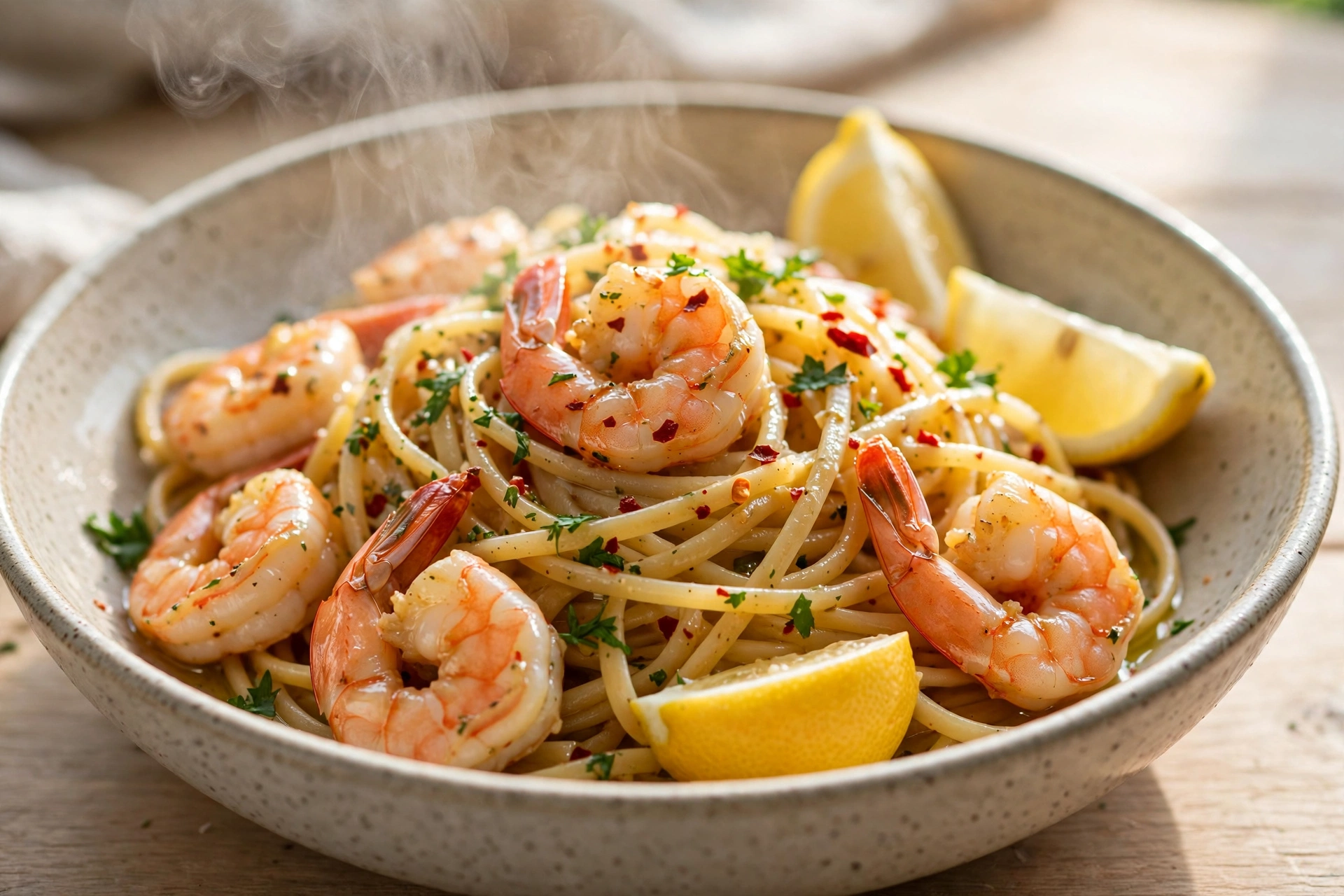
This is the dinner for when you want a treat in fifteen minutes. Shrimp cook in three minutes, the sauce is just butter, garlic and lemon, and the pasta water thickens it. Double it and you have tomorrow’s lunch.
Prep: 5 minutes | Cook: 10 minutes | Serves: 1 (easily doubled)
Ingredients
- 100 g spaghetti or linguine
- 150 g raw peeled shrimp
- 2 garlic cloves, thinly sliced
- 1 tablespoon butter
- 1 tablespoon olive oil
- A pinch of chilli flakes
- Juice of half a lemon
- A small handful of fresh parsley, chopped
- Salt and black pepper
Method
- Cook the pasta in salted water until just tender. Before draining, scoop out a mug of the starchy pasta water — that is the sauce.
- While the pasta cooks, heat the oil in a wide pan over medium-high heat. Cook the shrimp for 2–3 minutes, turning once, until pink all the way through. Take them out.
- Lower the heat, melt the butter, and cook the garlic and chilli flakes for 30 seconds — no longer, or the garlic turns bitter.
- Add the drained pasta, a splash of the pasta water and the lemon juice. Toss for a minute until the sauce clings to the pasta, then return the shrimp and the parsley.
- Season, taste, and serve.
Make it yours: swap the shrimp for sliced chicken or mushrooms, add spinach at the end, or use lime and chilli instead of lemon. The method never changes — only the protein does.
Recipe 2: Sheet-pan chicken and vegetables (25 minutes)
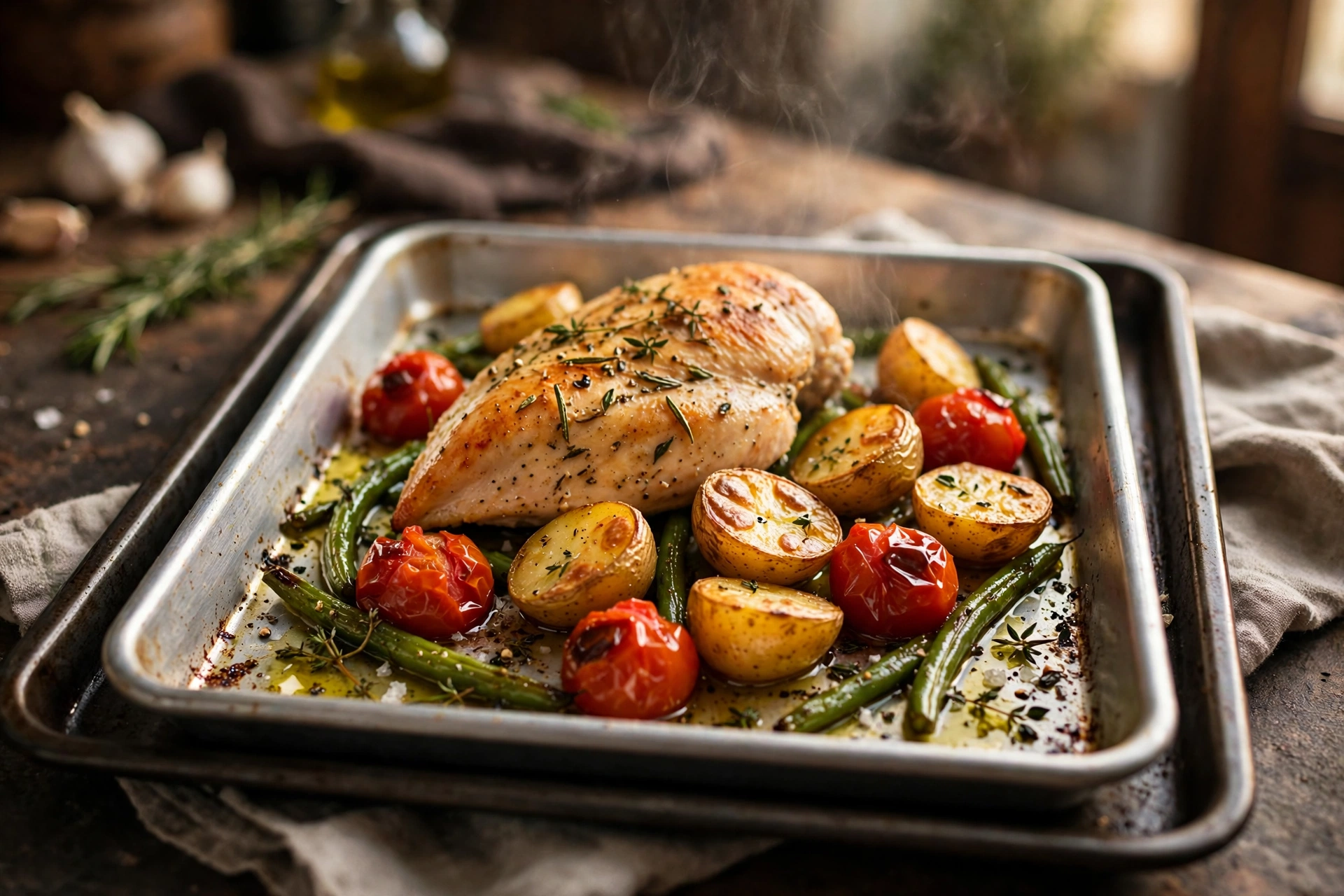
When you do not want to stand at the hob, the sheet pan is your friend. Everything roasts together, the chicken stays juicy, and the only washing-up is one tray and one plate. Use a small tray: food spread on a big tray dries out, while a small tray keeps everything close and moist.
Prep: 5 minutes | Cook: 20 minutes | Serves: 1
Ingredients
- 1 chicken breast (about 180 g), sliced in half horizontally so it cooks evenly
- 8 cherry tomatoes, halved
- A handful of green beans, trimmed
- 4–5 baby potatoes, halved
- 1 tablespoon olive oil
- 1 teaspoon dried oregano or mixed herbs
- 1/2 teaspoon garlic powder
- Salt and black pepper
- Lemon wedge, to serve
Method
- Heat the oven to 200°C (400°F). Toss the potatoes, tomatoes and green beans with half the oil and a pinch of salt on a small baking tray.
- Rub the chicken with the remaining oil, oregano, garlic powder, salt and pepper, and lay it on top of the vegetables.
- Roast for 18–20 minutes until the chicken is cooked through with no pink meat and the potatoes are golden at the edges.
- Rest for 3 minutes, squeeze over the lemon, and eat from the tray or a plate.
Food safety note: chicken must be cooked through to the centre. The USDA advises cooking chicken to 74°C (165°F), and slicing the breast in half first is what keeps a single portion cooking in twenty minutes USDA Food Safety and Inspection Service. If you cannot decide what to cook at all, our guide on what to cook for dinner answers three quick questions and points you at the right recipe.
Recipe 3: Egg fried rice (10 minutes)
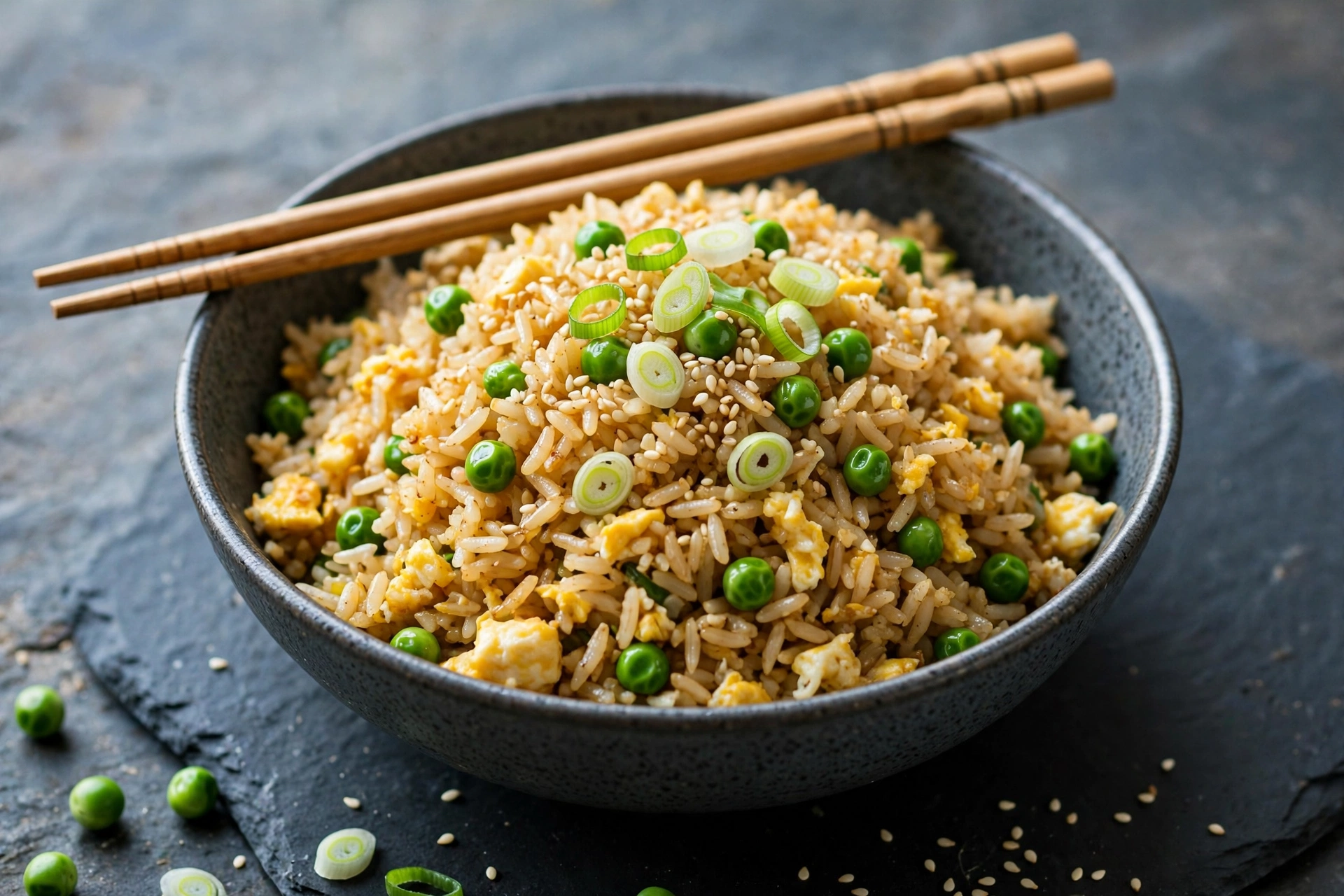
Some nights the answer is whatever is fastest, and egg fried rice is the fastest proper dinner. Day-old rice works best because it is drier and fries instead of steaming, but a pouch of microwave rice works too — spread it on a plate and let it cool first.
Prep: 3 minutes | Cook: 7 minutes | Serves: 1
Ingredients
- 2 eggs, beaten with a pinch of salt
- 1 cup cooked rice, cooled
- 1 tablespoon oil
- 50 g frozen peas and carrots, or any frozen mixed vegetables
- 1 tablespoon soy sauce
- 1 spring onion, sliced
- Sesame oil or chilli sauce, to finish
Method
- Heat the oil in a large pan over high heat. Scramble the eggs quickly, break them into small pieces, and scoop them out.
- Cook the vegetables for 2 minutes, then add the rice and stir-fry for 2–3 minutes, pressing it flat so it crisps.
- Return the egg, add the soy sauce and spring onion, and toss for 1 minute.
- Taste, adjust the seasoning, and serve immediately with chilli sauce on the side.
Make it yours: add leftover chicken, a tin of tuna, or a handful of cashews. The pan and the method stay the same — only the contents change.
Two more dinners that need no recipe
Not every dinner needs a recipe card — these two take under ten minutes:
Tuna and chickpea bowl. Half a tin of chickpeas, half a tin of tuna, a chopped tomato, half a cucumber, lemon and olive oil. Mix in a bowl and eat with bread. Protein, vegetable, base — done.
Loaded toast. Two slices of good bread, toasted. Top one with smashed avocado and a fried egg, the other with beans and grated cheese. It is beans on toast, upgraded, and a perfectly respectable dinner. For five more fifteen-minute dinners, see our easy recipes guide.
Cook once, eat twice: the solo cook’s best trick
The smartest thing a person cooking for one can do is cook for two — on purpose. Make the pasta recipe with a double portion of shrimp, eat half tonight, and pack the rest for tomorrow’s lunch. Roast two chicken breasts instead of one, and slice the second over a salad or into a wrap tomorrow. The cooking takes the same time, the washing-up is the same, and tomorrow’s lunch is already made.
The rule is simple: only double dishes that reheat well. Pasta, rice dishes, stews and traybakes all work; salads, fried food and crispy toppings do not — cook those fresh, in single portions. Cool leftovers quickly, refrigerate within two hours, and eat within 3–4 days. The FDA has general guidance on safe storage and reheating of leftovers U.S. Food and Drug Administration.
The three mistakes solo cooks make
1. Cooking family quantities. A recipe that serves four does not become a recipe for one by eating a quarter of it and throwing the rest away. Halve the ingredients properly, or cook the full amount and freeze the rest in single portions the same night.
2. Buying family packs. A value pack of chicken is only a bargain if you use it all. Freeze single portions in separate bags the day you buy them, and defrost one at a time — never the whole pack.
3. Skipping the seasoning. Cooking for one is not a reason to cook bland food. Salt, acid and herbs are what make a simple dinner taste like a real meal, and they cost almost nothing. A squeeze of lemon wakes up every recipe in this guide.
Frequently asked questions
How do I scale a recipe for one person?
Halve or quarter the ingredients, but keep the cooking time roughly the same — a smaller portion cooks at nearly the same speed, so watch it rather than trusting the timer. For sauces and seasonings, start with half and adjust.
What is the easiest dinner to cook for one person?
Egg fried rice: one pan, ten minutes, and it uses ingredients you probably already have. The sheet-pan chicken is easiest if you do not want to stand at the hob at all — the oven does the work.
How can I stop wasting food when cooking for one?
Buy smaller packs, freeze single portions the day you shop, and plan two or three dinners from the same ingredients — one chicken breast tonight, the second in a wrap tomorrow. Cook once, eat twice, and throw away less.
Is it cheaper to cook for one or order takeaway?
Cooking is usually cheaper: one protein, one vegetable and one base from ingredients you already have costs far less than a delivery, and the same shopping covers two or three dinners.
What should I always keep in the cupboard for solo dinners?
Pasta, rice, tinned tomatoes, tuna, chickpeas, soy sauce, eggs, frozen vegetables and a few spices. With those stocked, a proper dinner is never more than twenty minutes away.
Final word
Easy dinner recipes for one are not smaller versions of family recipes. They are a different way of cooking: one protein, one vegetable, one base, twenty-five minutes, one pan to wash. Learn the formula, keep the cupboard stocked, and cook double when a dish reheats well. Tonight’s dinner becomes tomorrow’s lunch, and cooking for one starts to feel like a pleasure instead of a chore.
Source: USDA Food Safety and Inspection Service, Chicken Food Safety
Source: U.S. Food and Drug Administration, Food Safety in Your Kitchen
Related Posts
Easy Banana Milk Recipe: Creamy Homemade Korean-Style Drink in 5 Minutes
Learn how to make a delicious banana milk recipe at home. This creamy, naturally sweet Korean-style banana milk is perfect…
Perfect Boiled Cabbage and Potatoes Recipe (Tips & Variations)
Learn how to make tender, buttery boiled cabbage and potatoes. This guide covers the best techniques, flavor tips, and how…
Easy Indian Appetizers: A Party Countdown with 10 Recipes
Easy Indian Appetizers: A Party Countdown with 10 Recipes Guests arrive in two hours, the chai is on, and the…