How to Store Strawberries So They Last a Week (or Longer)
Strawberries are the fastest-spoiling fruit in most fridges. Buy a punnet on Saturday, and by Monday there is a soft one at the bottom, by Tuesday a furred one beside it, and by Wednesday the whole box smells faintly of wine. It feels like bad luck, but it is not — it is moisture. Strawberries spoil because water sits on their skins, mould spores spread from one berry to the next, and every bruise is an open door.
The good news is that the fix is simple, and it takes about two minutes. The short answer: do not wash them until you eat them, keep them dry, and store them in a container lined with paper towel in the fridge. Done properly, fresh strawberries last 5–7 days — and the ones you cannot eat in time freeze beautifully for smoothies. Here are the four methods, compared honestly, so you can pick the one that fits your week.
Why strawberries go bad so fast
Three things work against a strawberry. First, it has no protective skin — unlike an apple or a banana, a strawberry’s surface is soft and porous, so moisture and mould get in easily. Second, strawberries are usually packed touching each other, so one mouldy berry infects its neighbours within a day. Third, they are picked ripe and keep ripening: the sugars that make them sweet also feed the mould.
That is why the first rule of strawberry storage is to remove the bad ones immediately. One soft or mouldy berry left in the box will spoil the rest. Check the punnet when you get home, pick out any damaged berries, and eat those first — they are still fine if they are only bruised, just not worth storing.
The golden rules before any method
Whichever method you choose, these four rules apply to all of them:
1. Do not wash until you eat. Water on the skin is the main cause of mould. Wash strawberries just before eating, under running water, and pat them dry. The FDA advises washing produce under running water just before eating, and not using soap or detergent U.S. Food and Drug Administration, Selecting and Serving Produce Safely.
2. Keep the green tops on. The leafy cap protects the berry’s most vulnerable spot. Pull it off only when you are about to eat the strawberry.
3. Handle them gently. Every bruise is a place mould can start. Tip the punnet out rather than digging through it, and do not stack berries more than two layers deep.
4. Keep them cold. Strawberries last about a day on the counter and up to a week in the fridge. The fridge is where they belong unless you are eating them today.
Method 1: The paper-towel container (best, 5–7 days)
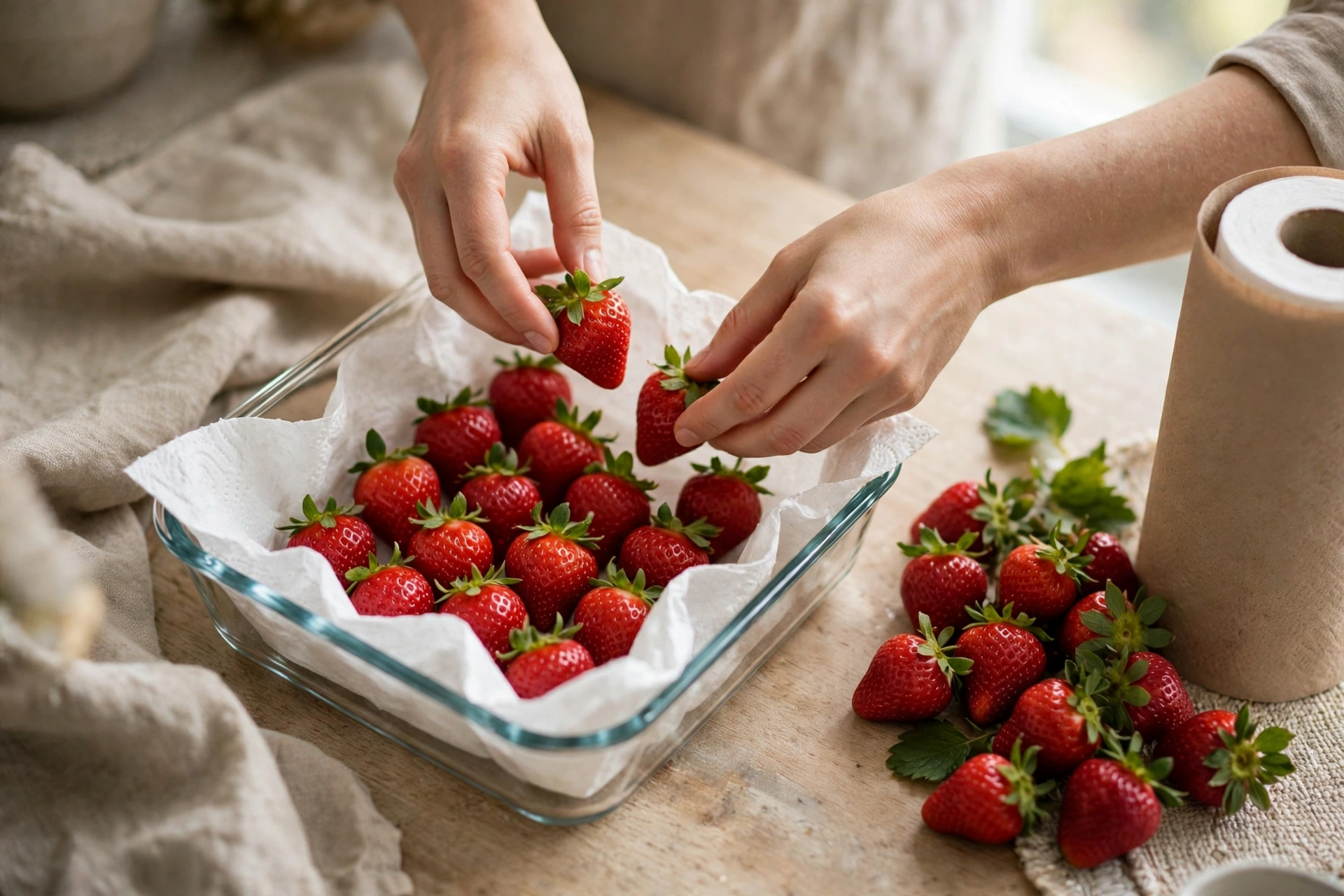
This is the method that works best, and it is the one to use for the berries you plan to eat fresh. It takes two minutes and roughly doubles how long a punnet lasts.
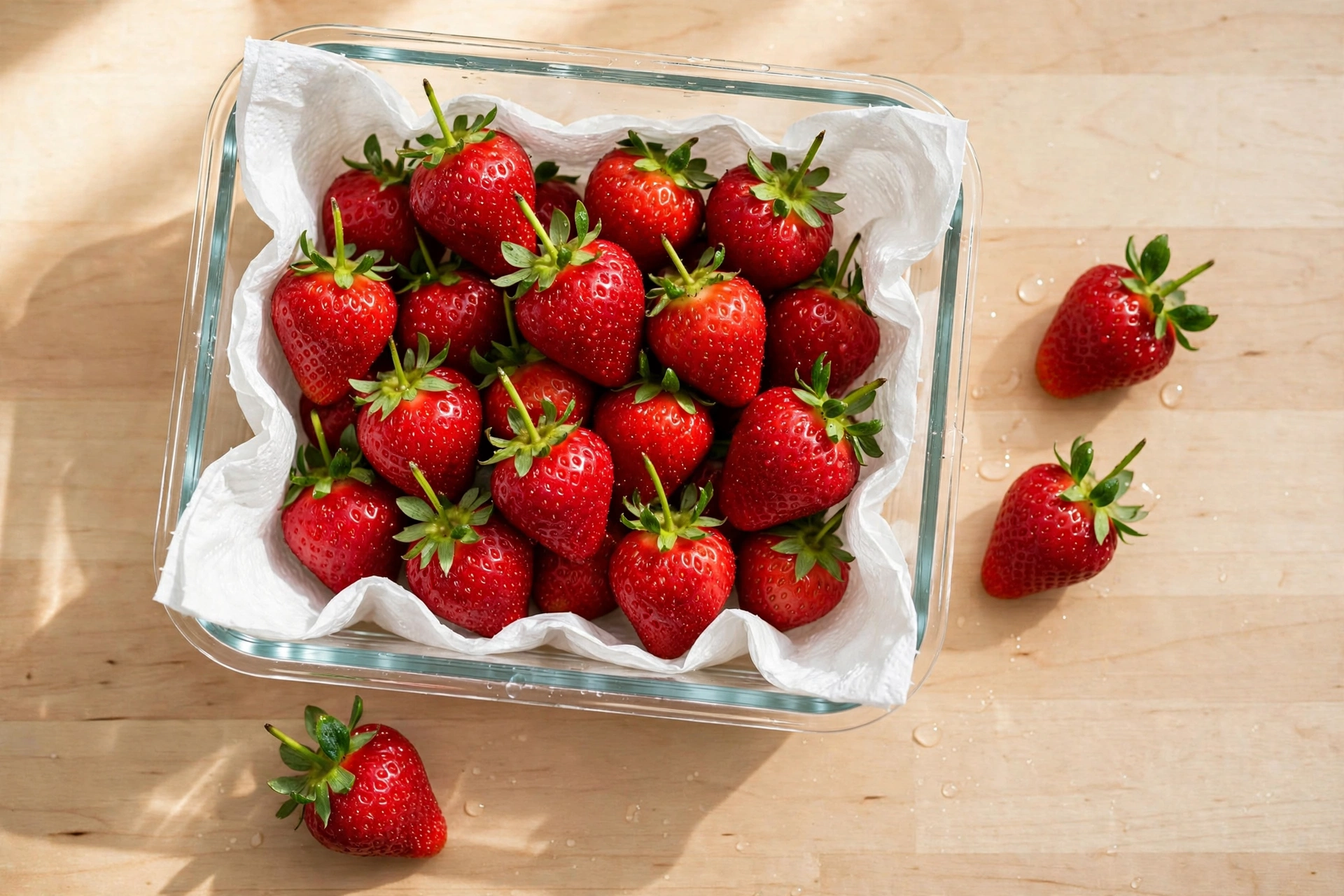
Line a container — glass or plastic, with a lid — with a folded paper towel. Lay the unwashed strawberries in a single layer, stems up, with a little space between them. If you have more than one layer, put another paper towel between the layers. Lay a second paper towel on top, and put the lid on loosely, or leave a small gap, so a little air can move. The paper towel absorbs the moisture that would otherwise sit on the berries and feed mould; change it if it gets damp. Store the container in the fridge, not in the crisper drawer, where humidity is higher.
Stored this way, good strawberries stay firm and sweet for 5–7 days. Check them every couple of days, remove any that have gone soft, and replace a damp paper towel. The same paper-towel trick works for other soft fruit too — and for herbs, as our guide on how to store fresh herbs explains.
Method 2: The vinegar wash — does it actually work?
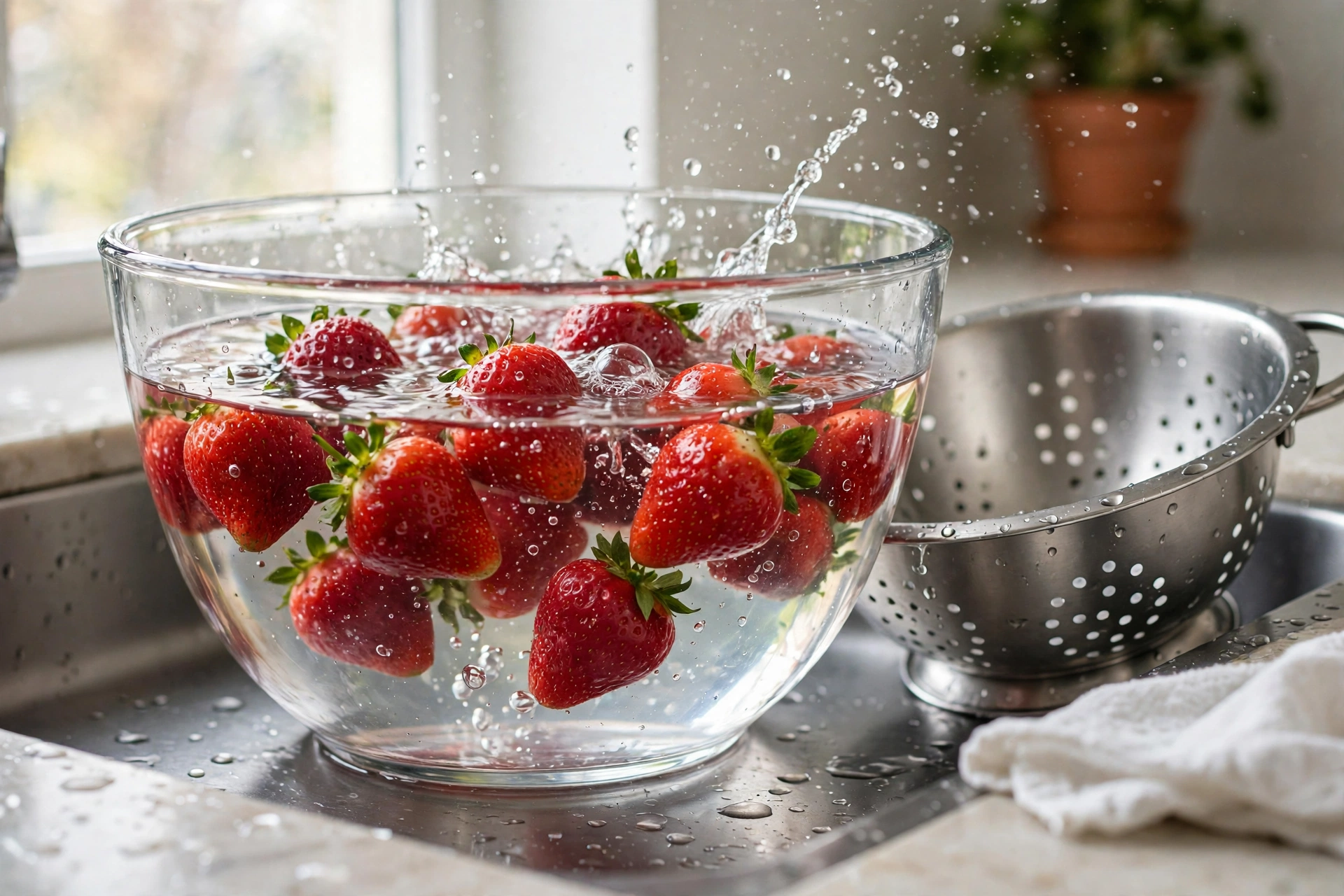
The vinegar wash is the internet’s favourite strawberry tip: soak the berries for a few minutes in a bowl of water with a splash of vinegar — about one part vinegar to three parts water — then rinse well and dry them thoroughly before storing. The idea is that the vinegar kills mould spores on the surface, so the berries last longer.
Does it work? Partly. A diluted vinegar rinse can reduce surface mould and may buy you an extra day or two, but it is not magic, and it is not official guidance — it is a home tip, not a food-safety recommendation. It also has a real downside: if the berries are not dried completely afterwards, the extra moisture does more harm than the vinegar did good. And if you skip the rinse, the berries taste faintly of vinegar.
Our advice: if your strawberries often go mouldy within two days, try the vinegar wash once, rinse well, dry each berry with a paper towel, and then use the paper-towel container method above. If your berries already last four or five days without it, skip the wash — the container method alone is enough. Either way, never soak berries for longer than five minutes, and never store them wet.
Method 3: Freezing strawberries (for smoothies and baking)
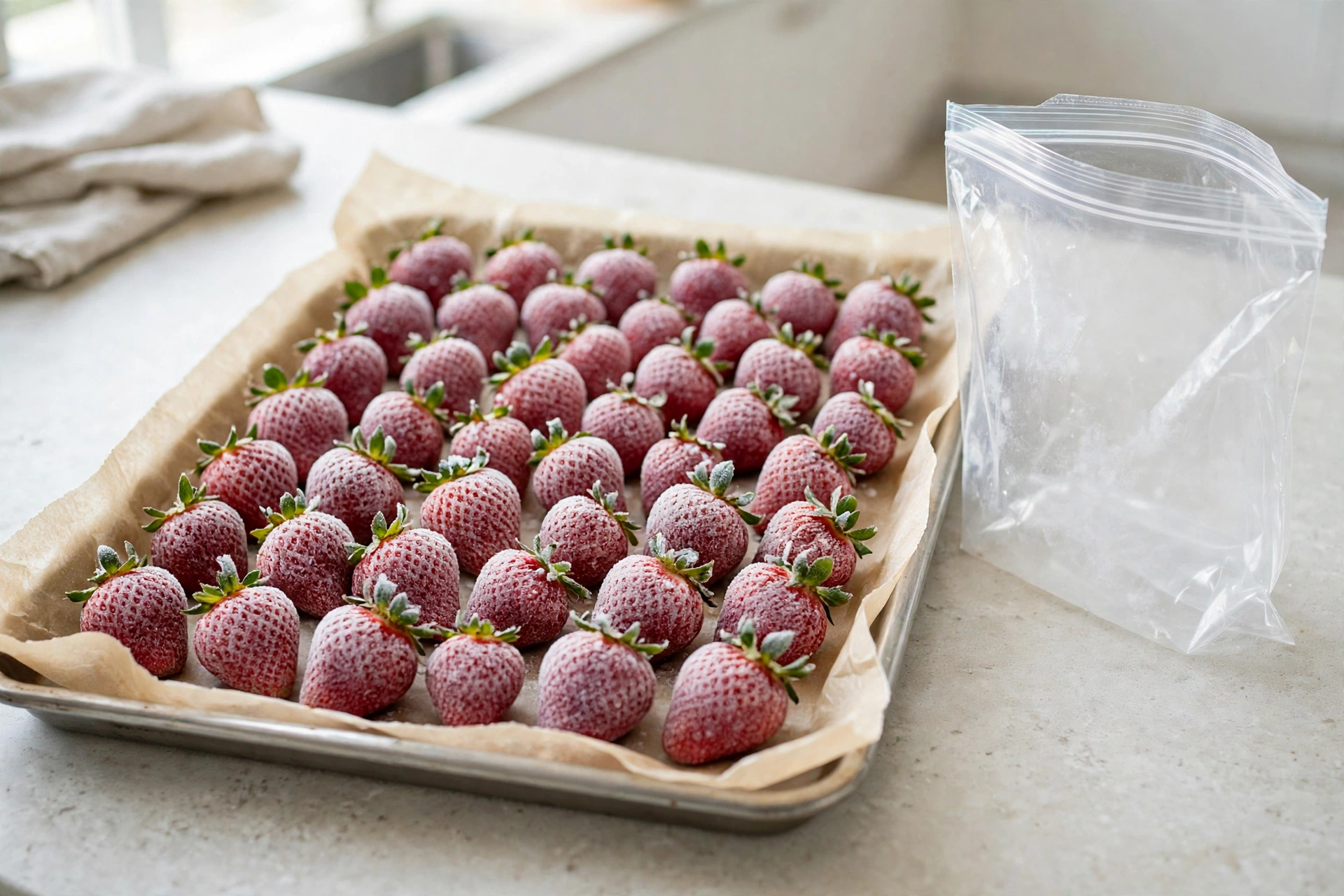
When the punnet is too big to finish in a week, freezing is the answer — but frozen strawberries will never be the same as fresh ones. They go soft when they thaw, so they are for smoothies, sauces, baking and jam, not for eating with cream.
Wash the berries, pat them completely dry, and pull off the green tops. Spread them in a single layer on a baking tray lined with parchment paper and freeze for 2–3 hours, until solid. Then tip them into a freezer bag, squeeze out the air, and label it with the date. Freezing them flat first stops them clumping into one solid block, so you can pour out a handful at a time. Frozen strawberries keep well for 6–8 months. For the best containers to store them in, see our guide to the best meal prep containers.
What about cut strawberries?
Cut strawberries spoil faster than whole ones, because cutting opens up the flesh to air and bacteria. Store cut strawberries in an airtight container in the fridge, with a paper towel underneath, and eat them within 2–3 days. A squeeze of lemon juice over the cut surfaces slows browning slightly, but it does not extend their life much — cut berries are a today-or-tomorrow food, not a storage project. If you cut more than you need, freeze the rest instead of refrigerating it.
How to tell when strawberries have gone bad
Throw strawberries away when you see white or grey fuzzy mould, when the berry is mushy or leaking juice, when it smells fermented or wine-like, or when the colour has darkened and gone dull. A single mouldy berry should be removed immediately so it does not spoil the rest — but if more than a few berries in the box are mouldy, it is safer to throw the whole box away than to pick through it. Mould on soft fruit spreads invisibly, and cutting the mouldy part off does not make a soft berry safe.
What to do with strawberries that are going soft
Soft does not always mean spoiled. Berries that are slightly soft but smell sweet and show no mould are perfect for cooking: blend them into a smoothie, simmer them with a spoonful of sugar into a quick sauce for yogurt or pancakes, bake them into muffins, or freeze them for later. The heat or the blender does not care that the berry has lost its crunch. What you should not do is put a soft berry back in the box with the fresh ones — eat it or cook it the same day.
Frequently asked questions
Should you wash strawberries before storing them?
No. Wash strawberries just before eating, under running water. Washing before storage leaves moisture on the skin, which speeds up mould. Store them dry and unwashed, and wash only what you are about to eat.
How long do strawberries last in the fridge?
Stored in a paper-towel-lined container, fresh strawberries last 5–7 days in the fridge. Left in their original punnet, they usually last 2–3 days. Cut strawberries last 2–3 days in an airtight container.
Do strawberries last longer in the fridge or on the counter?
In the fridge, by several days. Strawberries last about a day on the counter at room temperature, and mould spreads much faster in warmth. Keep them in the fridge unless you are eating them the same day.
Can you store strawberries in water?
It is not recommended. Storing strawberries in water makes them soggy, dilutes their flavour, and the damp conditions encourage mould. The paper-towel container method keeps them dry and lasts longer.
Can you freeze whole strawberries?
Yes. Wash, dry and hull them, freeze in a single layer on a tray for 2–3 hours, then transfer to a freezer bag. They keep for 6–8 months and are best used in smoothies, sauces and baking, since they go soft when thawed.
Final word
How to store strawberries comes down to one word: dry. Do not wash them until you eat them, keep the tops on, line the container with paper towel, and check the box every couple of days. The vinegar wash can help if mould is a constant problem, and the freezer saves whatever you cannot eat in time. A punnet that used to last two days will last a week — and the berries you do eat will taste like the day you bought them. The same dry-and-paper-towel principle works for other produce too, including ginger — see our guide on how to store ginger.
Source: U.S. Food and Drug Administration, Selecting and Serving Produce Safely
Source: U.S. Food and Drug Administration, Food Safety in Your Kitchen