
You buy a knob of ginger for one curry, use a thumb-sized piece, and the rest slowly dries out in the fridge until it is a wrinkled, woody shadow of itself. Ginger is not cheap, and it is not an ingredient you want to keep re-buying — so learning how to store ginger properly pays for itself in a week.
The good news: ginger is one of the easiest ingredients to keep. The only question is how long you need it to last. Pick your timeline below, and the right method follows.
First, Buy Ginger That Will Last
Storage starts at the shop. A good piece of ginger is firm, heavy for its size, and smooth-skinned, with a spicy, sharp smell when you snap a piece. Avoid knobs that feel soft or spongy, look wrinkled, or have dark, damp spots — those are already on their way out, and no storage method will save them. Buy the smallest piece you can for the week ahead, or buy a bigger knob and freeze the rest on the day you bring it home. That one habit — freezing what you will not use within a week — is what stops ginger going to waste.
Method 1: The Fridge — Paper Towel and Bag (About 3 Weeks)
This is the best method for ginger you plan to use within a few weeks. It works because it does two things at once: the paper towel absorbs the moisture that causes mould, and the bag stops the root drying out in the fridge’s cold, dry air.
- Leave the ginger unpeeled. The skin is its natural protection — peeling it shortens its life dramatically.
- Wrap the knob loosely in a dry paper towel.
- Put the wrapped ginger in a resealable bag or airtight container. Squeeze out most of the air, but do not vacuum-seal it.
- Store in the fridge, ideally in the crisper drawer.
- Replace the paper towel if it feels damp — usually every few days.
Stored this way, a fresh, unpeeled knob stays firm and usable for about three weeks, often longer. Check it once a week: if the towel is wet, swap it; if a cut end has dried out, just slice a thin piece off before using.
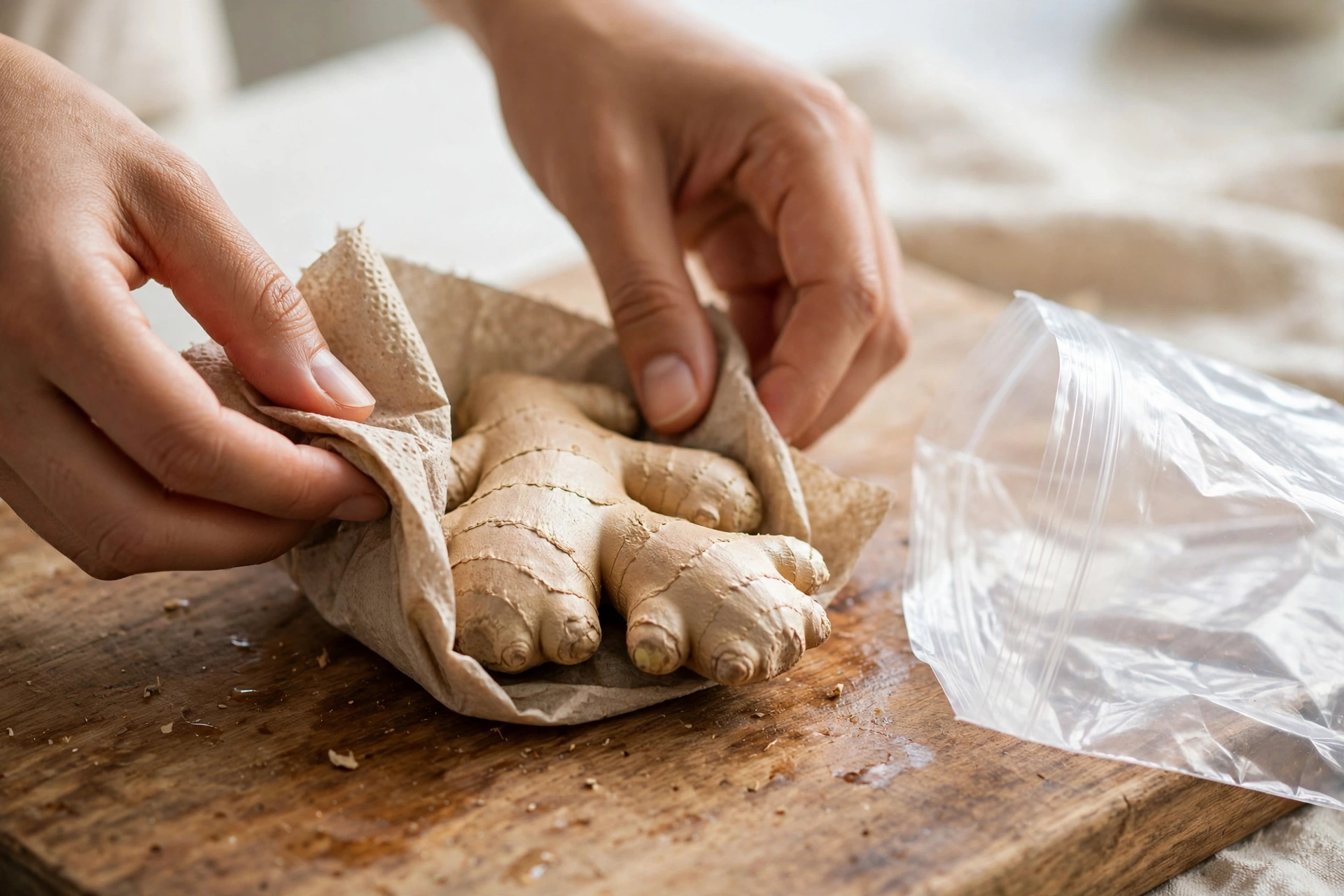
The shortcut version: if you are in a rush, skip the towel and put the unpeeled ginger straight into a resealable bag with the air pressed out. It will not last quite as long, but it is far better than leaving it loose on a fridge shelf, where it dries out in days.
Method 2: The Water Jar — Peeled Ginger (2–3 Weeks)
Already peeled your ginger, or bought it peeled? Water is your friend. Peeled ginger dries out fast in the open air, but submerged in water it stays plump and ready to use.
- Peel the ginger and place the pieces in a clean glass jar.
- Cover completely with cold water, and put the lid on.
- Store in the fridge.
- Change the water every 2–3 days — fresh water is what keeps it from going slimy.
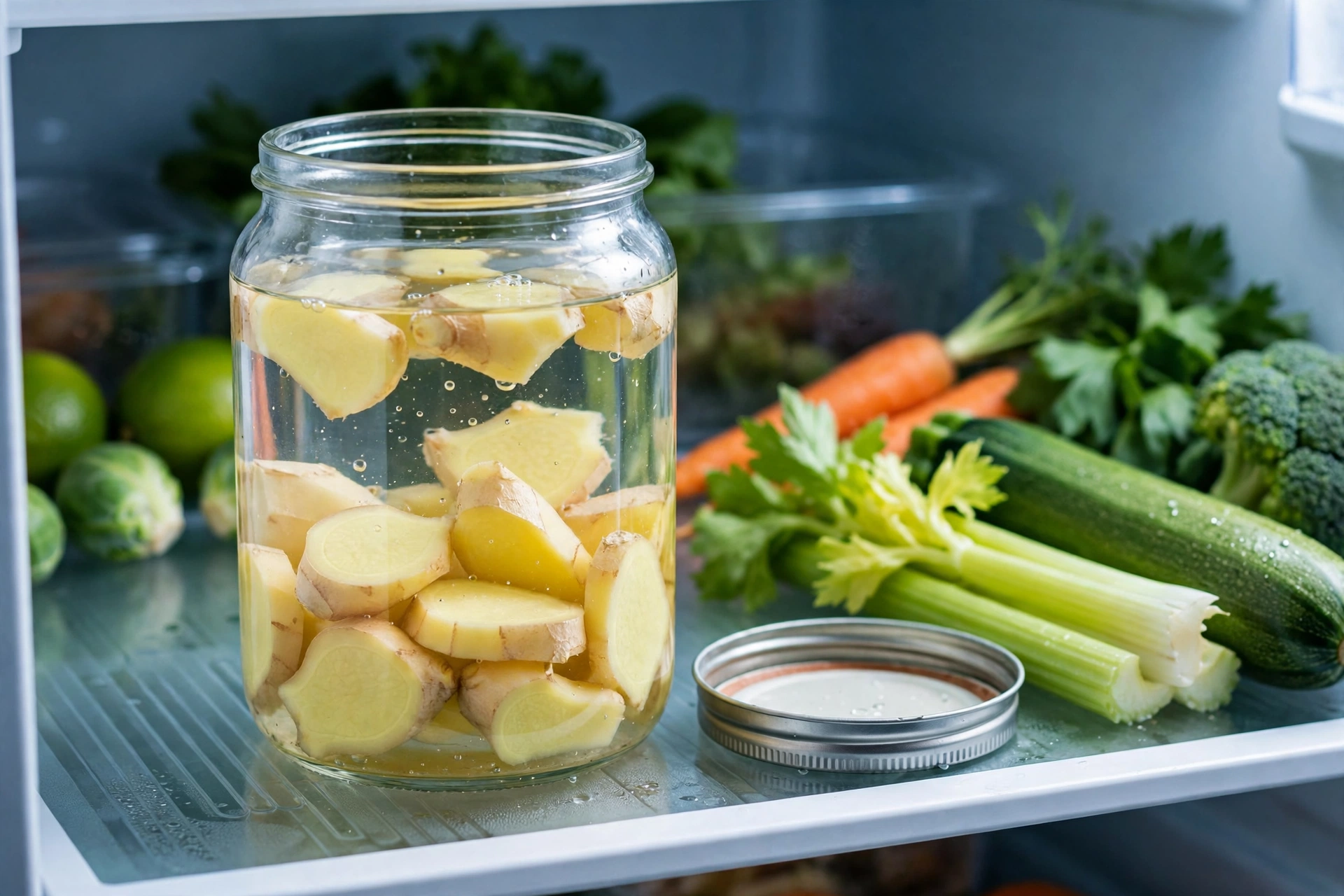
Peeled ginger kept this way lasts 2–3 weeks. This method is also handy for ginger you have already cut: a jar of peeled pieces in the fridge means you can grab exactly what a recipe needs without peeling anything mid-cook.
One warning: if the water turns cloudy or the ginger smells sour, throw it out. Cloudy water is a sign that bacteria have moved in, and no amount of rinsing makes it safe again.
Method 3: The Freezer — Whole or Grated (Up to 6 Months)
Freezing is the answer when you have more ginger than you can use in a month. Frozen ginger keeps for up to six months, and — here is the best part — you do not even need to thaw it. Frozen ginger grates more easily than fresh, and it goes straight from the freezer into the pan.
Freezing whole:
- Peel the ginger (optional — the skin peels off frozen ginger easily with a spoon, so many cooks freeze it unpeeled).
- Place the knob in a freezer bag, press out the air, seal and label with the date.
- To use, grate what you need straight from frozen with a fine grater or microplane, then return the rest to the freezer.
Freezing grated:
- Peel and grate the ginger, or blitz it in a small food processor with a splash of water.
- Spoon teaspoon-sized portions onto a tray lined with baking paper, or into an ice-cube tray.
- Freeze until solid, then transfer the portions to a labelled freezer bag.
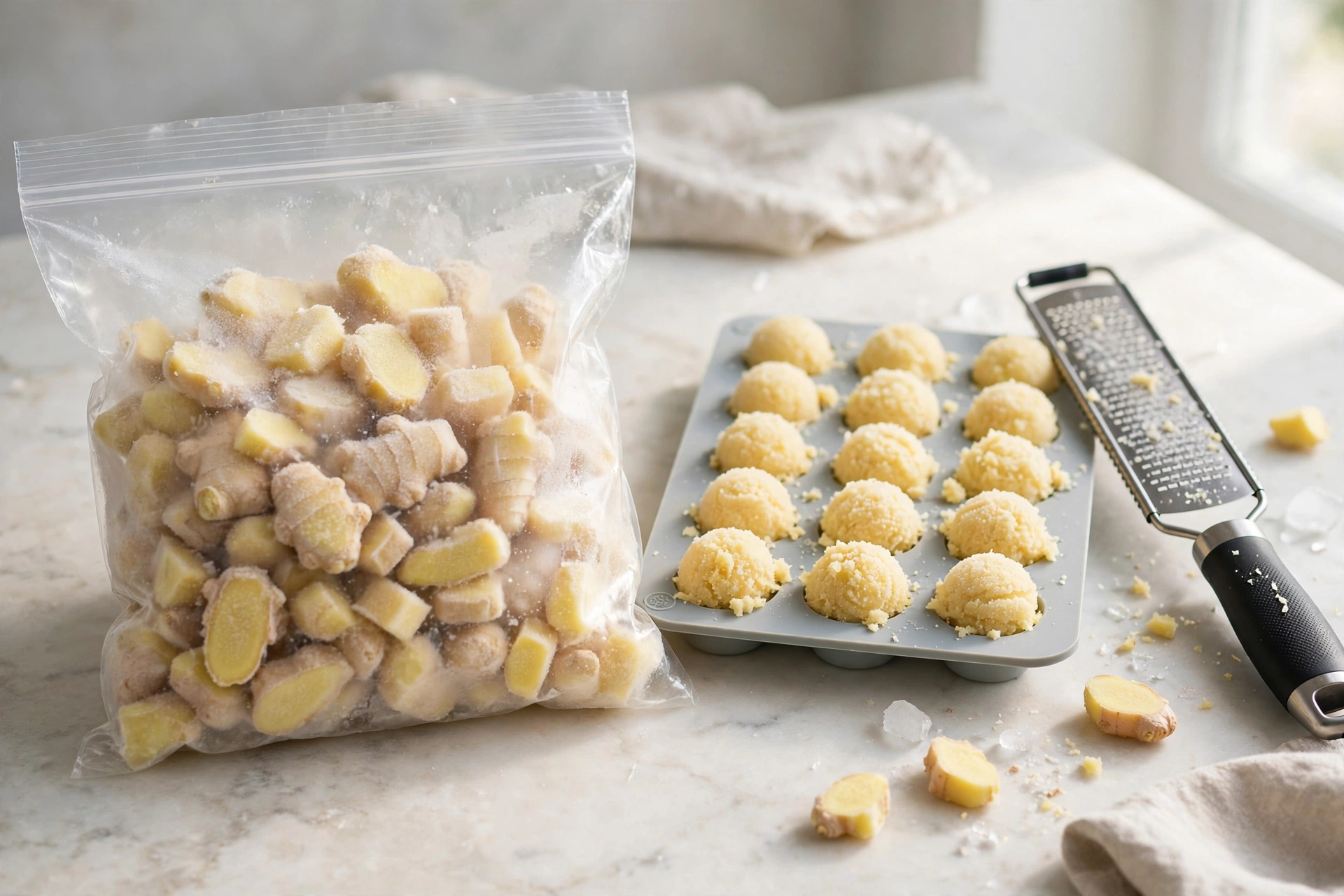
Frozen portions are perfect for curries, stir-fries, soups and teas — one cube or one spoonful is roughly a teaspoon of fresh ginger.
Frozen ginger loses its crisp texture, so it is best for cooked dishes rather than salads or garnishes.
What NOT to Do with Ginger
A few common mistakes cut ginger’s life short:
- Leaving it on the counter. A whole knob lasts about a week at room temperature in a cool, dry spot — fine for a few days, but the fridge doubles or triples that.
- Storing it wet. Ginger that goes into the fridge damp will mould. Always dry it before wrapping.
- Keeping it next to onions or garlic in a warm cupboard. They share the same drawer in many kitchens, but warm, humid storage speeds up spoilage for all of them.
- Freezing and thawing repeatedly. Each thaw cycle softens the root and invites bacteria. Grate from frozen and put the rest straight back.
How to Tell Ginger Has Gone Bad
Trust your senses before any date:
- Soft or spongy spots — the root is breaking down. Cut them away generously; if the softness runs through the whole knob, compost it.
- Mould — dark or fuzzy patches, especially around cut ends. Unlike hard cheese, you cannot safely cut mould off ginger and use the rest.
- A sour or musty smell — fresh ginger smells sharp and clean. Anything sour means it is finished.
- Shrivelled and woody — not dangerous, just dried out. It is still usable grated into cooked dishes, but the flavour will be weaker.
When in doubt, throw it out. Ginger is cheap; food poisoning is not.
Getting the Most from Stored Ginger
A few habits make stored ginger even more useful:
- Grate from frozen. A microplane turns frozen ginger into fine, fluffy shreds in seconds — no peeling, no thawing, no waste.
- Keep a jar of peeled ginger in water if you cook with it several times a week; it is the fastest option for daily use.
- Save the peels. Ginger peel makes a lovely tea: simmer the peels in water for 10 minutes, strain, and add honey and lemon.
- Pair it with herbs. If you are building a well-stocked fridge, the storage method for ginger works on the same principles as our guide to how to store fresh herbs — keep moisture off the surface, keep air moving gently, and check on things weekly. A tidy fridge and a good pantry storage system make all of it easier, and our smart kitchen storage ideas show how to set both up.
Frequently Asked Questions
How long does ginger last in the fridge? Unpeeled ginger wrapped in a paper towel inside a bag lasts about three weeks in the fridge. Peeled ginger submerged in water in a sealed jar lasts 2–3 weeks if you change the water every 2–3 days.
Can you freeze fresh ginger? Yes — freezing is the best long-term method. Whole or grated ginger keeps for up to six months in the freezer, and you can grate it straight from frozen without thawing.
Should ginger be stored in the fridge or on the counter? The fridge, for anything longer than a few days. Ginger keeps about a week on the counter in a cool, dry spot, but the fridge extends that to around three weeks, and the freezer to months.
How do you store ginger after peeling it? Put the peeled pieces in a clean jar, cover completely with cold water, seal and refrigerate. Change the water every 2–3 days and use within 2–3 weeks.
Can you eat ginger that has gone soft? Only if the softness is limited to a small spot you can cut away generously, and the rest is firm and smells fresh. If the whole knob is soft, spongy, mouldy or sour-smelling, throw it away.
The Takeaway
Ginger storage is a “choose your timeline” decision: fridge in a paper towel for the next three weeks, a water jar for peeled ginger, or the freezer for up to six months — and the freezer version is actually easier to use, because frozen ginger grates beautifully. Pick the method that matches how you cook, and that knob you bought for one curry will still be firm, fragrant and ready when the next one comes around.
Storage times are general guidance for home refrigerators. When in doubt, the U.S. government’s FoodKeeper tool and the FDA’s guide to storing food safely are the references to trust.
Related Posts

Smart Kitchen Storage Ideas: Transform Your Chaos into Culinary Order
Maximize your space with these creative kitchen storage ideas. From pantry hacks to DIY solutions, learn how to organize your…
15 Brilliant & Space-Saving Pantry Storage Solutions for a Clutter-Free Kitchen
Pantry storage solutions that maximize space, improve organization, and keep food fresh. Discover smart ideas, expert tips, and must-have tools.…

A Thrifty Mom DIY Recipes Crafts Online Deals Amazon Deals Guide | Real Me Foods
Discover the ultimate guide for a thrifty mom diy recipes crafts online deals amazon deals. Learn how to save money…