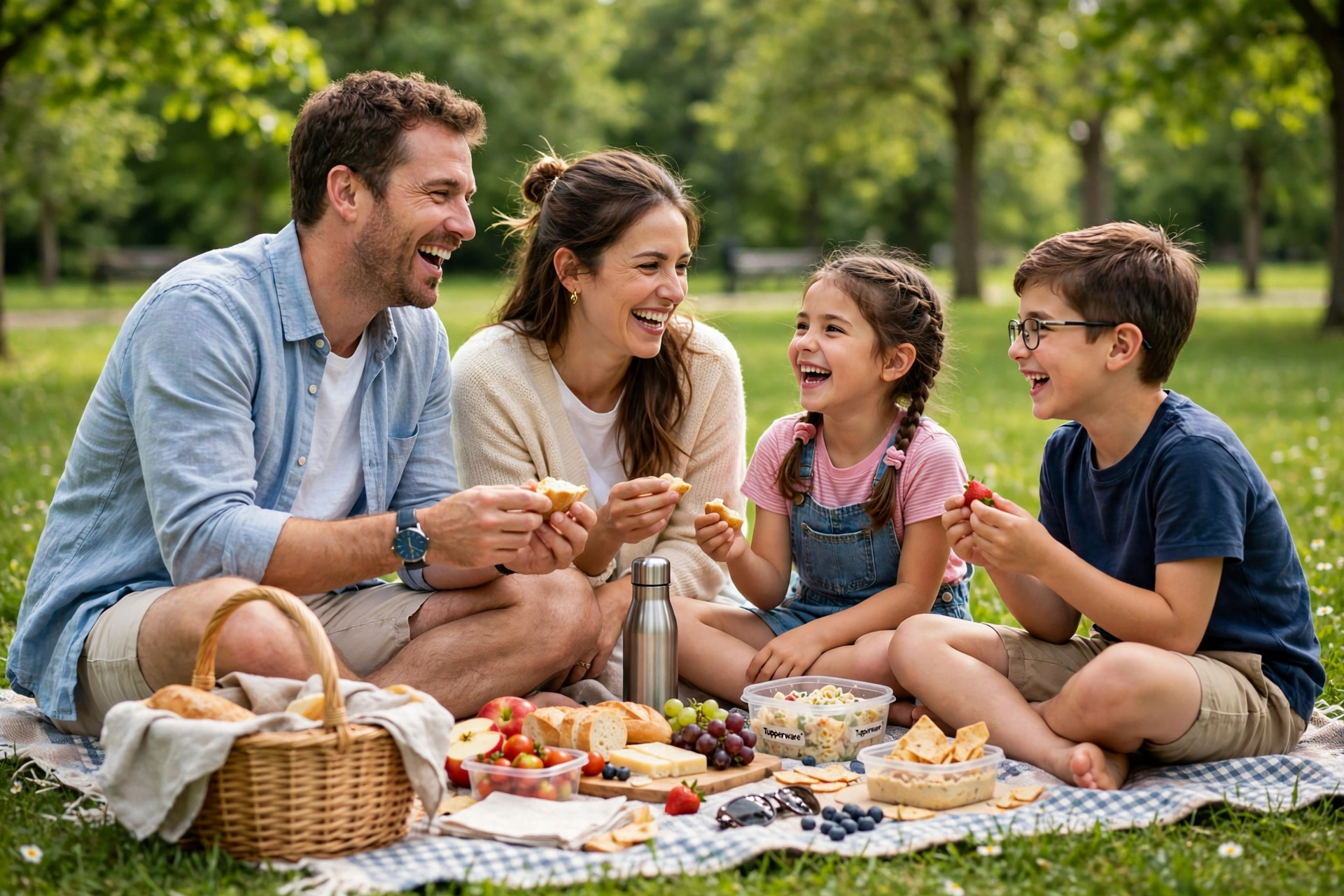
A perfect picnic is rarely about fancy food. It is about food that travels well, gear that is easy to carry, and timing that keeps everything fresh and safe. Get those three things right, and a simple lunch on a blanket can feel like a small holiday. Get them wrong, and you end up with warm drinks, soggy sandwiches, and a bag full of things you forgot.
This guide explains what to pack for a picnic, step by step: the food, the gear, and the timing. It works for a family afternoon in the park, a date in the countryside, or a group lunch after a walk. Keep it simple, pack it the night before where you can, and leave room in the basket for the food you actually enjoy.
Note: This guide shares general picnic planning and food safety ideas. Check the weather, the rules of the park or beach you visit, and any food allergies in your group before you pack.
What Makes a Picnic Work
Three things decide whether a picnic works: food that can be eaten without a kitchen, gear that fits in one or two bags, and a plan for keeping cold food cold. The best picnic food can be eaten with your hands or with a fork, it does not need reheating, and it still tastes good after an hour in a basket. Sandwiches, wraps, salads in sealed containers, fruit, and cheese all pass that test. Soups, saucy dishes, and anything that needs a plate and a knife usually do not.
Think about where you will sit, too. A park with shade and a flat patch of grass is ideal. A beach is wonderful, but sand gets everywhere, so pack food in sealed containers and bring a blanket you can shake out. If you are walking to your picnic spot, weight matters more than variety: one good main dish and a few snacks will beat a heavy basket of food you are too tired to eat.
What to Pack for a Picnic: The Food
Start with the main dish, then add one or two sides, a snack, and something sweet. Keep portions generous but simple, and pack a little extra for anyone who is extra hungry after fresh air. Sandwiches and wraps are the classic choice because they are easy to hold, easy to share, and easy to make the night before. Make them with fillings that do not go soggy: cheese, hummus, roasted vegetables, or cold chicken work well, while very wet fillings are better packed separately and added at the picnic.

- Main: sandwiches, wraps, or a cold pasta or grain salad in a sealed container.
- Sides: a simple green salad, cut vegetables, or a fruit salad.
- Snacks: crisps, nuts, crackers, or cheese, packed in small bags.
- Sweet: cookies, brownies, or whole fruit that travels well.
- Drinks: water for everyone, plus juice or a cold drink, kept in the cooler.
Plan for the people who are coming. Children eat less, but they like food they can hold and snack on, so pack extra fruit and small sandwiches. Vegetarian and vegan guests need a main dish of their own, not just the side salad. Ask about allergies in advance, and keep any food with nuts separate and labelled. For snack ideas that travel well, see our best snacks for weight loss guide, and for shopping, our healthy food buying guide will help you buy only what you need.
Packing Gear Checklist
Gear is where picnics are won or lost. You do not need expensive equipment, but you do need the basics, and you need them all in one place before you leave. Pack the basket the night before if you can, and keep a small picnic bag ready with the non-food items, so you can grab it and go.
- A blanket, and a waterproof layer underneath if the grass is damp.
- A cooler bag or box with ice packs for cold food and drinks.
- Plates, cups, cutlery, and napkins, plus a few spare napkins.
- A knife, a small chopping board, and a bottle opener if you need one.
- Sealed containers for leftovers, and a bag for rubbish.
- Wet wipes, hand sanitiser, sunscreen, and insect repellent.
- A water bottle for everyone, and a little extra water for washing hands.
Good containers make a real difference. Sealed, stackable containers keep food fresh, stop leaks in the bag, and make it easy to pack leftovers for the trip home. Our guide to the best meal prep containers explains what to look for, and the same containers work well for picnics. Pack heavy items at the bottom of the basket, cold items in the cooler, and anything fragile on top.
Timing: When to Pack, When to Eat
Timing is the part most people forget. Make as much as you can the night before: sandwiches (without wet fillings), salads, and desserts all keep well in the fridge overnight. In the morning, add the cold items from the fridge to the cooler last, just before you leave, so they stay cold for as long as possible. Freeze a bottle of water the night before and use it as an extra ice pack; it will melt into cold drinking water by lunchtime.

Eat within two hours of leaving home, and sooner on a hot day. That is the window in which cold food stays safe and tastes its best. If you are planning a long walk before lunch, keep the food in the cooler and in the shade, and do not open the cooler until you are ready to eat. A short, simple timeline beats a long, complicated one: pack the night before, chill in the morning, eat at midday, and be home before the food has been out too long.
Keeping Picnic Food Safe Outdoors
Food safety matters more outdoors, because there is no fridge and no oven to help you. FoodSafety.gov advises that perishable food should not be left at room temperature for more than two hours, and only one hour if the temperature is above 90°F (about 32°C). That includes sandwiches with meat, cheese, or mayonnaise, salads, and cooked food. Keep those foods in a cooler with ice packs, in the shade, until you are ready to eat them.
- Keep cold food in a cooler with plenty of ice or frozen packs.
- Keep the cooler in the shade, and open it as little as possible.
- Wash hands before eating, and bring wet wipes if there is no water nearby.
- Throw away perishable food that has been out for more than two hours.
Choose your menu with the weather in mind. On a hot day, pick foods that are safer at warm temperatures, such as whole fruit, bread, crackers, and sealed snacks, and keep the cold dishes in the cooler until the last moment. The U.S. Food and Drug Administration’s food pages offer clear advice on safe food handling, and the NHS Eat Well pages have general guidance on balanced eating outdoors as well as at home.
Picnic Ideas for Different Groups
Not every picnic is the same. A family picnic needs easy food, a blanket with room to play, and snacks for the journey home. A picnic for two can be smaller and a little more special: good bread, cheese, fruit, and a favourite drink, packed in one small basket. A group picnic works best when everyone brings one dish, so no single person carries the whole meal. Agree on who brings what in advance, so you do not end up with five bags of crisps and no main dish.
If you want a hot dish, grilled food can work, but only where barbecues are allowed and you have a safe way to cook and to cool the grill afterwards. Our guide to how to cook chicken on a pellet grill is useful if you are grilling at home before you go, so the food is cooked safely and packed cold. Whatever the group, the rule is the same: keep it simple, pack it well, and spend the time enjoying the day rather than managing the food.
Frequently Asked Questions
Q: What should I pack for a picnic for the first time?
A: Sandwiches or wraps, a salad, fruit, snacks, water, a blanket, a cooler with ice packs, plates, napkins, and a bag for rubbish. That covers the basics for most groups.
Q: How long can picnic food stay out safely?
A: Perishable food should be eaten within two hours of leaving the fridge, and within one hour on a very hot day. Keep it in a cooler in the shade until you eat.
Q: What food should I avoid taking on a picnic?
A: Avoid food that needs reheating, food that goes soggy quickly, and food that spoils fast in the heat. Choose food that travels well and tastes good cold or at room temperature.
Q: How do I keep drinks cold without a fridge?
A: Use a cooler with ice packs, freeze a bottle of water the night before as an extra ice pack, and keep the cooler in the shade until you need it.
Sources
- FoodSafety.gov — U.S. government food safety guidance, including the two-hour rule for perishable food.
- U.S. Food and Drug Administration — Food — safe food handling advice for home cooks.
- NHS — Eat Well — general guidance on balanced eating and food safety.
A perfect picnic is not a big production. It is a short list, a cooler full of cold food, and a blanket in a nice spot. Pack the food the night before, keep it cold, eat within a couple of hours, and take your rubbish home. Do that, and the picnic will take care of itself.
Related Posts
How to Build a Weekly Grocery Budget That Actually Works
A weekly grocery budget sounds simple: pick a number, spend less than it, repeat. Yet most people who try it…
Edible Gifts: How to Choose, Make and Pack Food Gifts People Actually Love
Some gifts get used once and forgotten. Others get eaten, enjoyed, and remembered. Edible gifts belong firmly in the second…
How to Host a Dinner Party Without Stress: A Simple Planning Guide
Hosting a dinner party sounds wonderful until the week of the event arrives. Suddenly the guest list feels too long,…