
A weekly grocery budget sounds simple: pick a number, spend less than it, repeat. Yet most people who try it give up within a month. The problem is rarely a lack of willpower. It is that the budget was a guess, not a plan. A number copied from a friend, or from a website, will not match your household, your shops, or the way you actually eat.
This guide shows how to build a weekly grocery budget that actually works, in five practical steps. You will start with what you really spend, plan meals before you shop, and set a limit you can keep. The result is not a strict diet or a joyless shop. It is a routine that saves money, cuts waste, and still puts good food on the table.
Note: This guide shares general budgeting and food planning ideas. Prices vary by place and season, so use the examples as a starting point and adjust them to your local shops.
Why Most Grocery Budgets Fail
Most budgets fail for three reasons. First, they are set too low. If you normally spend $150 a week and suddenly aim for $80, you will run out of food by Thursday and feel like you have failed. Second, they ignore real life: birthdays, school lunches, a guest for dinner, or a week when the fridge is empty. Third, they have no link to meals. A budget without a meal plan is just a wish, because you will still stand in the shop wondering what to buy.
A budget that works is built on your own numbers, not someone else’s. It leaves room for the weeks that cost more, and it is tied to a plan for what you will eat. That is the difference between a budget you keep for a month and a budget you keep for a year.
Step 1: Know What You Spend Now
Before you set a budget, find out what you actually spend. Look at the last four weeks of grocery receipts, bank statements, or shopping app history. Add up only food and household shopping, and leave out takeaways and eating out, which belong in a separate part of your budget. Then divide the total by four to get your average weekly spend.
If that number surprises you, you are not alone. Small top-up shops, snacks, and drinks add up quickly, and most people underestimate them. Write the number down. It is your starting point, not a judgement. A realistic first goal is to cut it by about ten percent, not by half. Small, steady savings last longer than dramatic cuts that you abandon after two weeks.
Step 2: Plan Meals Before You Shop
Meal planning is the single most useful habit for a grocery budget. When you know what you will eat this week, you buy only what those meals need, and you stop buying food that sits in the fridge until it goes off. Sit down once a week, ideally before shopping day, and plan five or six dinners. Leave one night free for leftovers or for eating out, so the plan feels flexible rather than rigid.
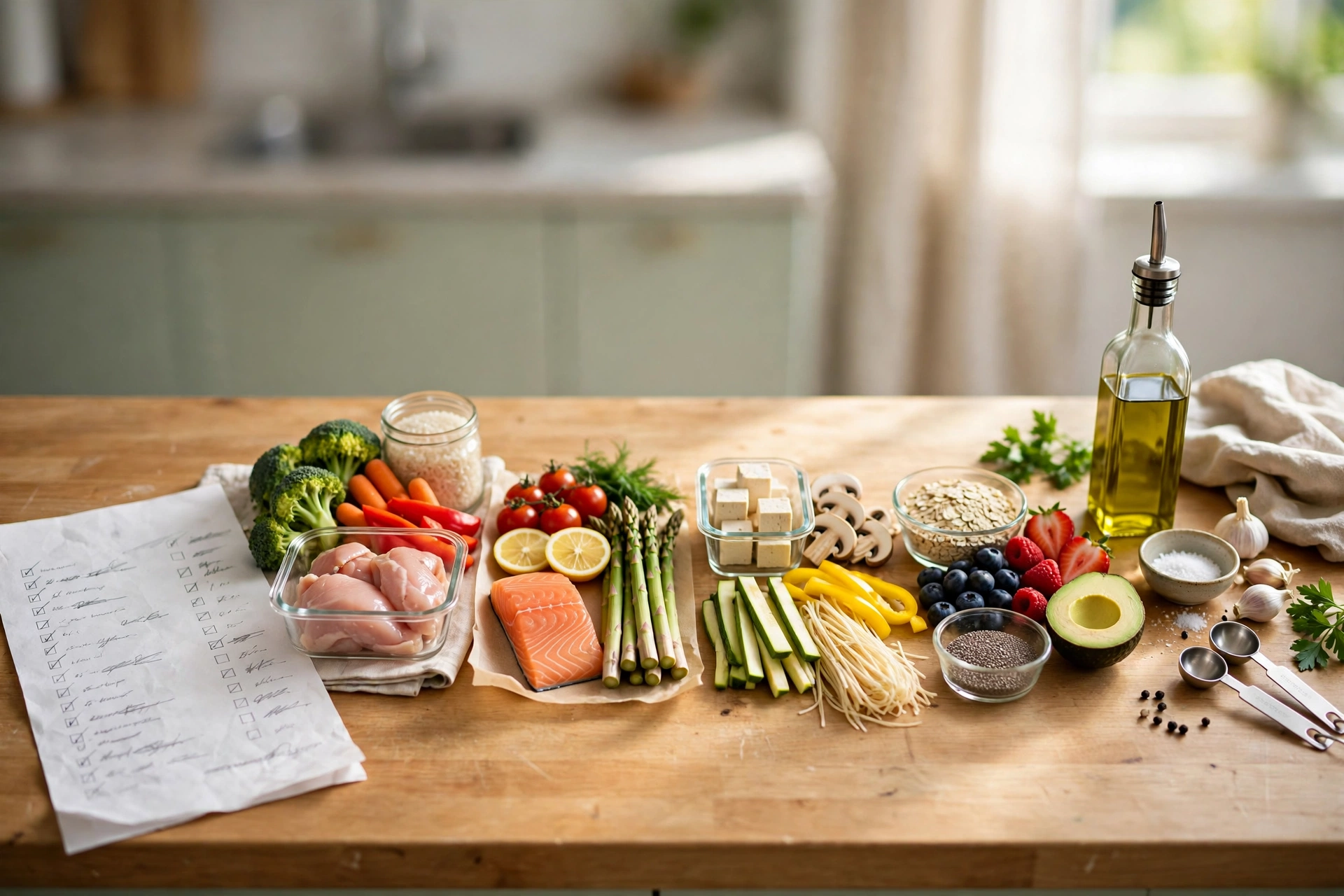
Build the plan around what you already have. Check the fridge, the freezer, and the cupboard first, and use those ingredients before you buy more. A meal built from a tin of beans, some rice, and vegetables you already own costs almost nothing. Repeat a few favourite meals each week, so shopping becomes faster and you waste less. For ideas on buying well, see our healthy food buying guide, and use the USDA MyPlate guide to keep meals balanced across food groups.
- Plan five or six dinners, and leave one night for leftovers.
- Use what you have first, then list only what is missing.
- Repeat favourites, so you know the cost and the ingredients by heart.
- Plan lunches too, even if it is only sandwiches and fruit.
Step 3: Build a Weekly Budget That Fits
Now set your weekly number. Take your average spend, cut it by about ten percent, and round it to a simple figure you can remember. If you spent $140 a week, try $125. If that works for a month, try $115. If it feels too tight, go back up a little. A budget that is slightly too generous and kept is better than a budget that is too strict and abandoned.
| Category | Share of the budget | What it covers |
|---|---|---|
| Fresh food | About 40% | Vegetables, fruit, meat, fish, dairy |
| Pantry staples | About 25% | Rice, pasta, bread, oil, tins, spices |
| Breakfast and lunch | About 20% | Cereal, sandwiches, snacks, drinks |
| Household and extras | About 15% | Cleaning, treats, and a small buffer |
The shares above are a guide, not a rule. A household that eats mostly plant-based meals will spend less on meat and more on fresh food. A household with young children may spend more on breakfast and lunch. Adjust the shares to fit your household, and review them once a month. The point of the table is to show where the money goes, so you can spot the category that keeps running over.
Step 4: Shop With a List and a Limit
Write the shopping list from your meal plan, and take it with you. A list is the cheapest tool in the supermarket: it stops impulse buying, it stops duplicate buying, and it makes the shop faster. Shop once a week if you can, with one small top-up for fresh items, rather than visiting the shop every day, when every visit adds a few unplanned items to the basket.
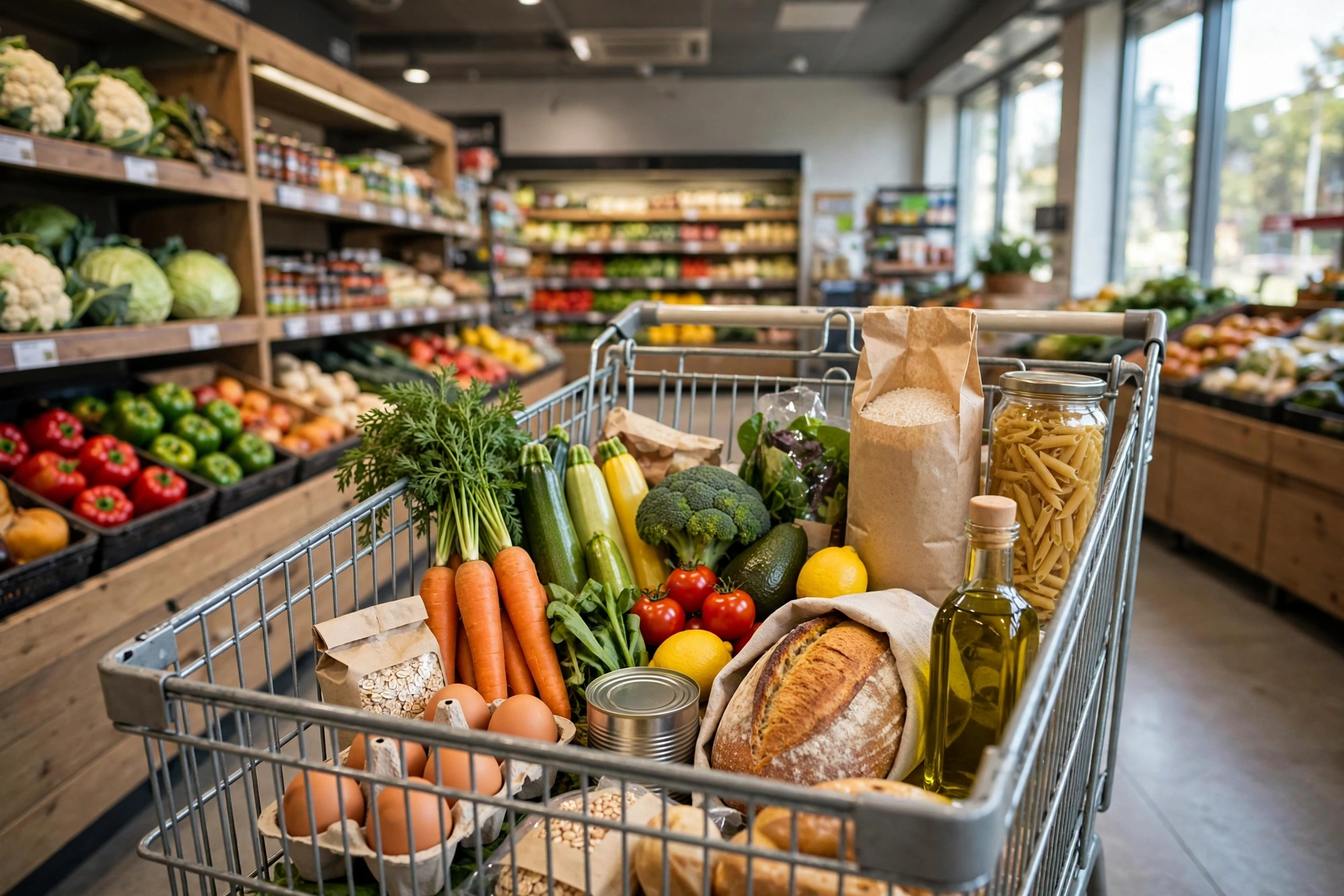
A few shopping habits save real money over time. Compare the price per kilo or per litre, not the price on the packet, because the bigger pack is not always cheaper. Buy seasonal fruit and vegetables, which are usually cheaper and taste better. Keep a small stock of pantry staples, such as rice, pasta, tinned tomatoes, and beans, so you can make a meal from the cupboard on a busy night instead of ordering takeaway. Fresh herbs are worth buying, but only if you use them; our guide to how to store fresh herbs shows how to keep them fresh for longer.
- Shop once a week, with one small top-up if needed.
- Compare price per kilo, not just the packet price.
- Buy seasonal produce and pantry staples in sensible amounts.
- Keep snacks simple: fruit, nuts, and homemade snacks beat expensive packaged ones, as our best snacks for weight loss guide also shows.
Step 5: Use Up What You Buy
Food waste is a budget leak. Every meal thrown away is money thrown away, and most households throw away more than they think. The fix is simple: cook the food that goes off first, turn leftovers into tomorrow’s lunch, and freeze anything you cannot use in time. A clear fridge helps enormously, because you can see what needs using before it is too late.
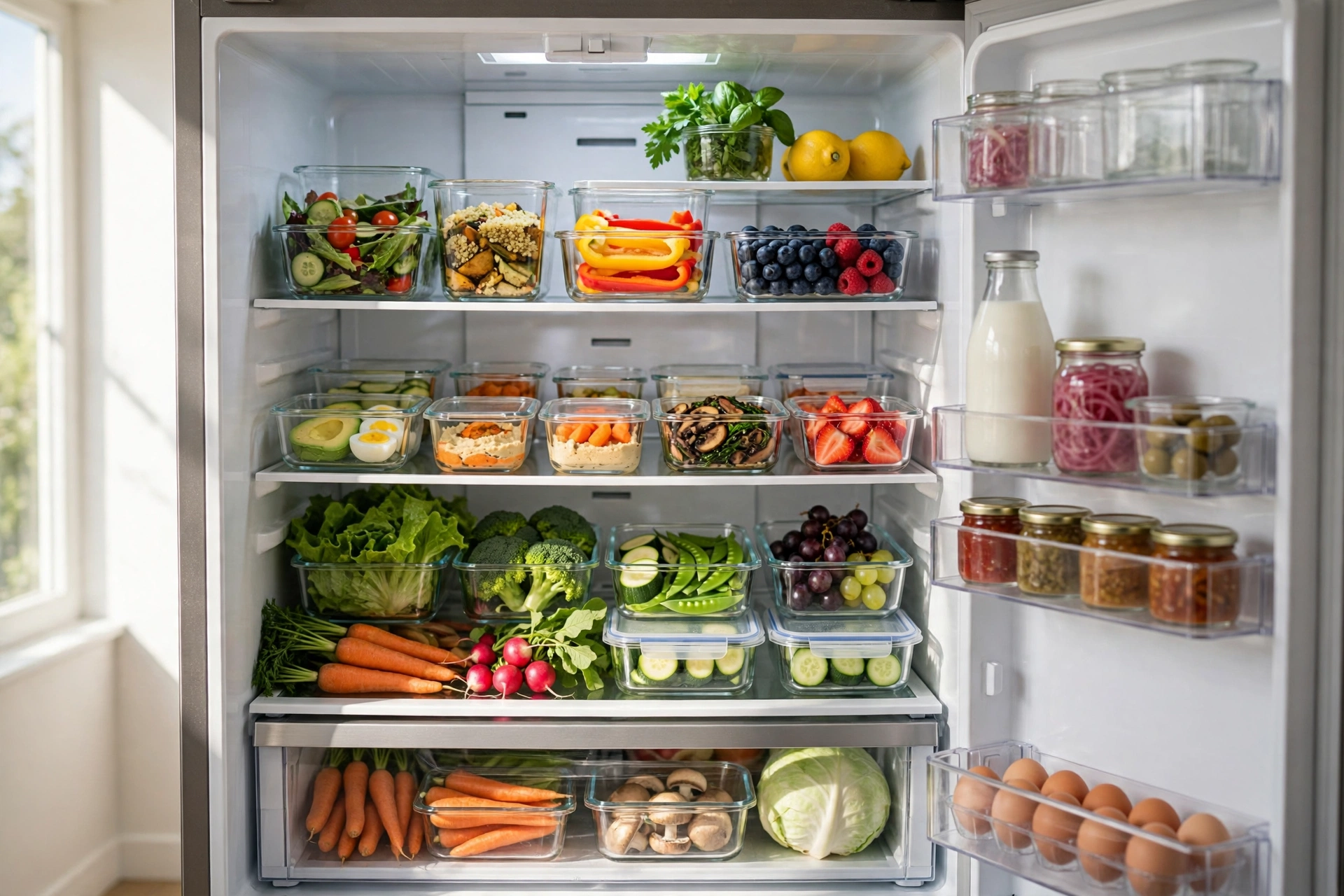
Store leftovers safely. FoodSafety.gov advises refrigerating perishable food within two hours of cooking, and using refrigerated leftovers within three to four days. Label containers with the date, and keep them where you can see them. Good containers make this much easier, and our guide to the best meal prep containers explains what to look for. The NHS Eat Well pages also offer practical advice on planning balanced meals and reducing waste at home.
Track It, Then Adjust
A budget only works if you check it. At the end of each week, write down what you spent and compare it with your target. If you went over, look for the reason: was it a one-off, such as a birthday, or did one category keep running over? If you came in under, put the saving aside, or keep it as a buffer for the next expensive week. After a month, adjust the budget to match reality, and keep going. The goal is not perfection every week. It is a budget that fits your life, week after week.
Frequently Asked Questions
Q: How much should a weekly grocery budget be?
A: It depends on your household size, where you live, and how you eat. Start with your average spend over the last four weeks, then aim to cut it by about ten percent.
Q: How can I save money on groceries without eating badly?
A: Plan meals, buy seasonal produce, cook with pantry staples, and waste less food. These habits save money while keeping meals balanced and filling.
Q: Should I shop weekly or daily?
A: Weekly shopping with one small top-up usually costs less, because every extra trip adds impulse buys. Daily shopping works only if you stick strictly to a list.
Q: What if I go over budget one week?
A: Do not give up. Look for the reason, use up what you already have the following week, and adjust the budget if the target was too low.
Sources
- USDA MyPlate — guidance on balanced meals across food groups.
- FoodSafety.gov — U.S. government food safety guidance, including storing leftovers safely.
- NHS — Eat Well — general guidance on balanced eating and reducing food waste.
A weekly grocery budget that actually works is not a punishment. It is a short plan, a shopping list, and a habit of checking what you spent. Start with your real numbers, plan your meals, and give the budget a month to settle. The savings will follow, and so will calmer, less wasteful weeks in the kitchen.
Related Posts
How to Pack a Perfect Picnic: Food, Gear and Timing
A perfect picnic is rarely about fancy food. It is about food that travels well, gear that is easy to…

Edible Gifts: How to Choose, Make and Pack Food Gifts People Actually Love
Some gifts get used once and forgotten. Others get eaten, enjoyed, and remembered. Edible gifts belong firmly in the second…

How to Host a Dinner Party Without Stress: A Simple Planning Guide
Hosting a dinner party sounds wonderful until the week of the event arrives. Suddenly the guest list feels too long,…