Protein Snacks: 20 Ideas That Actually Keep You Full
Most snacks fail in the same way: they are gone in two minutes and you are hungry again in twenty. A biscuit, a bag of crisps, a piece of fruit on its own — all carbohydrate, all fast, all forgotten by the body within the hour. The fix is not eating less; it is eating a snack with protein in it. Protein digests slowly, so a snack built around it keeps you full for hours instead of minutes.
How much protein are we talking about? A good protein snack has roughly 10–20 grams — about the same as two eggs, or a small pot of Greek yogurt. That is enough to bridge the gap between meals without turning the snack into a second lunch. This guide is organised by situation: at your desk, after a workout, on the move, and for kids. Three recipes are written out in full; the other seventeen need no recipe at all.
Note: the protein figures below are approximate, based on standard serving sizes from the USDA FoodData Central database. Brands vary, so treat them as a guide, not a label.
How much protein should a snack have?
As a rule of thumb, a snack should carry 10–20 grams of protein. Less than that and it is really just a carbohydrate snack with a protein garnish; more than that and it is a meal. The Harvard T.H. Chan School of Public Health notes that protein needs vary by body size and activity, but that most adults benefit from spreading protein across the day — including at snack times — rather than eating it all at dinner Harvard T.H. Chan School of Public Health. A protein-rich snack in the afternoon is often the difference between a calm evening and a raid on the biscuit tin at 5 p.m.
What the protein comes with matters too: pairing it with fibre — nuts with an apple, yogurt with berries — keeps you full longer than protein alone. The table at the end lists every snack with its approximate protein.
Recipe 1: No-bake peanut butter energy balls (15 minutes, makes 12)
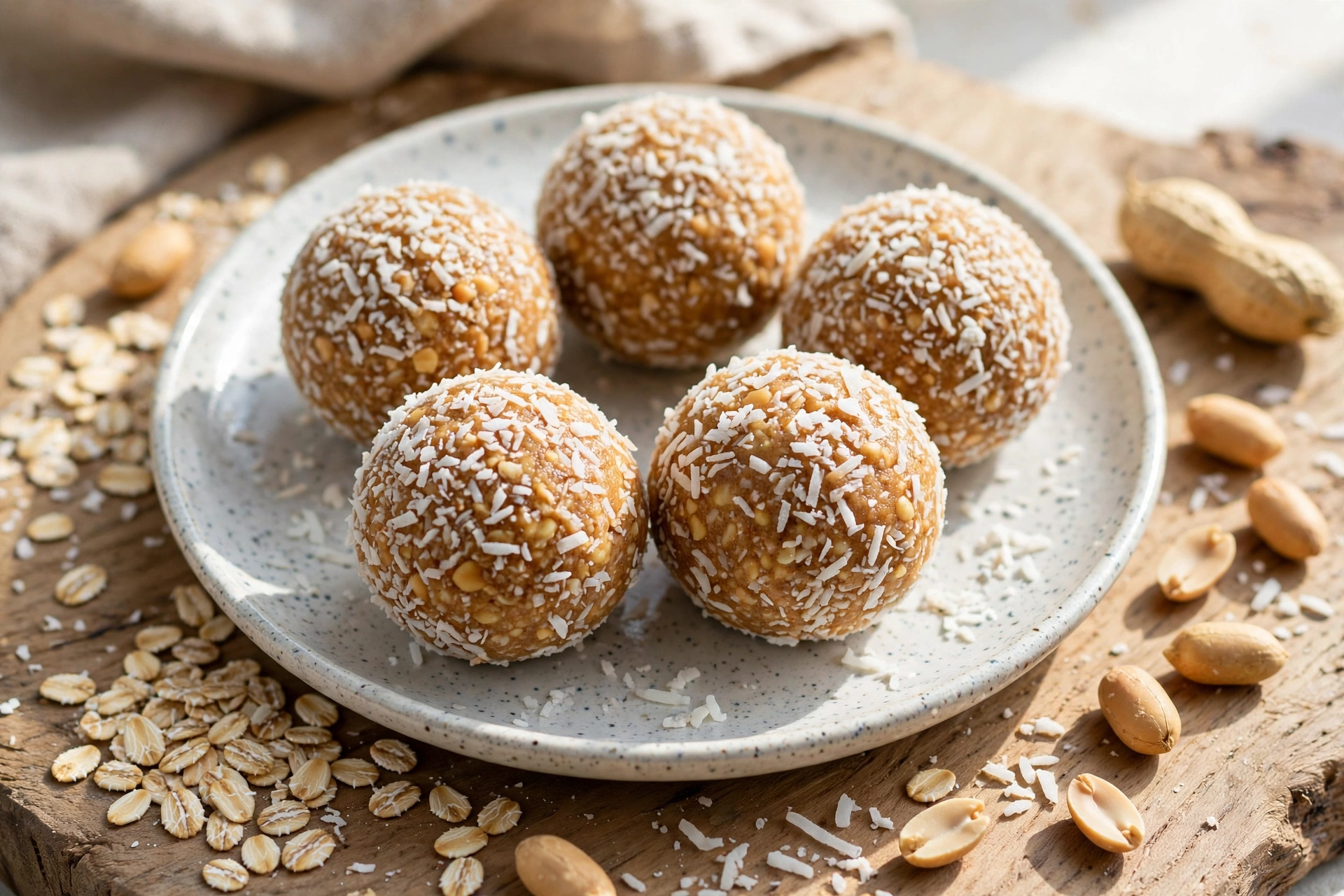
Energy balls are the most useful protein snack to know how to make: no baking, no special equipment, a batch that lasts a week in the fridge, and a recipe that survives any substitution. Oats and peanut butter supply the staying power; honey holds them together; chocolate chips make them something you actually want to eat.
Prep: 15 minutes | Chill: 30 minutes | Makes: 12 balls (about 6 g protein each)
Ingredients
- 100 g rolled oats
- 120 g peanut butter (smooth or crunchy)
- 2 tablespoons honey or maple syrup
- 2 tablespoons ground flaxseed or chia seeds
- 30 g dark chocolate chips
- 1 teaspoon vanilla extract
- A pinch of salt
- Desiccated coconut, for rolling (optional)
Method
- Stir everything together in a bowl until it holds together when squeezed. If it is too dry, add a teaspoon of milk; if too wet, add a spoonful of oats.
- Roll into 12 balls, about the size of a golf ball. Roll in coconut if you like.
- Chill for 30 minutes to firm up, then store in a sealed container in the fridge for up to a week.
Make it yours: swap peanut butter for almond butter, add dried cranberries or chopped dates, or use cocoa powder instead of chocolate chips. For more make-ahead ideas in the same style, see our healthy snacks for weight loss guide.
Recipe 2: Greek yogurt bowl with berries and seeds (5 minutes)
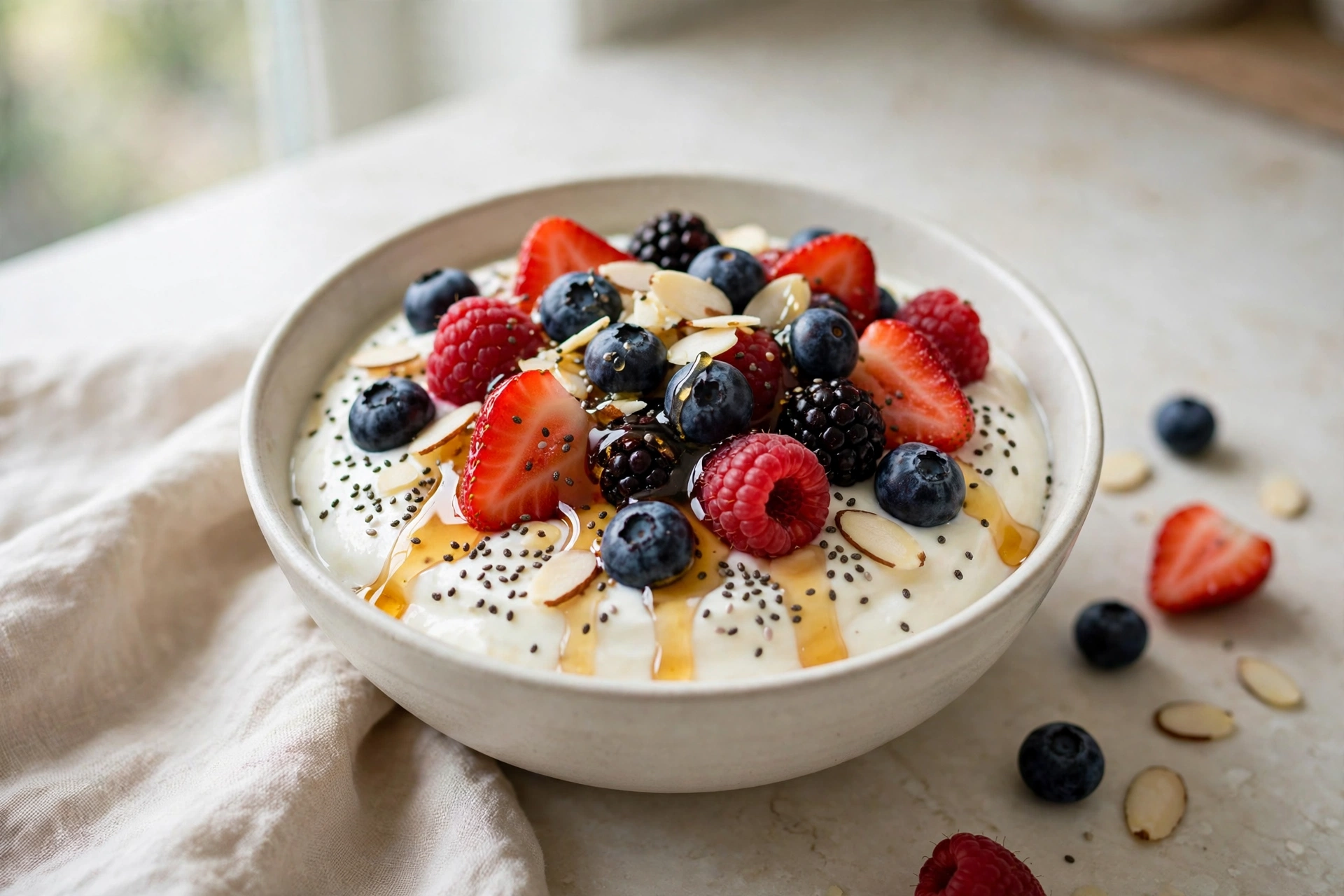
This is the protein snack for people who do not want to cook anything. A pot of Greek yogurt has around 15–17 grams of protein on its own; the berries add fibre and the seeds add healthy fat and crunch. It takes five minutes, it travels in a small container, and it works for breakfast, a desk snack, or a post-workout snack alike.
Prep: 5 minutes | Serves: 1 (about 17 g protein)
Ingredients
- 170 g plain Greek yogurt (full-fat or low-fat)
- A handful of mixed berries
- 1 tablespoon chia seeds or ground flaxseed
- 1 tablespoon sliced almonds or walnuts
- 1 teaspoon honey (optional)
Method
- Spoon the yogurt into a bowl.
- Top with the berries, seeds and nuts, and drizzle with honey if you like.
- Eat immediately, or pack the toppings separately and assemble at your desk.
Make it yours: use cottage cheese instead of yogurt, sliced banana instead of berries, or a spoonful of peanut butter instead of nuts. Buy plain yogurt and add your own fruit — flavoured yogurts are often sweetened enough to undo the point. The same yogurt-bowl base appears in our healthy breakfast ideas guide, where it does duty as a full breakfast.
Recipe 3: Crunchy roasted chickpeas (30 minutes, makes 4 servings)
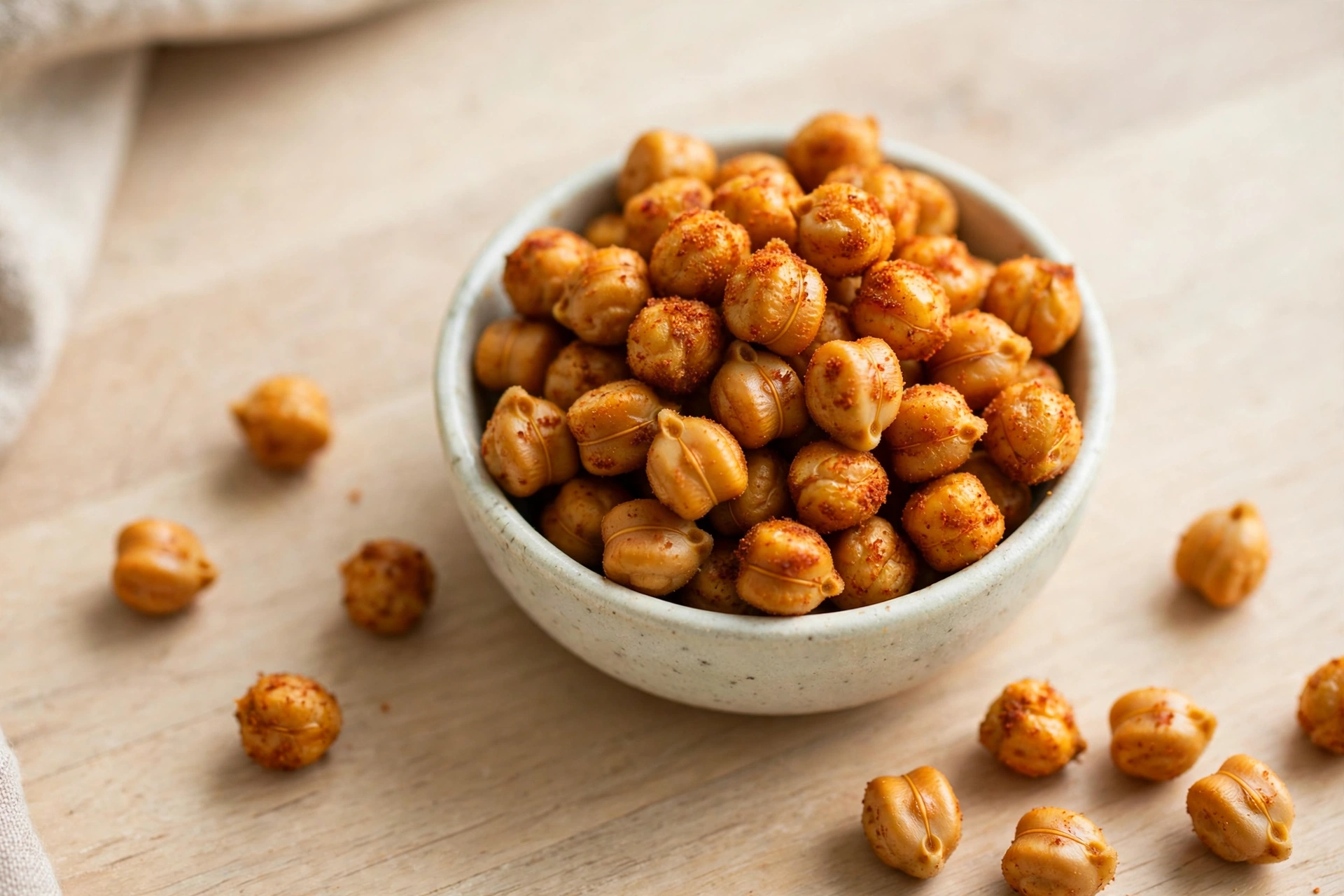
Roasted chickpeas are the savoury protein snack — the one for people who want crunch and salt, not sweetness. A tin of chickpeas, a little oil and spice, thirty minutes in the oven, and you have a snack with about 7 grams of protein and plenty of fibre per serving. They keep for a week in a jar, and they are the cheapest snack on this list.
Prep: 5 minutes | Cook: 25 minutes | Serves: 4 (about 7 g protein each)
Ingredients
- 1 tin chickpeas (400 g), drained and rinsed
- 1 tablespoon olive oil
- 1 teaspoon smoked paprika
- 1/2 teaspoon garlic powder
- 1/2 teaspoon cumin
- Salt and black pepper
Method
- Heat the oven to 200°C (400°F). Dry the chickpeas thoroughly with a clean tea towel — wet chickpeas steam instead of crisping. Remove any loose skins.
- Toss with the oil and spices.
- Spread in a single layer on a baking tray and roast for 20–25 minutes, shaking the tray halfway, until golden and crunchy.
- Cool completely before storing in a jar or container — they crisp up further as they cool.
Make it yours: try curry powder, chilli flakes, or rosemary and sea salt. The method never changes — only the seasoning does.
At your desk: 5 protein snacks that need no fridge
Desk snacks need to survive a drawer and be eaten one-handed. These five do both: mixed nuts (a small handful, about 6 g protein — measure it, because nuts are easy to overeat); beef or turkey jerky (about 10 g per small pack — check the label for added sugar); roasted edamame (about 9 g per small pack); peanut butter on wholegrain crackers (about 8 g); and hummus with vegetable sticks (about 5 g). Keep nuts and crackers in the drawer and the 4 p.m. slump stops being a vending-machine trip.
After a workout: 5 snacks that rebuild, not just refuel
After exercise, the body wants protein and some carbohydrate together. These five deliver both: two boiled eggs (about 12 g protein — boil a batch on Sunday); chocolate milk (about 8 g per small carton, and genuinely one of the best-studied recovery drinks); cottage cheese with pineapple (about 14 g); a tuna and cracker snack pack (about 15 g); and a banana with peanut butter (about 8 g).
On the move: 4 protein snacks for the car, the train and the school run
Portable snacks need to survive a bag without leaking or going soft: a cheese stick and an apple (about 7 g); a small pot of Greek yogurt (about 15 g — the single highest-protein snack on this list for its size); a protein bar (10–20 g, but check the sugar — some bars are chocolate bars with a protein label); and trail mix with seeds and dried fruit (about 6 g).
For kids: 3 protein snacks they will actually eat
Kids do not care about protein, so the snack has to win on taste: peanut butter banana bites (banana slices sandwiched with peanut butter — about 5 g); cheese cubes with grapes (about 7 g); and yogurt tubes or pouches, frozen (about 5 g — frozen yogurt is ice cream to a child).
Protein per snack: the quick table
Approximate protein per serving, so you can compare at a glance:
- Greek yogurt bowl: ~17 g
- Tuna and crackers: ~15 g
- Cottage cheese with pineapple: ~14 g
- Two boiled eggs: ~12 g
- Beef jerky (small pack): ~10 g
- Roasted edamame: ~9 g
- Chocolate milk: ~8 g
- Peanut butter on crackers: ~8 g
- Banana with peanut butter: ~8 g
- Roasted chickpeas: ~7 g per serving
- Cheese stick with apple: ~7 g
- Energy balls (two): ~12 g
Yogurt, eggs, cottage cheese and tuna are the highest-protein options for the least effort; nuts, chickpeas and energy balls win on portability and shelf life. Pick the snack that fits the situation, not the one with the biggest number.
Frequently asked questions
What is the best high protein snack?
Greek yogurt is the best all-round choice: about 15–17 grams of protein per pot, no cooking, portable, and easy to make taste good with berries and nuts. Two boiled eggs are a close second and cost less.
What snacks are high in protein but low in sugar?
Boiled eggs, Greek yogurt (plain), cottage cheese, roasted chickpeas, nuts and jerky are all high in protein and naturally low in sugar. Avoid protein bars and flavoured yogurts, which often contain as much sugar as a chocolate bar.
How much protein should a snack have?
Aim for 10–20 grams — enough to keep you full until the next meal without turning the snack into a meal. Two eggs, a pot of Greek yogurt, or a tuna snack pack all sit in that range.
Are protein snacks good for weight loss?
They can help: protein keeps you full longer, so a protein-rich snack often means eating less later. But a snack still has calories — measure nuts and nut butter rather than eating from the bag. Our sugar-free desserts guide has sweet options that use the same low-sugar logic.
Can I make protein snacks ahead for the week?
Yes — that is the point of the recipes above. Energy balls keep a week in the fridge, roasted chickpeas keep a week in a jar, and boiled eggs keep up to a week refrigerated.
Final word
Protein snacks are not a special diet food — they are just snacks built the right way round. Start with the protein, add fibre, and keep the sugar low. Boil the eggs on Sunday, make a batch of energy balls, keep yogurt in the fridge, and the afternoon stops being a hunger emergency.
Source: Harvard T.H. Chan School of Public Health, Protein
Source: USDA FoodData Central
Related Posts

Beef Bouillon Cubes Pho Recipe: Rich Broth in 45 Minutes
Beef Bouillon Cubes Pho Recipe made easy — no bones, no all-day simmering. Deep spiced broth, tender noodles, and all…

7 Easy Recipes for Pineapple Guava Fruit You Need to Try
Looking for creative recipes for pineapple guava fruit? Discover easy jams, smoothies, and feijoa dessert recipes to enjoy this tropical…
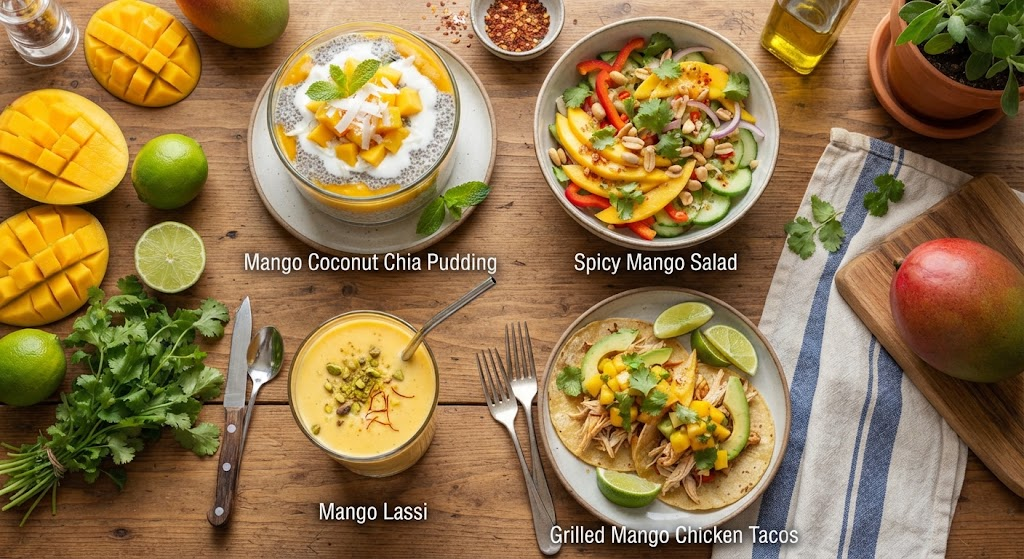
Mango Recipes: 25+ Sweet & Savory Ways to Use Fresh Mango
From smoothies to salsa, these mango recipes cover breakfast, snacks, mains, and desserts — plus tips for picking and ripening…