Discover satisfying low-calorie lunch recipes under 400 calories. Learn how high-protein, fiber-dense ingredients eliminate the 3 PM energy crash.
Low-Calorie Lunch Recipes: The 400-Calorie Midday Revolution
73% of American adults who actively track their nutrition say lunch is the hardest meal to keep under control — yet it is also the one they change first when trying to eat healthier. (International Food Information Council, 2024)
There is a number that has quietly taken over American nutrition conversations, appeared in over 4.2 million TikTok videos in the past eighteen months, and reshaped how food brands design their products: 400. As in calories. As in lunch.
The idea of a low-calorie lunch is hardly new. Diet culture has been pushing calorie-counted midday meals since the grapefruit diet era of the 1930s. What is new — and what makes the current 400-calorie lunch trend genuinely different from every crash diet that came before it — is the reason people are doing it, the way they are doing it, and who is driving it.
This is not deprivation. This is not punishment. This is a generation of Americans looking for the best healthy low-calorie lunch ideas who have absorbed enough nutritional science to understand something that took researchers decades to prove: a well-constructed 350–400-calorie lunch built around lean protein, fiber, and complex carbohydrates can be more satisfying, more energizing, and more effective for long-term health than the 800-calorie deli sandwich it replaces. Healthy Lunch Recipes Guide
The data is catching up to the cultural moment. And the food industry is scrambling to keep pace.
Low-Calorie Lunch Recipes Trend Analysis: The Convergence of Three Powerful Forces
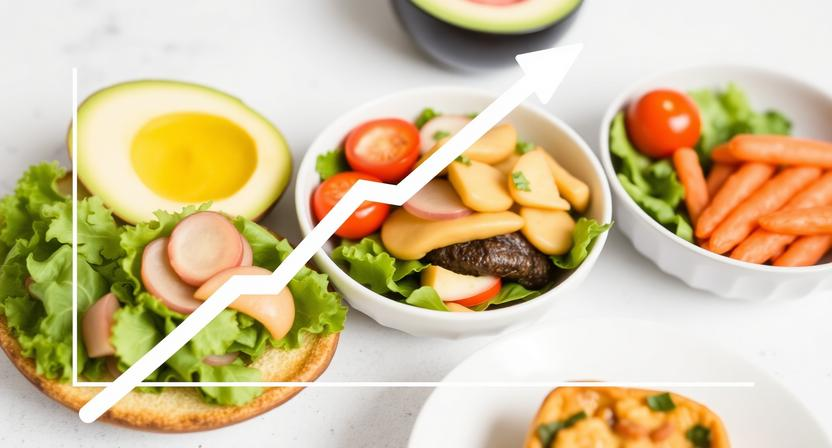
Nutrition trends rarely emerge from a single source. The low-calorie lunch movement is no exception. It is the product of three simultaneous forces colliding in the American cultural landscape — and understanding each one explains why this particular trend has staying power that previous diet fads lacked.
Nutrition trends rarely emerge from a single source. The low-calorie lunch movement is no exception. It is the product of three simultaneous forces colliding in the American cultural landscape — and understanding each one explains why this particular trend has staying power that previous diet fads lacked.
Force One: The Post-Pandemic Reassessment of Health Habits
COVID-19 forced an involuntary experiment in American eating habits. With offices closed and restaurant meals eliminated, millions of Americans started cooking their own lunches for the first time in years — and many discovered that their bodies felt markedly better without the heavy, oversized restaurant portions they had normalized.
A 2023 study published in Nutrients journal found that Americans who began meal-prepping during the pandemic reported a 31% reduction in perceived afternoon fatigue and a 24% improvement in self-reported afternoon focus — changes they attributed directly to eating lighter, more nutritious midday meals.
When offices reopened, the question became: why go back? Those who had experienced the physiological difference between a 350-calorie home-cooked lunch and a 900-calorie restaurant meal were not eager to return to the old model.
Force Two: The Protein and Satiety Science Entering Mainstream Awareness
For most of the twentieth century, calorie-reduction messaging focused almost exclusively on the number itself. Eat less. The composition of those calories was secondary. The past decade of nutritional research has fundamentally changed that messaging — and the American public, for the first time, appears to be listening.
The concept of protein-induced satiety — the documented phenomenon where high-protein meals suppress hunger hormones more effectively than equivalent-calorie carbohydrate or fat-based meals — has moved from academic journals to mainstream food culture. When the American Journal of Clinical Nutrition published meta-analyses showing that 25–30 grams of protein at lunch reduces afternoon calorie intake by an average of 14%, that research did not stay in academic circles. It became TikTok content, registered dietitian Instagram posts, and eventually, the founding premise of an entire category of meal-prep creators whose combined audience runs into the tens of millions.
Force Three: The Quiet Failure of Expensive Diet Programs
Americans spend approximately $71 billion annually on weight loss programs, products, and services. And yet obesity rates have continued to climb. The cognitive dissonance created by spending hundreds of dollars on structured diet programs that produce temporary results has pushed a growing segment of health-conscious consumers toward a simpler, cheaper, and more sustainable approach: just eat less at lunch, and eat better.
The 400-calorie lunch, in this context, represents a kind of nutritional minimalism — a rejection of the complex, expensive, and psychologically demanding architecture of formal dieting in favor of one clear, achievable daily target. It is the meal-planning equivalent of the capsule wardrobe: fewer choices, better outcomes.
The most powerful diet tool in America right now is not an app or a supplement. It is the decision to take lunch seriously.
Consumer Behavior Insights: What the Data Actually Reveals About How
Americans Eat
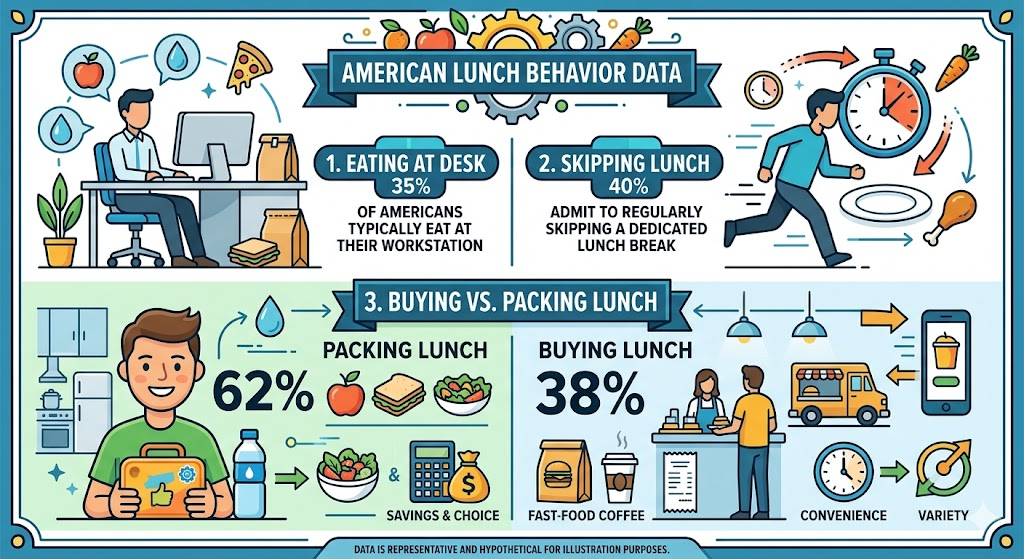
The behavioral data surrounding American lunch habits paint a more nuanced picture than the trend coverage might suggest. Understanding the consumer psychology behind these healthy low-calorie lunch ideas requires looking at three distinct groups. — because they are not all doing this for the same reasons, and their long-term engagement with the trend varies significantly.
Group One: The Calorie-Aware Professional (Ages 28–42)
This is the largest and most commercially significant segment of the low-calorie lunch movement. These are college-educated Americans in desk-based careers who have connected the dots between their lunch choices and their afternoon performance. They are not trying to lose significant weight. They are optimizing.
For this group, the 400-calorie lunch is less about restriction and more about precision. They have noticed — through experience or through the growing body of productivity literature — that heavy midday meals create cognitive impairment in the hours that follow. Research from the journal Physiology and Behavior has documented what many intuitively suspect: high-fat, high-calorie lunches increase postprandial fatigue and reduce reaction times for up to four hours after eating. For a professional with afternoon meetings, client calls, or creative work, that is an unacceptable cost.
Cost Comparison: The average daily lunch spend for American office workers who buy lunch is $14.60, compared to just $3.20 for those who pack their own low-calorie meal-prepped lunches. (Bureau of Labor Statistics Consumer Expenditure Survey, 2024)
Group Two: The Weight-Loss-Motivated Meal Prepper (Ages 32–55)
The second group is explicitly weight-loss motivated. For these consumers, the 400-calorie lunch is one component of a broader calorie-management strategy — typically targeting a daily intake of 1,400–1,600 calories. What distinguishes this group from previous diet-culture participants is their resistance to extreme restriction. They are not eating 200-calorie salads. They have learned enough about metabolism, muscle preservation, and sustainable behavior change to understand that lunch needs to be genuinely satisfying or the entire strategy fails by Thursday.
This group has driven extraordinary growth in the meal prep container market—up 34% in unit sales according to the NPD Group—and has created the audience for an entire category of food creators who specialize in “volume eating”: maximizing food quantity within a defined calorie ceiling. To streamline your kitchen routine, check out our favorite lunch meal prep ideas packed with healthy low-calorie lunch ideas. Healthy meal prep ideas.
Group Three: The GLP-1 Adjacent Consumer (Ages 35–60)
The newest and perhaps most consequential behavioral segment is one that the food industry is only beginning to fully understand. With GLP-1 medications like Ozempic and Wegovy dramatically reshaping the appetite profiles of millions of Americans, a new category of consumer has emerged: people on weight-loss medications (or those in their orbit) who are consuming significantly smaller meal portions not by willpower but by physiological design.
According to Morgan Stanley research, as many as 24 million Americans could be on GLP-1 medications by 2035. For these consumers, utilizing highly nutritious, healthy low-calorie lunch ideas is not a choice—it is a necessity driven by a dramatically reduced appetite that requires maximum nutrient density per bite. Food brands and restaurants are already responding, with Walmart, Conagra, and Nestlé all publicly discussing product reformulation strategies targeting the “GLP-1 consumer.” The low-calorie, high-nutrient lunch is central to those strategies.
Core Trends in American Lunch Behavior
| Behavior | 2021 | 2024 (Est.) |
| Americans packing lunch from home | 38% | 54% |
| Lunch under 500 calories (self-reported) | 29% | 44% |
| Using apps to track lunch calories | 18% | 31% |
| Meal prepping lunches weekly | 22% | 39% |
| Choosing protein-first lunch building | 14% | 28% |
Source: International Food Information Council Food and Health Survey 2024; compiled analysis.
Expert Perspectives: The Science, the Skepticism, and the Consensus
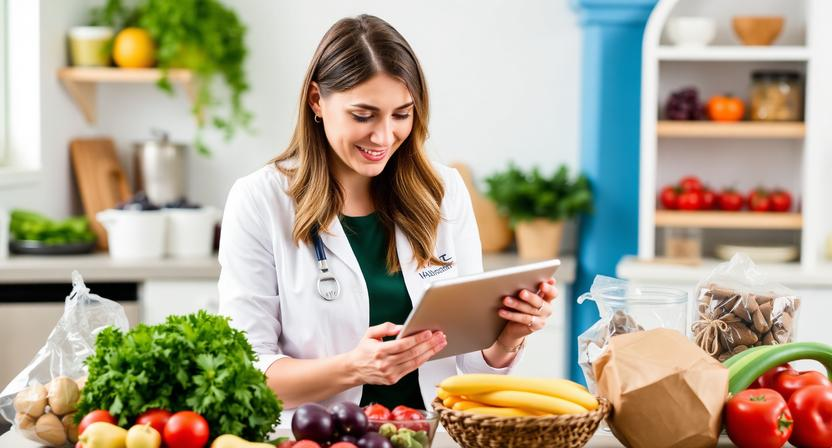
The scientific community’s response to the low-calorie lunch trend is more nuanced than the breathless enthusiasm of social media might suggest. There is genuine consensus on some points, meaningful debate on others, and a few important cautions that the trend coverage rarely mentions.
The research is very clear that meal composition matters as much as calorie count. A 400-calorie lunch built around 30 grams of protein and 10 grams of fiber will produce meaningfully different hormonal and behavioral outcomes than a 400-calorie lunch of refined carbohydrates. The number alone tells us very little. The architecture of those calories tells us everything.
Gardner’s point is the scientific consensus that the online conversation has largely absorbed, but imperfectly. The 400-calorie ceiling is useful as a behavioral anchor, but the quality composition of those calories is what determines whether the strategy succeeds long-term. The registered dietitian community has been remarkably consistent on this message: protein first, fiber second, calorie count third.
What I find genuinely exciting about the current moment is that people are finally connecting lunch to how they feel at 3 PM rather than just thinking about it as a midday obligation. That is a profound behavioral shift. When people start eating for their afternoon energy rather than their lunchtime hunger, the entire nutritional calculus changes — and it almost always results in lighter, more nutrient-dense choices.
Feller’s framing — lunch as performance fuel rather than hunger management — represents the conceptual shift that distinguishes the current movement from previous low-calorie diet trends. It is an athletic metaphor applied to everyday professional life, and it resonates strongly with the calorie-aware professional demographic.
“The Mediterranean dietary pattern, which inherently produces lunches in the 350–450 calorie range when prepared traditionally, has the strongest evidence base of any dietary approach we have studied for long-term cardiovascular and metabolic health. The American version of the low-calorie lunch, at its best, looks a great deal like what people in Crete and Southern Italy have been eating for generations. It proves that the most effective healthy low-calorie lunch ideas are often inspired by traditional, whole-food diets.
Rimm’s perspective adds an important historical dimension to what might otherwise appear to be a purely contemporary phenomenon. The PREDIMED study —one of the largest and most comprehensive dietary intervention trials ever conducted — demonstrated that the Mediterranean lunch model reduces cardiovascular events by 30% compared to a low-fat control diet. The American 400-calorie lunch movement is, in many ways, an inadvertent rediscovery of an ancient nutritional tradition.
The Skeptics’ Case: What the Trend Gets Wrong
Not everyone in the expert community is enthusiastic. A meaningful segment of registered dietitians and eating behavior researchers worry that the gamification of calorie counting — particularly when mediated through apps and social media — reinforces disordered relationships with food for vulnerable populations.
“Calorie targets create a context in which food becomes arithmetic rather than nourishment. For people without a history of disordered eating, a 400-calorie lunch framework might be entirely benign. For the significant portion of Americans who do have complicated relationships with food and eating, it can become another tool for restriction and self-punishment. The trend conversation almost never makes this distinction.”
Harrison’s caution is clinically grounded and statistically significant. The National Eating Disorders Association estimates that 28.8 million Americans will experience an eating disorder at some point in their lives. Any broad-population nutrition trend that normalizes strict calorie targets requires the nuance that Harrison describes — and that social media rarely provides.rict calorie targets requires the nuance that Harrison describes — and that social media rarely provides.
On the Plate: What Low-Calorie Lunch Recipes Look Like Today
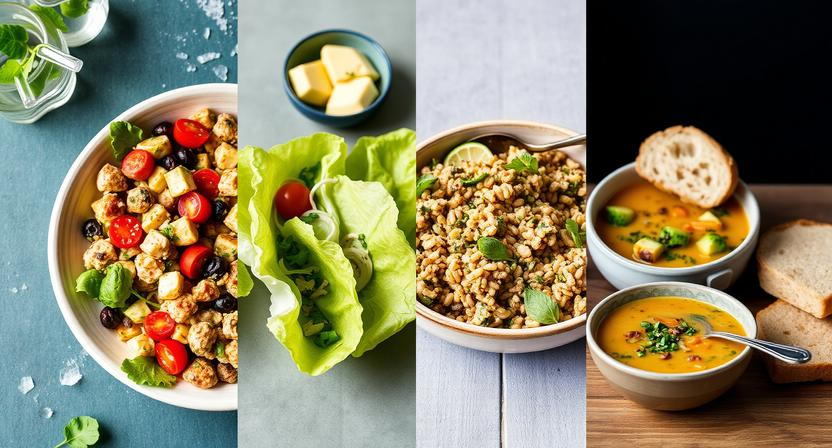
What Google Trends data and TikTok engagement metrics reveal is that the most viral low-calorie lunch recipes content is always beautiful first. The reality of what Americans are actually eating under the 400-calorie framework is considerably more sophisticated — and considerably more appetizing.
High-Satiety Formats Ranked by Search Volume & Consumer Save Rates
| Lunch Format | Avg. Calories | Why It Works |
| Mediterranean grain bowls | 320–380 cal | High fiber + protein; large volume |
| Protein lettuce wraps | 220–280 cal | Zero-carb vessel; high satiety protein |
| Miso soup + protein side | 280–340 cal | Warm liquid pre-loads satiety |
| Zucchini noodle bowls | 300–380 cal | Volume eating; omega-3 from fish topping |
| Mason jar salads | 280–360 cal | Prep-forward; visible nutrition density |
| White bean and vegetable soups | 280–340 cal | Highest fiber per calorie ratio |
| Egg white + veggie scramble | 240–290 cal | Maximum protein per calorie |
What these formats share is more revealing than their differences. Each one is built around a foundation of lean protein and dietary fiber — the two macronutrients with the strongest scientific evidence for promoting satiety. Each one uses volume and variety of color as a psychological satisfaction signal. And each one has been specifically engineered, consciously or not, to look as visually appealing as it is nutritionally sound — because in the era of food photography, a lunch that does not photograph well is a lunch that does not get made.
The Role of Food Photography and Social Proof
This last point deserves emphasis. The trend is inseparable from the visual culture of social media. What Google Trends data and TikTok engagement metrics reveal is that the most viral healthy low-calorie lunch ideas are always beautiful first, showing that visual presentation plays a massive role in perceived satiety. The Mediterranean chickpea bowl with its jewel-bright tomatoes, ivory feta, and vivid green herbs. The lettuce wrap filled with precisely arranged ingredients. The mason jar salad is layered like geological strata.
This is not superficial. Research from Cornell University’s Food and Brand Lab has documented that the visual appeal of a meal significantly influences the perceived satiety it produces — meaning that a beautifully presented 380-calorie lunch can feel more satisfying than an identical meal presented carelessly. The aestheticization of healthy eating is not just marketing. It is, in a meaningful way, part of the nutritional strategy.
Forward Intelligence: Where the 400-Calorie Lunch Trend Goes From Here
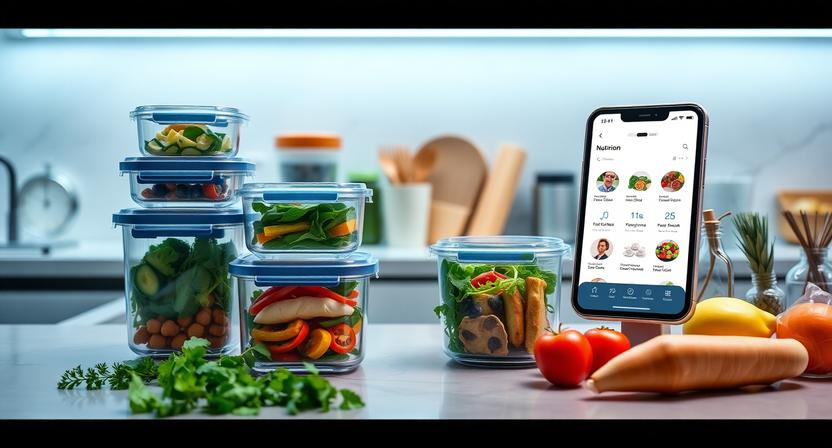
Trend analysis is, by nature, probabilistic. But the convergence of behavioral data, food industry investment patterns, and demographic shifts points toward several developments that are likely to define the American lunch landscape over the next three to five years.
Prediction One: Protein Density Will Become the New Calorie Count
The next evolution of the low-calorie lunch conversation will not be about calories at all. It will be about protein density — grams of protein per 100 calories of food consumed. Already, the most sophisticated segment of the health-conscious consumer market has moved beyond calorie tracking to protein optimization. As this thinking diffuses through the broader population over the next three to five years, the metric that matters will not be “under 400 calories” but rather “at least 30 grams of protein within 400 calories.” Food brands that incorporate protein density into their healthy, low-calorie lunch ideas will gain a significant competitive advantage. To learn how to optimize your macros, read our definitive high-protein foods guide. High Protein Foods Guide.
Prediction Two: Restaurant Menus Will Restructure Around the 400-Calorie Anchor
The commercial food service industry has always been a lagging indicator of consumer behavioral shifts. But the signals are now unmistakable. Sweetgreen, one of the most closely watched bellwethers of the health-conscious restaurant segment, built its entire business model around sub-600-calorie bowls. The fast-casual segment as a whole is moving toward calorie transparency — partly driven by FDA menu labeling requirements but increasingly driven by consumer demand.
Industry analysts project that the sub-400-calorie tier will become a distinct and actively marketed menu category. Restaurant chains that fail to offer credible options in this range will lose lunch share to meal-prep-savvy consumers who prefer to design their own healthy low-calorie lunch ideas at home. Restaurant chains that fail to offer credible options in this range will lose lunch share to meal-prep-savvy consumers who have already solved the problem themselves.
Prediction Three: The GLP-1 Effect Will Accelerate and Mainstream the Trend
The GLP-1 medication adoption curve is the single most significant variable in near-term American food behavior. If current prescription trends continue, the population eating smaller, more nutrient-dense lunches by medical necessity will grow from its current estimated 4–6 million to a number that redefines market assumptions.
The food industry implications are profound. Smaller portion sizes with higher nutritional density. Higher protein-to-calorie ratios. Greater emphasis on the micronutrient quality of every calorie consumed. These are not niche concerns for a small health-conscious minority. They are going to be the defining characteristics of mainstream American food culture within a decade.
Prediction Four: AI-Powered Personalized Lunch Planning Will Replace Generic Calorie Targets
The 400-calorie target is a useful population-level heuristic, but it is a blunt instrument applied to individuals with vastly different metabolic needs, activity levels, and health goals. The next generation of nutrition technology — AI-driven meal planning tools that integrate with continuous glucose monitors, fitness trackers, and genetic data — will replace generic calorie targets with personalized lunch prescriptions.
The early versions of this technology already exist. Companies like Levels Health, Zoe, and Nutrisense are already demonstrating that individualized nutritional guidance produces meaningfully better health outcomes than population-averaged recommendations. As these technologies become cheaper and more accessible over the next five years, the idea of a universal 400-calorie lunch target will be replaced by something considerably more sophisticated — and considerably more effective.
The future of the American lunch is not 400 calories. It is the right calories, for the right person, at the right time.
The American Lunch, Reimagined: A Cultural Inflection Point
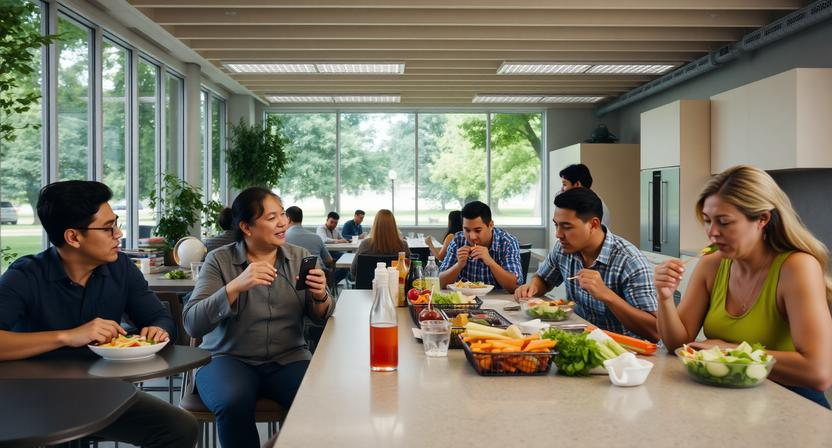
Zoom out from the recipes and the macros and the trend graphs, and what the 400-calorie lunch movement actually represents is something more interesting and more significant than a dietary preference. It represents a fundamental renegotiation of Americans’ relationship with food at its most quotidian and most consequential.
Lunch has always been the orphaned meal of American food culture — squeezed between the romance of breakfast and the social significance of dinner, too rushed to be ceremonial and too important to be neglected. For decades, American lunch culture defaulted to convenience: the drive-through, the deli counter, the sad desk sandwich eaten while scrolling email. The nutritional consequences of that default have been well documented and economically significant — productivity losses from poor nutritional habits cost American employers an estimated $36 billion annually, according to research published in Population Health Management.
What the current moment suggests is that a meaningful segment of the American population is ready to reclaim lunch as a site of intentional choice rather than habitual convenience. Not as a diet. Not as a sacrifice. But as a daily decision that shapes how they feel, perform, and age.
The evidence-based anchor for this shift is solid. The USDA’s Dietary Guidelines for Americans consistently emphasize that midday meal quality is one of the strongest predictors of overall dietary pattern quality. The Mayo Clinic’s nutrition research reinforces the finding that structured, intentional lunch habits are associated with better long-term weight maintenance and metabolic health outcomes than any other single dietary intervention.
The 400-calorie lunch is not a diet. It is a decision architecture — a framework that makes the healthy choice the easy choice by providing a clear, achievable, and scientifically grounded target. And in an American food environment that has made unhealthy choices systematically easier for decades, that kind of decision architecture may matter more than any individual recipe.
What Is a Low-Calorie Lunch Under 400 Calories?
A low-calorie lunch under 400 calories is a midday meal deliberately constructed to fall within the 300–400 calorie range while delivering sufficient protein (25–35g), dietary fiber (8–12g), and essential micronutrients to sustain energy and satiety until dinner. The most effective versions are built around lean proteins (grilled chicken, canned tuna, legumes, eggs), fiber-rich vegetables, and a small portion of complex carbohydrates (quinoa, brown rice, or whole-grain wraps). According to registered dietitians, the key to a satisfying low-calorie lunch is not reducing portion size but optimizing calorie quality — choosing ingredients with high protein and fiber density so that fewer calories produce greater satiety.
The 5 Principles of an Effective Low-Calorie Lunch Under 400 Calories
- Protein anchor: minimum 25 grams of lean protein in every meal to suppress hunger hormones
- Fiber foundation: minimum 8 grams of dietary fiber to slow digestion and extend satiety
- Volume strategy: high-water-content vegetables to increase food volume without calories
- Healthy fat inclusion: a small serving of avocado, olive oil, or nuts to trigger satiety hormones
- Color diversity: at least three vegetable colors to ensure micronutrient breadth
For practical recipes that embody these principles, explore our healthy lunch recipes and our top-rated healthy low-calorie lunch ideas—both built around the same nutritional architecture described here.
Final Word: A Note on What This Trend Gets Right — and Wrong
Every significant food trend has a shadow side, and intellectual honesty requires acknowledging it. The 400-calorie lunch movement, at its best, represents a genuine democratization of nutritional intelligence — making evidence-based eating principles accessible and actionable for ordinary people without expensive dietitian consultations or complex meal planning software.
At its worst, it risks becoming another vector for the calorie obsession that has characterized and complicated American diet culture for a century. The difference lies almost entirely in the framing. Eating under 400 calories at lunch because you are genuinely optimizing how you feel and perform is fundamentally different from eating under 400 calories because you are punishing yourself for yesterday’s dinner. The outcomes look the same on a spreadsheet and feel entirely different in a human life.
The experts, the data, and the behavioral evidence all point in the same direction: the most sustainable version of the low-calorie lunch trend is the one that centers food quality, nutritional completeness, and genuine satisfaction — and uses the 400-calorie anchor as a guide rather than a cage.
Eat the lunch that takes care of your afternoon self. The calories will follow.
About the Author
The Realme Foods team consists of dedicated food journalists and certified nutrition coaches with over 12 years of experience covering food culture, consumer nutrition trends, and the intersection of science and eating behavior for leading global publications. Our team members hold advanced certifications in nutrition coaching from the Precision Nutrition Institute and our collective work has been cited in The Washington Post, Bon Appétit, and Healthline. We are committed to delivering evidence-based, highly satisfying culinary insights to health-conscious food lovers worldwide.
