Discover the ultimate productivity recipe — 10 proven daily habits backed by science that help you focus better, beat burnout, and get more done.
The Ultimate Productivity Recipe: 10 Proven Habits to Get More Done Every Day
If your to-do list keeps growing while your energy keeps shrinking, you don’t need another app or hack — you need a repeatable productivity recipe: a simple mix of habits, timing, and environment that work together every single day. This guide breaks that recipe down into 10 proven, science-backed habits you can start using today, in the order that gets you results fastest.
What Is a Productivity Recipe and Why It Is More Effective Than Willpower
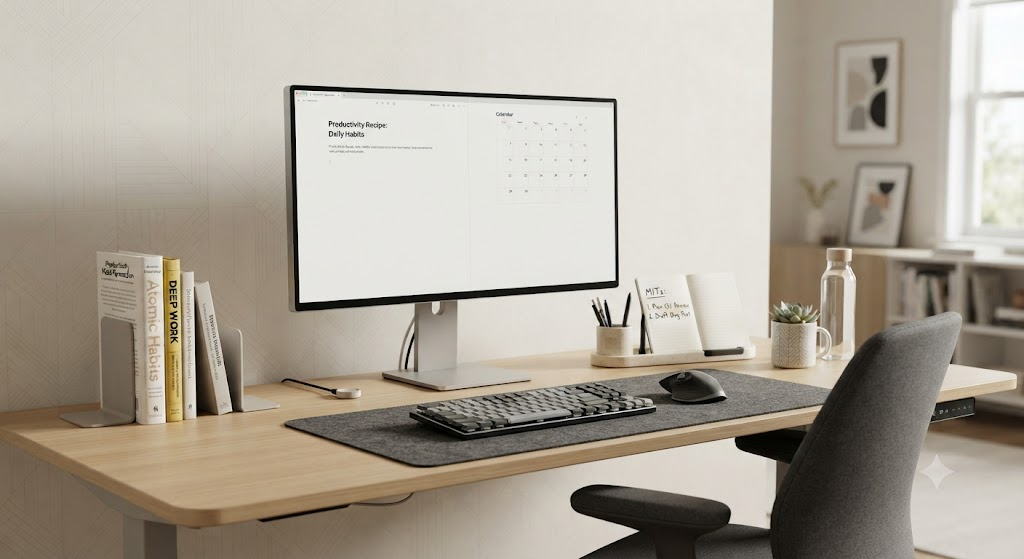
A productivity recipe is not a single trick. It’s a combination of small, repeatable ingredients — a morning ritual, focused work blocks, smart breaks, and a distraction-proof environment — that combine into consistent daily output.
Most people try to force productivity through willpower alone. That’s why it fails. Willpower is a limited resource that drains as the day goes on, a phenomenon researchers call decision fatigue. The fix isn’t more discipline; it’s fewer decisions. When habits handle the small stuff automatically, your mental energy stays free for the work that actually matters.
Think of it like cooking: you don’t reinvent a recipe every time you’re hungry. You follow the steps, and the result is consistent. Productivity works the same way.
The Science Behind Productive Habits
Before the list, it helps to understand why habits — not motivation — drive long-term output.
- Habits reduce cognitive load. Once a behavior becomes automatic, your brain no longer has to spend energy deciding whether to do it.
- Small wins build momentum. Completing an early task triggers a small dopamine response that carries motivation into later tasks.
- Energy is cyclical, not constant. The body naturally moves through cycles of high and low alertness (called ultradian rhythms), which is why scheduled breaks outperform working straight through the day.
- Environment shapes behavior more than intention does. A cluttered desk or a phone within reach will beat good intentions almost every time.
With that foundation, here’s the full productivity recipe.
The 10-Step Productivity Recipe for Daily Success
1. Start With a Consistent Morning Ritual
A short, repeatable sequence each morning signals to your brain that it’s time to focus. It doesn’t need to be elaborate — five to fifteen minutes is enough.
A simple ritual might include:
- A glass of water and a few minutes away from screens
- Reviewing your top 1–3 priorities for the day
- A short stretch or walk to wake up the body
People who follow a consistent morning routine are more likely to start the day productively than those who reach for their phone first thing.
2. Identify Your Most Important Tasks (MITs)
Not all tasks deserve equal attention. Each morning, choose two or three Most Important Tasks — the ones that will move the needle most if completed.
Why this works:
- It prevents you from confusing “busy” with “productive”
- It protects your peak energy hours for high-value work
- It gives you a clear finish line each day, rather than an endless list
Tackle your hardest or most important MIT first, while your focus and willpower are freshest.
3. Use Time Blocking Instead of an Open To-Do List
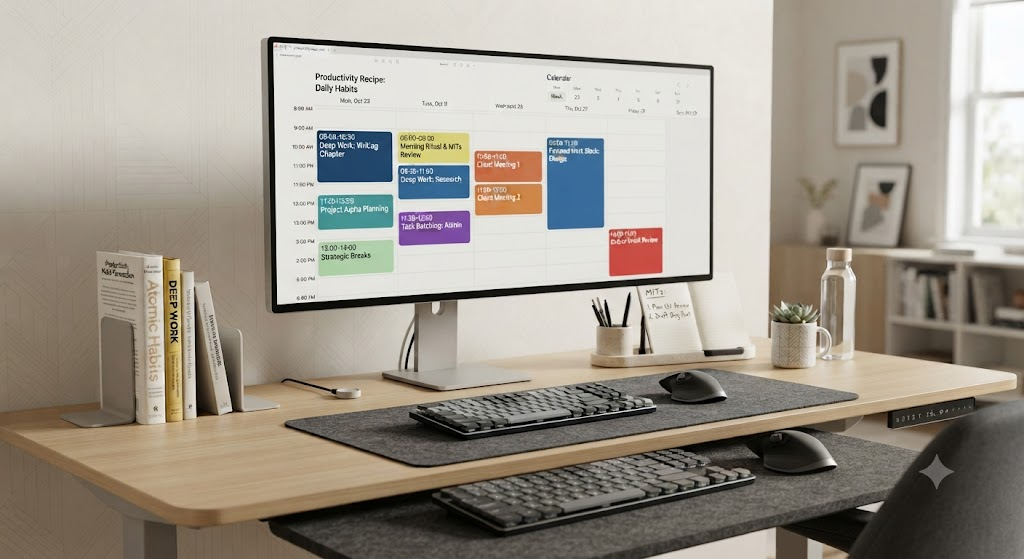
Time blocking means assigning specific chunks of your calendar to specific tasks, rather than working from a loose list. Instead of “reply to emails sometime today,” you schedule “9:00–9:30 AM: email.”
| Approach | Open To-Do List | Time Blocking |
|---|---|---|
| Structure | Unordered tasks | Scheduled time slots |
| Decision fatigue | High (decide what’s next constantly) | Low (schedule decides for you) |
| Follow-through | Easy to skip low-priority items | Protects time for every task |
| Best for | Simple, low-volume days | Busy, meeting-heavy schedules |
Time blocking works especially well when paired with your MITs — block your peak hours for the tasks that matter most.
4. Protect Focused, Distraction-Free Work Blocks
Deep, uninterrupted focus — often called deep work — is where your most valuable output happens. Author Cal Newport describes it as distraction-free concentration that pushes your abilities to their limit and creates real value.
To protect a deep work block:
- Turn off nonessential notifications
- Close unrelated browser tabs and apps
- Put your phone out of reach, not just on silent
- Start with sessions of 45–90 minutes; concentration tends to drop off beyond that window
Even two protected deep work blocks a day can outperform eight hours of fragmented, interrupted work.
5. Take Strategic Breaks — Don’t Just Push Through
Breaks aren’t wasted time; they’re part of the recipe. Research on high performers has found that many of the most productive workers use a working rhythm of roughly 50 minutes of focused work followed by a short recovery break, rather than grinding for hours without pause.
Simple ways to build in recovery:
- Stand, stretch, or take a short walk between work blocks
- Step outside for a few minutes of natural light
- Avoid replacing a real break with more screen time (scrolling isn’t rest)
Skipping breaks tends to backfire — output and focus quality both drop later in the day.

6. Batch Similar Tasks Together
Every time you switch between different types of tasks, your brain pays a “switching cost” — a few minutes of lost focus as it reorients. Task batching groups similar activities (emails, calls, admin work) into single blocks to reduce that cost.
Examples of batching:
- Checking and answering email at two or three set times a day, rather than continuously
- Grouping all calls or meetings into one part of the day
- Doing all your writing or creative work in one focused stretch
7. Reduce Digital Friction in Your Workspace
Your environment either supports focus or fights it. Small changes to reduce digital clutter compound into meaningfully fewer interruptions.
Quick wins:
- Turn off nonessential app notifications during work hours
- Use a website blocker for your biggest time sinks
- Keep a notepad nearby to jot down intrusive thoughts or new to-dos without breaking focus
- Keep only work-related items in your immediate line of sight
8. Fuel Your Focus With Balanced Meals and Hydration
Nutrition has a direct, same-day effect on concentration and energy. Meals that combine stable carbohydrates, protein, healthy fats, and micronutrients help prevent the energy crashes that derail an afternoon.
Habits that support steady energy:
- Favor balanced meals over heavy, high-sugar options that cause energy dips
- Keep water within reach — mild dehydration alone can reduce focus and alertness
- Have a light protein-rich snack ready for slumps instead of reaching for sugar
When to seek professional care: occasional afternoon fatigue is normal, but persistent exhaustion, difficulty concentrating, or major changes in appetite or sleep can signal an underlying health issue, such as a thyroid condition, anemia, or a mood disorder. If these symptoms continue for more than two weeks or interfere with daily life, consult a doctor rather than trying to “productivity hack” your way through it.
9. Plan Tomorrow Before You Finish Today
Spend five minutes at the end of each workday deciding what tomorrow’s MITs will be. This single habit removes the most common productivity killer: starting the day without a plan.
Benefits of an end-of-day review:
- You start the next morning with clarity instead of scrambling to figure out priorities
- Your brain can process unfinished problems in the background overnight
- You’re less likely to forget an important task or deadline
10. Track, Measure, and Adjust Your System
Treat your productivity recipe like an experiment, not a fixed formula. What works for someone else’s schedule may not fit yours.
How to fine-tune your system:
- Track how you actually spend your time for a few days to spot patterns
- Notice which meals, sleep amounts, or work blocks correlate with your best days
- Change one variable at a time and give it at least a week before judging the results
Productivity gains are rarely dramatic overnight. Small, consistent adjustments compound into significant results over months.
Building Your Own Custom Productivity Recipe: A Practical Framework
You don’t need to adopt all 10 habits at once. Start with whichever addresses your biggest pain point:
- Mornings feel chaotic? Start with the morning ritual and MITs.
- Constantly distracted? Start with time blocking and reducing digital friction.
- Burning out by 3 p.m.? Start with strategic breaks and balanced meals.
- Forgetting priorities? Start with the end-of-day planning habit.
Layer in one new habit every one to two weeks. Trying to overhaul your entire routine overnight almost always leads to burnout and abandonment within days.
Frequently Asked Questions
What is the best productivity habit to start with?
For most people, choosing 2–3 Most Important Tasks each morning delivers the fastest results because it forces clear priorities before the day gets chaotic.
How long does it take to build a productivity habit?
Most habits take a few weeks of consistent repetition before they feel automatic. Focus on consistency over intensity, and expect gradual, compounding improvement rather than instant results.
Is multitasking ever a good idea?
Generally, no. Switching between tasks adds a mental “switching cost” that slows you down overall, even though it feels like you’re getting more done at once.
How many breaks should I take during a workday?
A common approach is roughly 50 minutes of focused work followed by a 10–15 minute break, though the right ratio depends on the task and your personal energy patterns.
Can poor productivity be a sign of a health issue?
Sometimes. If low energy, poor focus, or fatigue persists for more than two weeks despite good habits, it’s worth speaking with a doctor to rule out sleep disorders, nutritional deficiencies, or other medical causes.
Final Thoughts
A true productivity recipe isn’t about doing more — it’s about building a repeatable system of habits that protect your focus, energy, and time. Start small: pick one habit from this list, apply it consistently for a week, and layer in the next once it feels automatic. Over time, these 10 habits combine into a sustainable rhythm that helps you get more done every day, without burning out along the way.

Related Posts

Healthy Eating: A Practical Guide to Nourishing Your Body
Discover what healthy eating really means! Learn simple, sustainable habits for balanced nutrition, mindful eating, and lasting well-being. Introduction Tired…
10 Essential Healthy Eating Habits at Work to Boost Your Productivity and Focus
Struggling with midday fatigue? Transform your workday with these practical healthy eating habits at work. Learn how to fuel your…

Benefits of Healthy Eating: How Good Food Improves Your Life
Explore the benefits of healthy eating, from better energy and digestion to disease prevention and mental well-being. Introduction Healthy eating…