Introduction
The Hook: The Overwhelming Aisle of Uncertainty
Picture this: You’re standing in the supplement aisle of your local pharmacy or health food store. The shelves stretch from floor to ceiling, a kaleidoscope of amber bottles, green “natural” labels, and bold promises. To your left, a $12.99 bottle of Magnesium boasts “Maximum Absorption!” To your right, an identical-looking $34.99 bottle has a small, unfamiliar gold seal and the word “Chelated.”
You pull out your phone and open Amazon. That’s worse. You type “Turmeric Curcumin.” You are greeted with 6,000+ results. The top product has 45,000 reviews and a 4.7-star average. Scrolling down, you see reviews like “Changed my life!” and “Caused severe stomach pain.”
The mental paralysis sets in.
- Is the expensive one safer?
- Is the cheap one just a placebo?
- Are those Amazon reviews even real?
- Is this actually what the label says it is?
You do not have a chemistry lab in your basement. You are not a toxicologist. You are a person trying to feel better, sleep better, or live healthier. You are standing in the dark, and the only light comes from marketing copy designed to sell you something, not inform you. This guide exists to hand you a flashlight.
The Problem: The Reality of DSHEA (Why the Government Isn’t Checking for You)
Before we hand you that flashlight, you need to understand the terrain. Most consumers operate under a false assumption of safety. We assume that if a product is on a store shelf at CVS, Walmart, or Whole Foods, a government agency must have verified that:
- The bottle contains what the label claims.
- The pills do not contain dangerous contaminants (lead, arsenic, bacteria).
- The product is effective for its stated purpose.
This assumption is incorrect and, in the case of dietary supplements, potentially dangerous.
In 1994, Congress passed the Dietary Supplement Health and Education Act (DSHEA). This law created the legal category for supplements as we know them today. Crucially, DSHEA classifies supplements as a subcategory of food, not drugs.
Here is the critical distinction that shapes everything about this framework:
| Required. Must prove safety and efficacy to the FDA before sale. | Drugs (Prescription/OTC) | Dietary Supplements (Vitamins, Herbs) |
|---|---|---|
| Pre-Market Approval | Required. Must prove safety and efficacy to FDA before sale. | Not Required. Manufacturer is responsible for safety, but does not need to submit proof to FDA before selling. |
| FDA’s Role | Proactive Gatekeeper. | Reactive Policeman. |
| Burden of Proof for Safety | On the Manufacturer (verified by FDA). | On the Manufacturer (self-policed). FDA intervenes only after adverse events or deaths are reported. |
| Contaminant Testing | Mandatory and verified. | Voluntary (unless the FDA shows up for an inspection years later). |
Under DSHEA, a company can manufacture a supplement in a facility that has never been inspected, using raw ingredients from a supplier they’ve never audited, put it in a bottle with an unverified label, and sell it online tomorrow. The FDA’s enforcement arm generally only gets involved when people start showing up in emergency rooms. A 2015 study in the New England Journal of Medicine estimated that dietary supplements account for approximately 23,000 emergency department visits every year in the United States.
This is not to say all supplements are dangerous. Many are produced with pharmaceutical-grade precision and integrity. But the regulatory environment forces you, the consumer, to be the detective. You cannot rely on the government to pre-screen safety. You must build your own dietary supplements a framework for evaluating safety .
The Solution: A Framework Based on Public Data and Visual Literacy
If you can’t test a pill in a lab, what can you test?
You can test transparency. You can test reputation. You can test public records.
This guide introduces a framework for evaluating safety that relies on three pillars of information that are 100% accessible to the average person without scientific equipment:
- Packaging Literacy: Learning to spot the “Proprietary Blend” trap and reading the Supplement Facts panel with a skeptic’s eye.
- Third-Party Audit Seals: Leveraging the work of independent labs (USP, NSF) who have done the lab testing for you.
- Brand Due Diligence: Using Google’s public index to search FDA Warning Letter databases and testing customer service for responsiveness.
This is not about memorizing a list of “Top 10 Safe Brands.” That list is obsolete by next month due to formula changes and supply chain shifts. A framework is a repeatable thought process—a filter you can apply to any bottle of dietary supplements , whether you find it at a boutique yoga studio or the clearance rack at a gas station.
The Promise: Your Repeatable, Lab-Free Checklist
By the time you finish reading this guide, you will not be overwhelmed by the supplement aisle. You will have a specific, actionable checklist that takes less than 90 seconds to complete per product.
We will walk through five specific steps:
- The Label Test
- The Seal Scan
- The Digital Background Check
- The Interaction Check
- The Marketing Bullseye Filter
This is a framework for evaluating safety that fits in your pocket. Let’s turn on the lights.
1: Decode the Supplement Facts Panel (The First Filter)
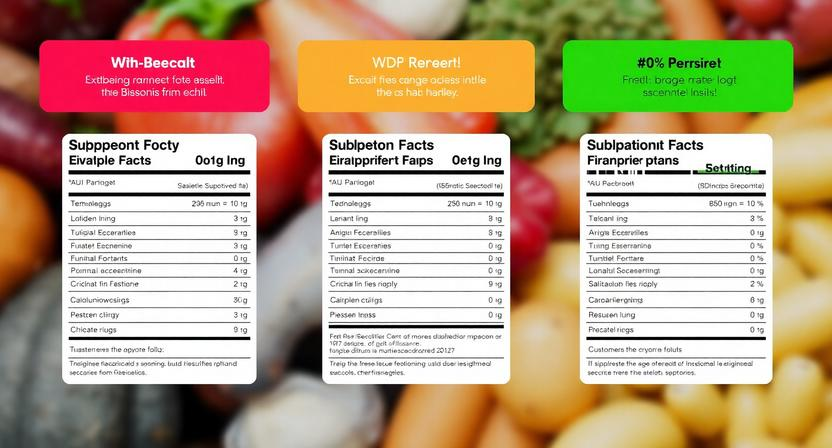
Your safety evaluation begins here, on the back of the bottle—specifically on the panel titled “Supplement Facts.”
The “Proprietary Blend” Trap
This is the most common mechanism used to hide potentially dangerous dosages or under-dose expensive ingredients. Look for the word “Proprietary Blend” followed by a total milligram amount and a long list of ingredients in parentheses.
Example: “Proprietary Energy & Focus Matrix 750mg (Guarana Extract, Green Tea Extract, Yohimbe Bark, L-Theanine)”
The Detailed Framework Rule:
If you see a Proprietary Blend, stop and apply this question: Can I see the exact milligram dosage of each active ingredient?
If the answer is No, this product fails the first step of the safety framework.
- Why this is a Safety Issue: Let’s say this “Matrix” contains Yohimbe Bark. Yohimbe is a potent stimulant linked to heart palpitations and high blood pressure. Is there 10mg in here (mild) or 200mg (potentially dangerous for someone with anxiety or heart issues)? You cannot know. You are blind.
- Why this is a Quality Issue: Often, the first ingredient listed (e.g., Guarana) makes up 90% of the blend, and the expensive, trendy ingredient (e.g., L-Theanine) is just a dusting of “fairy dust” to get the name on the label.
Framework Rule: Prioritize supplements with fully transparent, non-proprietary labels.
The “Other Ingredients” Check
Scroll past the active ingredients to the fine print: Other Ingredients.
- Green Flags: Vegetable Cellulose (capsule), Rice Flour, Magnesium Stearate (vegetable source), Silica.
- Orange/Yellow Flags (Potential Allergens/Sensitivities): Titanium Dioxide (used to make pills shiny white; banned in EU food due to genotoxicity concerns), Artificial Dyes (Red #40, Yellow #5), Hydrogenated Oils (trans fats).
Framework Rule: A shorter, simpler “Other Ingredients” list generally correlates with a cleaner manufacturing process and lower risk of digestive upset.
The Mega-Dose Alert
Check the “% Daily Value” column.
Framework Rule: If a single serving exceeds 1,000% DV for any B-Vitamin, or if you are taking a Fat-Soluble Vitamin (A, D, E, K) at more than 200% DV daily, ensure you have a specific medical reason (or a doctor’s blood test) for doing so. Accumulation of Iron and Vitamin A in the liver is a real, documented risk of unsafe supplementation.
2: The Third-Party Verification Scan (The Credibility Check)
Since you don’t have a lab, you need to borrow the reputation of a lab that audits supplement manufacturers. This is the single most important visual cue in a framework for evaluating safety .
Look for these three seals on the physical bottle or the product image online.
| Seal | What It Actually Verifies (The Lab Work Done For You) | Best Use Case |
|---|---|---|
| USP Verified Mark | Identity: Is the ingredient in the bottle? Potency: Is the amount correct? Purity: No harmful levels of heavy metals (Lead, Arsenic, Cadmium)? Dissolution: Will the pill break down in your stomach within 30 minutes? | General health, daily multivitamins, minerals. |
| NSF Certified for Sport | All of the above, PLUS a screen for over 280 banned substances (steroids, stimulants, masking agents). PLUS regular on-site facility inspections. | Athletes subject to WADA drug testing, military personnel, first responders. |
| ConsumerLab.com Approved | Independent testing for potency and heavy metals based on product category. | Cost-conscious comparison shopping. |
Framework Rule:
- Scenario A: Bottle has a USP or NSF seal -> HIGH CONFIDENCE. Buy the product. You have outsourced the lab work.
- Scenario B: Bottle has no seal -> PROCEED WITH CAUTION. It doesn’t mean the product is dangerous, but it means you must rely 100% on Step 3 (Brand Reputation).
3: Investigating the Brand Without a Microscope

You can’t tour their factory, but you can read the government’s public mail. This is the digital forensics portion of dietary supplements a framework for evaluating safety .
1. The cGMP Claim Check
Flip the bottle over and look for: “Manufactured in a GMP (Good Manufacturing Practices) Certified Facility.”
- Red Flag: This statement is missing entirely (rare, but happens with ultra-cheap imports).
- Pro Move (The 30-Second Google Check): Open a new tab. Type: “[Brand Name] FDA Warning Letter” .
- The FDA publishes these letters online. They detail violations like: “Failure to test raw ingredients for Salmonella” or “Product contains prescription drug Sildenafil (Viagra) not listed on label.”
- Framework Result: If a brand has a Warning Letter in the last 3-5 years for adulteration or misbranded ingredients, do not buy from this brand. This is a public record of a failed safety audit.
2. The Certificate of Analysis (CoA) Test
This is the ultimate transparency test. It costs you nothing but an email.
- Go to the brand’s website. Look for a “Quality,” “Testing,” or “Transparency” page. Some top-tier brands post CoAs publicly.
- If you can’t find it, email customer service:
> “Hello, I’m interested in purchasing [Product Name]. Can you provide a recent Certificate of Analysis for Batch #[Enter Lot Number from Bottle] showing heavy metal and potency results?”
Framework Result:
- They reply with a PDF: ELITE SAFETY LEVEL. Buy with confidence and loyalty.
- They reply with vague marketing jargon: “We test everything rigorously!” (But don’t send proof) -> CAUTION.
- They don’t reply: FAILED. If they won’t be transparent before the sale, they won’t be transparent if there’s a recall.
4: The Interaction Check (Safety Beyond the Bottle)
This is the most personalized part of the framework. A supplement can be 100% pure and still land you in the ER because of a conflict with your existing biology or medication.
Framework Tools (Free & Lab-Free):
- Drug Interaction Checker: Use the tool on Drugs.com or Medscape.
- Critical Example: St. John’s Wort reduces the effectiveness of Birth Control Pills, Antidepressants (SSRIs), and Blood Thinners.
- Critical Example: Vitamin K (often in green powders) directly counteracts Warfarin (Coumadin) , increasing stroke risk.
- Critical Example: Ginkgo Biloba, Garlic Extract, and Fish Oil all thin the blood. Stacking them with Aspirin or Plavix can cause dangerous internal bleeding.
- The “Stacking” Audit:
Many consumers take multiple products: A Multi, a Magnesium, a Sleep Aid, and a Pre-Workout. Use theStandard Evaluation Framework for Dietary Interventionshere: Add up the totals.- Example: You take a Multivitamin with 10mg of zinc. You take a ZMA supplement with 30mg of zinc. You take an Immunity Lozenge with 15mg Zinc.
- Total Daily Zinc: 55mg.
- Safety Context: The Tolerable Upper Intake Level (UL) for Zinc is 40mg. Long-term intake above this level suppresses copper absorption, leading to neurological issues and anemia.
5: The Red Flag Marketing Glossary
Sometimes, the warning is written in huge font on the front label. Here is the final linguistic filter of the framework.
| If the Label Says… | Your Framework Translation… |
|---|---|
| “FDA Approved Facility” | DECEPTIVE. The FDA registers facilities. It does NOT approve, certify, or endorse them for supplements. This is a legal loophole phrase designed to trick you. |
| “Miracle Cure” or “Cures [Disease]” | ILLEGAL & DANGEROUS. Supplements cannot legally claim to treat, cure, or prevent disease. If they do, they are either selling an unapproved drug or it’s a scam. |
| “Clinically Proven” (Without a Citation) | MEANINGLESS. Which study? Who paid for it? How many people? Was it peer-reviewed? No citation = No credibility. |
| “All Natural” | LOGICAL FALLACY. Poison ivy is natural. Arsenic is natural. Amanita mushrooms are natural. “Natural” has zero correlation with “safe.” |
Putting It All Together: Your No-Lab Safety Scorecard
Use this checklist every time you consider a new supplement.
The 90-Second Framework Checklist:
- [ ] Label Transparency: Exact amounts listed? No hidden “Proprietary Blend” obscuring dosages?
- [ ] Seal of Approval: USP, NSF, or ConsumerLab logo visible?
- [ ] Clean Record: Google search for “[Brand Name] FDA Warning Letter” came back empty?
- [ ] Interaction Safe: Checked against my Rx meds? Added up the total daily intake from all sources?
- [ ] Marketing BS Filter: Avoided “Miracle,” “Cure,” and “FDA Approved Facility” claims?
Conclusion
Navigating the world dietary supplements is not about becoming a chemist. It’s about becoming a critical thinker.
The market is flooded with innovation and good intentions, but it is also flooded with opportunism and, occasionally, outright contamination. While The Dietary Guidelines Provide a Framework for food groups and balanced meals, the supplement industry requires a more forensic, independent framework.
You wouldn’t buy a used car without checking the Carfax and test-driving it. You wouldn’t eat food from a restaurant with a “C” health rating. Stop treating the products you swallow daily with less scrutiny than you apply to a dinner reservation.
This framework for evaluating safety Is your flashlight? It takes 90 seconds. Use it. Your liver, your kidneys, and your peace of mind will thank you.
Here are 05 Frequently Asked Questions (FAQs) tailored specifically to the blog topic: “The Consumer’s Guide: Dietary Supplements a Framework for Evaluating Safety Without a Lab.”
These FAQs address the most common follow-up concerns a reader would have after finishing the article.
Frequently Asked Questions (FAQs)
1. If a product has no USP or NSF seal, does that automatically mean it’s unsafe or fake?
Answer: No, not automatically. The absence of a third-party seal does not mean the product is dangerous. It simply means the manufacturer has not paid for or submitted to that specific, expensive independent audit. Many smaller, high-quality brands operate with excellent GMP standards but cannot yet afford the USP verification program. However, the lack of a seal shifts the burden of proof entirely to you. In this case, you must perform Step 3 (The Digital Background Check) with extra diligence. If a brand without a seal refuses to provide a Certificate of Analysis (CoA) when you email them, that is when you should consider it a red flag and walk away.
2. I’ve heard that *The Dietary Guidelines Provide a Framework* for eating. Why can’t I just use that to judge my supplements?
Answer: The Dietary Guidelines for Americans are designed specifically for food and beverage patterns—i.e., “Eat 2 cups of fruit per day” or “Limit added sugars to 10% of calories.” They are an excellent tool for building a healthy plate. However, they are not designed to evaluate the safety of concentrated extracts, isolated amino acids, or herbal supplements. The Dietary Guidelines will not tell you if your Turmeric capsule is contaminated with lead or if your “Proprietary Energy Blend” contains a hidden, dangerous dose of Yohimbe. For food, the framework is about nutrient density. For supplements, the framework for evaluating safety must include manufacturing integrity and contaminant screening.
3. What is the single biggest, most common mistake consumers make when evaluating supplement safety online?
Answer: Trusting Amazon star ratings and written reviews as a proxy for safety.
The vast majority of consumers use reviews to answer the question: “Is this safe?” This is a critical error. Reviews answer the question: “Did the shipping box arrive undamaged?” or “Did it taste okay?”
- The Problem: Incentivized reviews (where people get free product for a 5-star review) dominate the top listings. These reviewers have not lab-tested the pill for heavy metals.
- The Worse Problem: Dangerous side effects often get buried. A product could contain a hidden pharmaceutical, but the 1-star review saying “This made my heart race and I had to go to the hospital” is often flagged or pushed to page 12 of the reviews. Our framework bypasses reviews entirely in favor of FDA Warning Letter databases and third-party seals.
4. How do I apply this framework to “Whole Food” or “Greens” powders, which are a mix of food and supplement?
Answer: You apply the same framework, but you pay extra attention to Step 4 (The Interaction Check) and Step 2 (The Seal).
- Heavy Metals: “Greens” powders are concentrated vegetables. If the vegetables were grown in soil contaminated with lead or cadmium, the powder will concentrate those toxins. A USP or NSF seal is critical here for purity testing.
- Vitamin K Interaction: As noted in the blog, greens powders are often extremely high in Vitamin K. If you are on blood thinners (Warfarin/Coumadin), this is a non-negotiable conversation with your doctor. The
Standard Evaluation Framework for Dietary Interventionsapplies here: treat this powder as a dietary intervention that has physiological consequences.
5. Is this framework necessary for simple, single-ingredient supplements like just “Vitamin C” or just “Magnesium”?
Answer: Yes, but the risk profile shifts.
For single-ingredient products, the risk of hidden stimulants (Step 1: Proprietary Blend) goes down to near zero because there is no blend.
However, the risk of contaminants (Step 2 & 3) remains very real.
- Magnesium: Cheap magnesium oxide sourced from unregulated overseas suppliers has been found to contain elevated levels of lead.
- Vitamin C: A single-ingredient powder can be cut with cheap fillers (maltodextrin) if not tested.
The Framework for Single Ingredients: Skip Step 1, but double down on Step 2 (Look for USP Seal) . This is the easiest category to find verified, safe, and affordable options.

Related Posts
Applying a Standard Evaluation Framework for Dietary Interventions in Clinical Practice
Introduction "Dietary interventions have the potential to prevent, manage, and even reverse some of the world's most chronic diseases —…